
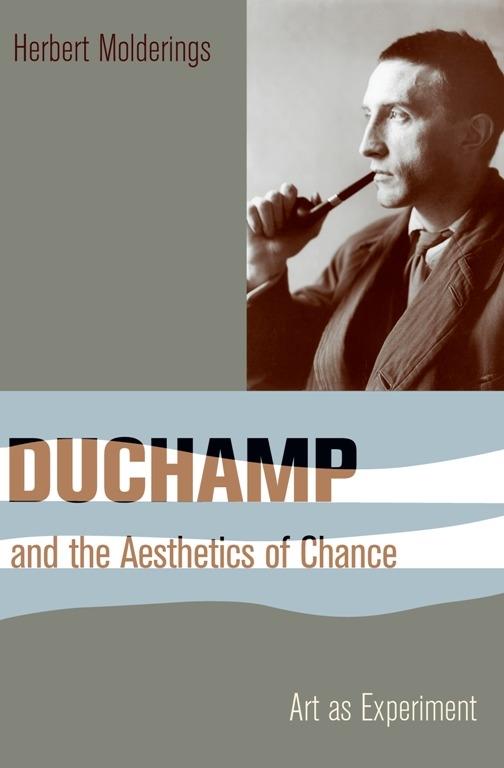
Marcel Duchamp is often viewed as an "artist-engineer-scientist," a kind of rationalist who relied heavily on the ideas of the French mathematician and philosopher Henri Poincaré. Yet a complete portrait of Duchamp and his multiple influences draws a different picture. In his 3 Standard Stoppages (1913-1914), a work that uses chance as an artistic medium, we see how far Duchamp subverted scientism in favor of a radical individualistic aesthetic and experimental vision.
Unlike the Dadaists, Duchamp did more than dismiss or negate the authority of science. He pushed scientific rationalism to the point where its claims broke down and alternative truths were allowed to emerge. With humor and irony, Duchamp undertook a method of artistic research, reflection, and visual thought that focused less on beauty than on the notion of the "possible." He became a passionate advocate of the power of invention and thinking things that had never been thought before.
The 3 Standard Stoppages is the ultimate realization of the play between chance and dimension, visibility and invisibility, high and low art, and art and anti-art. Situating Duchamp firmly within the literature and philosophy of his time, Herbert Molderings recaptures the spirit of a frequently misread artist-and his thrilling aesthetic of chance.
Paga fácilmente con tarjeta, Klarna, Apple Pay o Google Pay. ¿No estás contento? Siempre tienes 14 días de garantía de devolución. Lee más en nuestros términos. Si tienes preguntas, escríbenos a hello@memmo.org.
Memmo hace que estudiar sea más fácil, estés donde estés. Aquí tienes tus libros de texto y herramientas de estudio inteligentes en un solo lugar: resúmenes, quizzes, podcasts y flashcards. Y también a Ted, tu compañero de estudio que responde a todo lo que te preguntes. Más de 50 000 estudiantes ya estudian aquí. Está hecho para que aprendas más rápido y te estreses menos.