
Before Memmo my notes were scattered across PDFs. Now a workspace pulls everything into one place — I see exactly what's still left to study.
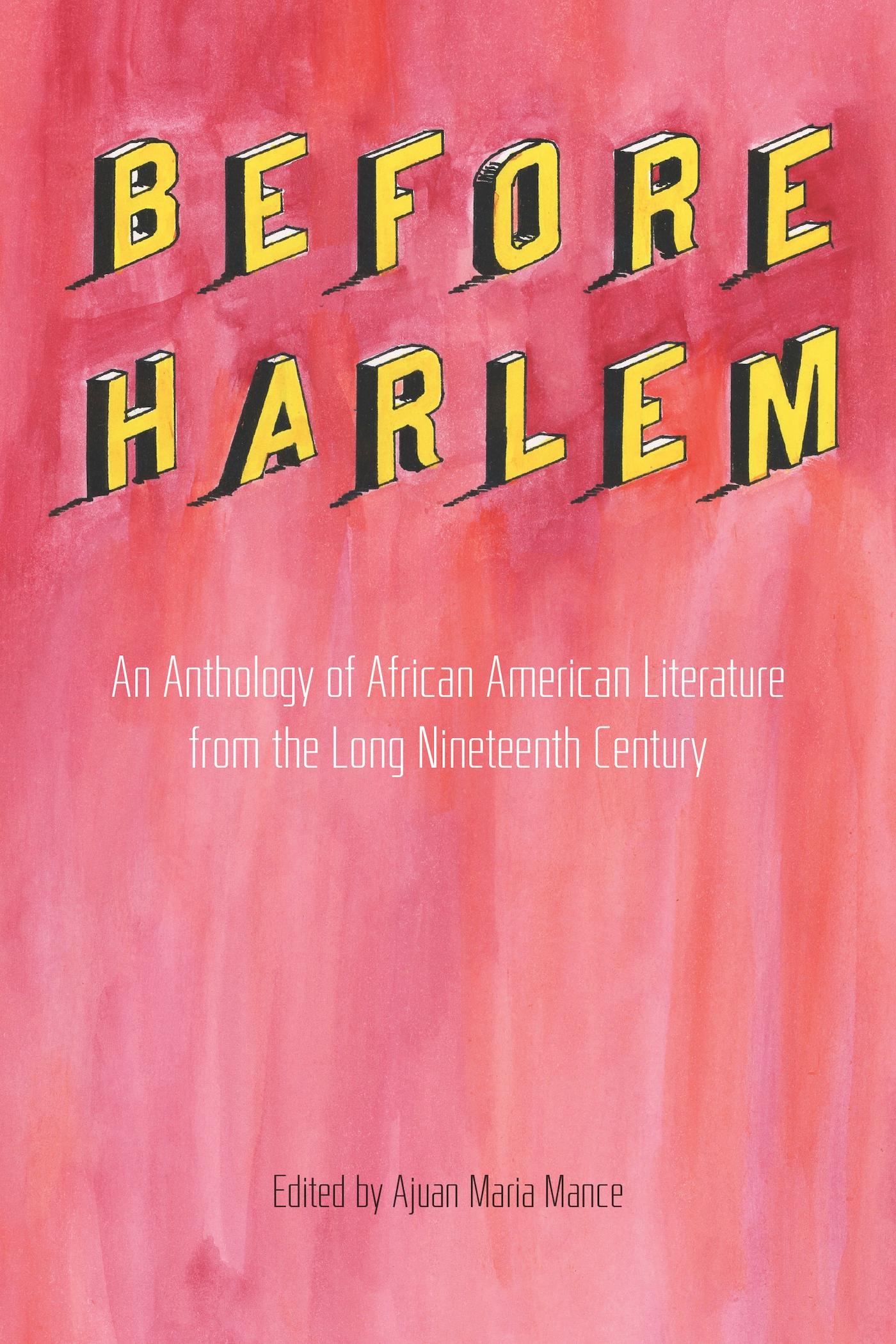
Despite important recovery and authentication efforts during the last twenty-five years, the vast majority of nineteenth-century African American writers and their work remain unknown to today’s readers. Moreover, the most widely used anthologies of black writing have established a canon based largely on current interests and priorities. Seeking to establish a broader perspective, this collection brings together a wealth of autobiographical writings, fiction, poetry, speeches, sermons, essays, and journalism that better portrays the intellectual and cultural debates, social and political struggles, and community publications and institutions that nurtured black writers from the early 1800s to the eve of the Harlem Renaissance.
As editor Ajuan Mance notes, previous collections have focused mainly on writing that found a significant audience among white readers. Consequently, authors whose work appeared in African American–owned publications for a primarily black audience—such as Solomon G. Brown, Henrietta Cordelia Ray, and T. Thomas Fortune—have faded from memory. Even figures as celebrated as Frederick Douglass and Paul Laurence Dunbar are today much better known for their “cross-racial” writings than for the larger bodies of work they produced for a mostly African American readership. There has also been a tendency in modern canon making, especially in the genre of autobiography, to stress antebellum writing rather than writings produced after the Civil War and Reconstruction. Similarly, religious writings—despite the centrality of the church in the everyday lives of black readers and the interconnectedness of black spiritual and intellectual life—have not received the emphasis they deserve.
Filling those critical gaps with a selection of 143 works by 65 writers, Before Harlem presents as never before an in-depth picture of the literary, aesthetic, and intellectual landscape of nineteenth-century African America and will be a valuable resource for a new generation of readers.
Before Memmo my notes were scattered across PDFs. Now a workspace pulls everything into one place — I see exactly what's still left to study.
Memmo's summaries are gold before exams. I don't have to re-read 800 pages two weeks before — just the important parts.
The AI chat has saved me the night before an exam more than once. I just keep asking until I get it — no waiting on a study group to reply.
The quizzes hit exactly what I need to know. Memmo tracks what I get stuck on — so I only practice what's worth it.
Flashcards with spaced repetition are magic. Memmo knows when I'm about to forget something and brings it back.
The AI podcasts are my favorite. I listen on my way to school and get a recap without sitting at a computer.

Handbok i kvalitativa metoder
281 kr

Hållbar utveckling: en introduktion för ingenjörer och andra problemlösare
334 kr

Brymans Samhällsvetenskapliga metoder
390 kr

Projektledning
491 kr

Den orättvisa hälsan: om socioekonomiska skillnader i hälsa och livslängd
326 kr

Vetenskapsteori för nybörjare
196 kr

Organizational Leadership
429 kr

På väg mot läraryrket
172 kr

Det sociala livet i skolan: Socialpsykologiska perspektiv
253 kr

Betygsättningens didaktik
151 kr

Personality
402 kr

Studying Leadership
404 kr

Managing Innovation
477 kr

Introduktion till samhällsvetenskaplig metod
347 kr

The Psychology of Sex and Gender
698 kr

Evidens och kunskap för socialt arbete
207 kr

Introduction to Leadership
605 kr