
Before Memmo my notes were scattered across PDFs. Now a workspace pulls everything into one place — I see exactly what's still left to study.
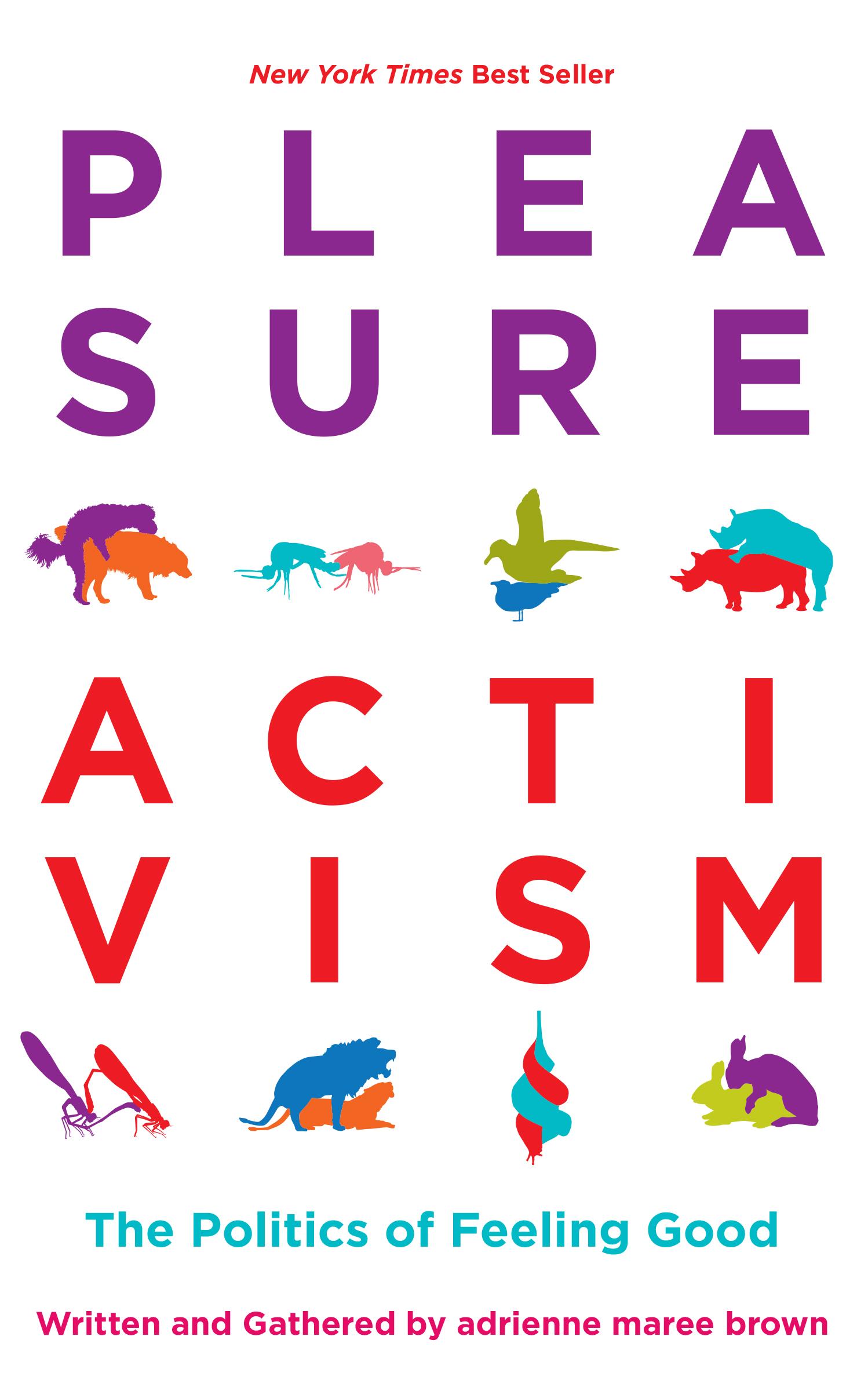
Welcome to the Pleasure Dome.
I first read the words “pleasure-dome” in a Samuel Taylor Coleridge poem, the rest of which I promptly forgot. But the image of a massive space dedicated to the exploration of pleasure planted itself in my young mind; I thought, “Yes, I want that.”
Years later I came across Audre Lorde’s life-changing essay “Uses of the Erotic: Erotic as Power,” in which she taught us what she had learned about the ways the power of the Erotic makes us “give up, of necessity, being satisfied with suffering, and self-negation.” Lorde made me look deeply at my life to find the “yes” inside of me, inside of the communities I love and work with, inside our species. I became attuned to the ways erotic and other pleasures shaped and healed me. I reflected on how my experiences with sex had opened doors to loving my body in spite of what society had taught me about big Black girls being undesirable, and how my experiences of deep political alignment with people who wanted to collaborate had taught me more than years of battling with people who wanted to dominate me.
I began to make decisions about whether I wanted to do things in my life and in the movements I am part of by checking in for my orgasmic yes. To feel for that resistance inside, the small place in my gut that knows before I do that something is not a fit for me and will not increase my aliveness. This exploration led me to some core questions that have shaped my work:
What would I be doing with my time and energy if I made decisions based on a feeling of deep, erotic yes?
How do I find balance in the things that give me pleasure, especially the things that tend to be misunderstood and manipulated by racialized capitalism, such as drugs, sex, drank, sugar?
How would we organize and move our communities if we shifted to focus on what we long for and love, rather than what we are negatively reacting to?
Is it possible for justice and pleasure to feel the same way in our collective body?
Over the years some of my work has been directly in the realm of pleasure, but even as I facilitate movements for social and environmental transformation, I always prioritize how people feel—is it a pleasure to be with each other, does the agenda/space allow for aliveness and joy, is there a “yes” at the center of the work? There are so many things that are violent, offensive, unbearable. Your embodied “no” is so justified—but I don’t think it moves us forward. “Yes” has a future.
At the same time, I’ve been tuned into pop culture and the ways ideas and norms move from the margins and movements into the realms of music, movies, television, books, and other arts, as well as humor, food, travel—even gossip. We can examine what gives us pleasure by observing those spaces. Beyoncé albums give many of us a feeling of power in claiming pleasure. Comparing Dave Chappelle and Louis C.K. as comedians speaking on class, race, gender, and sexuality can give us insight into where the culture is in terms of trans acceptance and solidarity and tangible diversity. Musical artists Tunde Olaniran and Mother Cyborg inspire us to reflect on how they can be so radically pleasing just by being themselves.
A quick glance at pop culture shows us that we get pleasure from violence and dominance, public shaming, trolling, being righteous together, knowing other people’s private pain, over indulgence, and the accumulation of material things. And those of us explicitly working to grow justice and liberation in the world are not immune to these things; we pick and choose what compromises we make, where we indulge, and where we hold standards.
I think there is a fertile ground for learning how we align pleasure with our values, decolonize our bodies and longings, and get into a practice of saying “yes” together, deriving our collective power from our felt sense of pleasure.
We’re going to start learning together. This is a space to ask shameless questions, love what we love and explore why, cultivate our interest in radical love and pleasure, and nourish the “yes” in each of us.
Before Memmo my notes were scattered across PDFs. Now a workspace pulls everything into one place — I see exactly what's still left to study.
Memmo's summaries are gold before exams. I don't have to re-read 800 pages two weeks before — just the important parts.
The AI chat has saved me the night before an exam more than once. I just keep asking until I get it — no waiting on a study group to reply.
The quizzes hit exactly what I need to know. Memmo tracks what I get stuck on — so I only practice what's worth it.
Flashcards with spaced repetition are magic. Memmo knows when I'm about to forget something and brings it back.
The AI podcasts are my favorite. I listen on my way to school and get a recap without sitting at a computer.

Handbok i kvalitativa metoder
281 kr

Hållbar utveckling: en introduktion för ingenjörer och andra problemlösare
334 kr

Brymans Samhällsvetenskapliga metoder
390 kr

Projektledning
491 kr

Den orättvisa hälsan: om socioekonomiska skillnader i hälsa och livslängd
326 kr

Vetenskapsteori för nybörjare
196 kr

Organizational Leadership
429 kr

På väg mot läraryrket
172 kr

Det sociala livet i skolan: Socialpsykologiska perspektiv
253 kr

Betygsättningens didaktik
151 kr

Personality
402 kr

Studying Leadership
404 kr

Managing Innovation
477 kr

Introduktion till samhällsvetenskaplig metod
347 kr

The Psychology of Sex and Gender
698 kr

Evidens och kunskap för socialt arbete
207 kr

Introduction to Leadership
605 kr