
Before Memmo my notes were scattered across PDFs. Now a workspace pulls everything into one place — I see exactly what's still left to study.
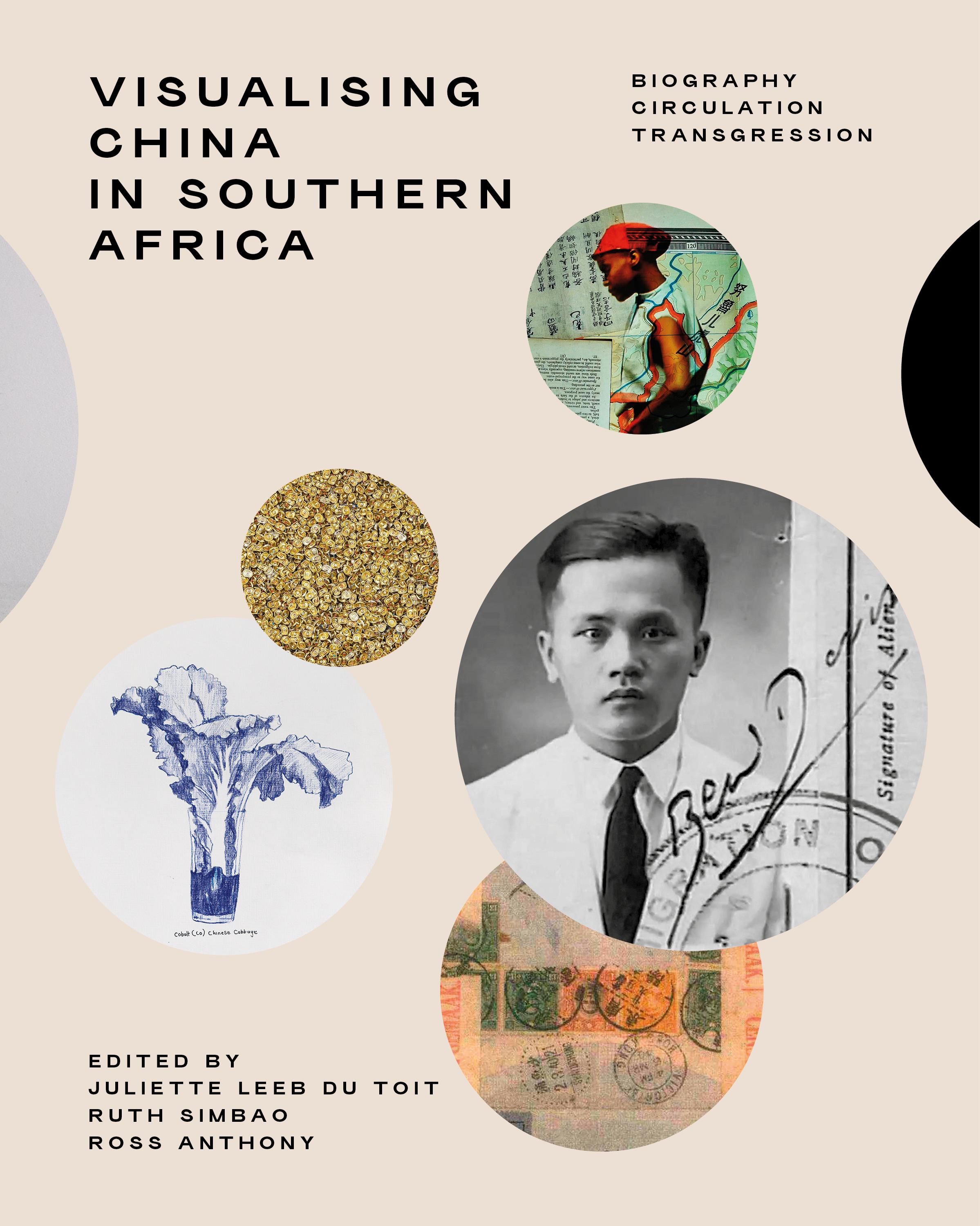
China and Africa have long shared a history of allegiance and contact points through global political forces from the time of colonialism and the Cold War. With China’s rise as the new superpower, its presence in Africa has expanded, leading to significant economic, geopolitical and cultural shifts. While issues such as trade, aid and development have received much attention, Chinese and African encounters through the lens of the visual arts and material culture is a neglected field.
Visualising China in Southern Africa: Biography, Circulation, Transgression is a ground-breaking volume that addresses this deficit through engaging with the work of contemporary African and Chinese artists while analysing broader material production that prefigures the current relationship. The essays are wide-ranging in their analysis of ceramics, photography, painting, etching, sculpture, film, performance, postcards, stamps, installations, political posters, cartoons and architecture.
Visualising China in Southern Africa confines its focus to southern Africa, yet even within this region, the context is complex. Ethnicity and nationalism, the lingering influence of Cold War allegiances and colonial configurations all continue to play a role. The various visual cultures discussed in this volume emphasise the commonality of these categories, but also point towards other shared histories that transcend the nation-state category.
The collection includes scholarly chapters, photo essays, interviews, and artists’ personal accounts, organised around four themes: material flows, orientations and transgressions, spatial imaginaries, and biographies. The artists, photographers, filmmakers, curators and collectors in this volume include: Stary Mwaba, Hua Jiming, Anawana Haloba, Gerald Machona, Nobukho Nqaba, Marcus Neustetter, Brett Murray, Diane Victor, William Kentridge, Kristin NG-Yang, Kok Nam, Mark Lewis, the Chinese Camera Club of South Africa, Wu Jing, Henion Han and Shengkai Wu.
Before Memmo my notes were scattered across PDFs. Now a workspace pulls everything into one place — I see exactly what's still left to study.
Memmo's summaries are gold before exams. I don't have to re-read 800 pages two weeks before — just the important parts.
The AI chat has saved me the night before an exam more than once. I just keep asking until I get it — no waiting on a study group to reply.
The quizzes hit exactly what I need to know. Memmo tracks what I get stuck on — so I only practice what's worth it.
Flashcards with spaced repetition are magic. Memmo knows when I'm about to forget something and brings it back.
The AI podcasts are my favorite. I listen on my way to school and get a recap without sitting at a computer.

Handbok i kvalitativa metoder
281 kr

Hållbar utveckling: en introduktion för ingenjörer och andra problemlösare
334 kr

Brymans Samhällsvetenskapliga metoder
390 kr

Projektledning
491 kr

Den orättvisa hälsan: om socioekonomiska skillnader i hälsa och livslängd
326 kr

Vetenskapsteori för nybörjare
196 kr

Organizational Leadership
429 kr

På väg mot läraryrket
172 kr

Det sociala livet i skolan: Socialpsykologiska perspektiv
253 kr

Betygsättningens didaktik
151 kr

Personality
402 kr

Studying Leadership
404 kr

Managing Innovation
477 kr

Introduktion till samhällsvetenskaplig metod
347 kr

The Psychology of Sex and Gender
698 kr

Evidens och kunskap för socialt arbete
207 kr

Introduction to Leadership
605 kr