
Before Memmo my notes were scattered across PDFs. Now a workspace pulls everything into one place — I see exactly what's still left to study.
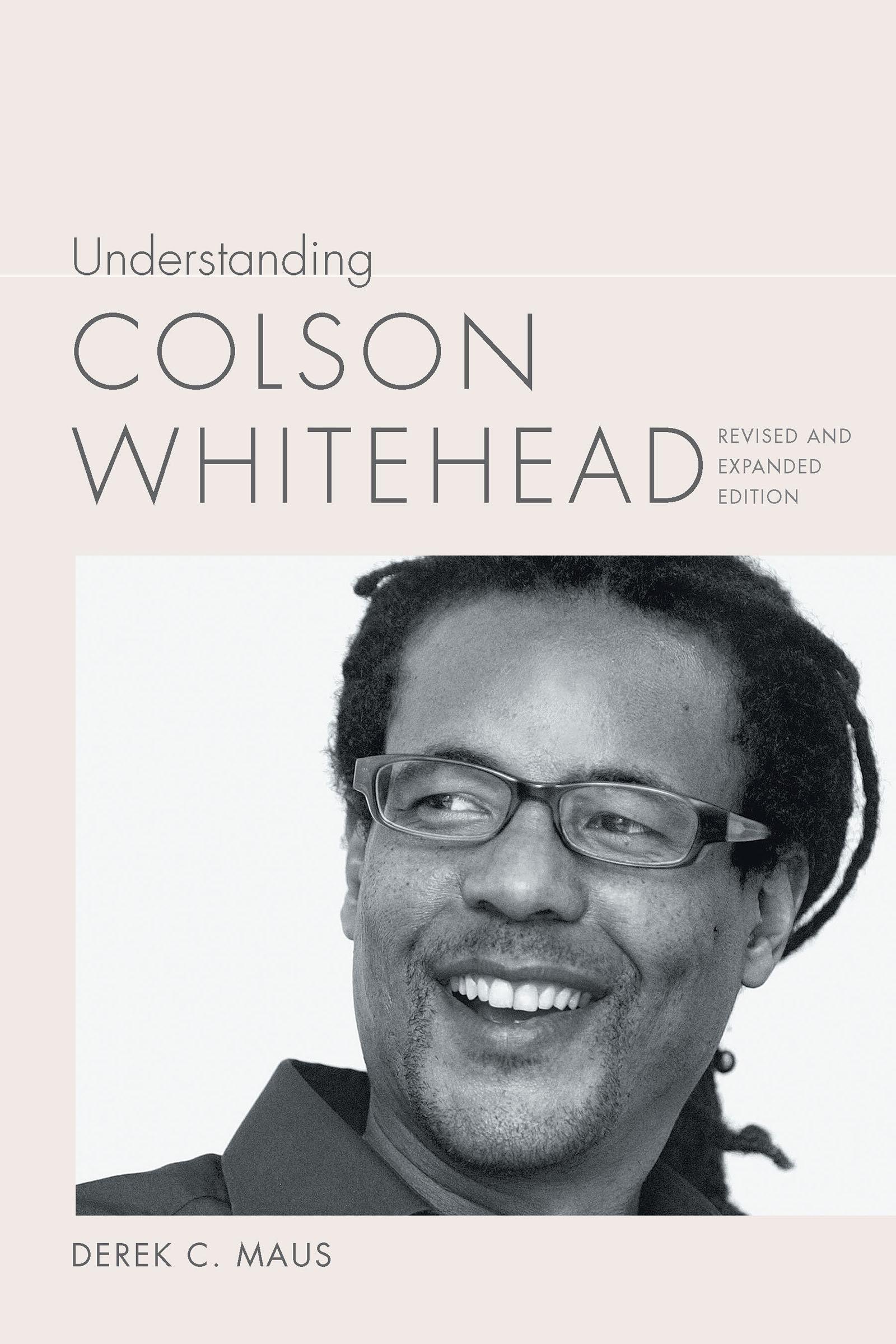
An inviting point of entrance into the truth seeking, genre defying novels of the award-winning author
In 2020 Colson Whitehead became the youngest recipient of the Library of Congress Prize for American Fiction. Although Whitehead's widely divergent books complicate overarching categorization, Derek C. Maus argues that they are linked by their skepticism toward the ostensible wisdom inherited from past generations and the various forms of "stories" that transmit it. Whitehead, best known for his Pulitzer Prize winning novel The Underground Railroad, bids readers to accompany him on challenging, often open-ended literary excursions designed to reexamine—and frequently defy—accepted notions of truth.
Understanding Colson Whitehead unravels the parallel structures found within Whitehead's books from his 1999 debut The Intuitionist through 2019's The Nickel Boys, for which he won his second Pulitzer Prize for Fiction. By first imitating and then violating their conventions, Whitehead attempts to transcend the limits of the formulas of the genres in which he seems to write. Whitehead similarly tests subject matter, again imitating and then satirizing various forms of conventional wisdom as a means of calling out unexamined, ignored, or malevolent aspects of American culture.
Although it is only one of many subjects that Whitehead addresses, race is often central to his work. It serves as a prime example of Whitehead's attempt to prompt his readers into revisiting their assumptions about meanings and values. By upending the literary formulas of the detective novel, the heroic folktale, the coming-of-age story, the zombie apocalypse, the slave narrative, and historical fiction, Whitehead reveals the flaws and shortcomings by which Americans have defined themselves. In addition to evoking such explicitly literary storytelling traditions, Whitehead also directs attention toward other interrelated historical and cultural processes that influence how race, class, gender, education, social status, and other categories of identity determine what an individual supposedly can and cannot do.
Before Memmo my notes were scattered across PDFs. Now a workspace pulls everything into one place — I see exactly what's still left to study.
Memmo's summaries are gold before exams. I don't have to re-read 800 pages two weeks before — just the important parts.
The AI chat has saved me the night before an exam more than once. I just keep asking until I get it — no waiting on a study group to reply.
The quizzes hit exactly what I need to know. Memmo tracks what I get stuck on — so I only practice what's worth it.
Flashcards with spaced repetition are magic. Memmo knows when I'm about to forget something and brings it back.
The AI podcasts are my favorite. I listen on my way to school and get a recap without sitting at a computer.

Handbok i kvalitativa metoder
281 kr

Hållbar utveckling: en introduktion för ingenjörer och andra problemlösare
334 kr

Brymans Samhällsvetenskapliga metoder
390 kr

Projektledning
491 kr

Den orättvisa hälsan: om socioekonomiska skillnader i hälsa och livslängd
326 kr

Vetenskapsteori för nybörjare
196 kr

Organizational Leadership
429 kr

På väg mot läraryrket
172 kr

Det sociala livet i skolan: Socialpsykologiska perspektiv
253 kr

Betygsättningens didaktik
151 kr

Personality
402 kr

Studying Leadership
404 kr

Managing Innovation
477 kr

Introduktion till samhällsvetenskaplig metod
347 kr

The Psychology of Sex and Gender
698 kr

Evidens och kunskap för socialt arbete
207 kr

Introduction to Leadership
605 kr