
Before Memmo my notes were scattered across PDFs. Now a workspace pulls everything into one place — I see exactly what's still left to study.
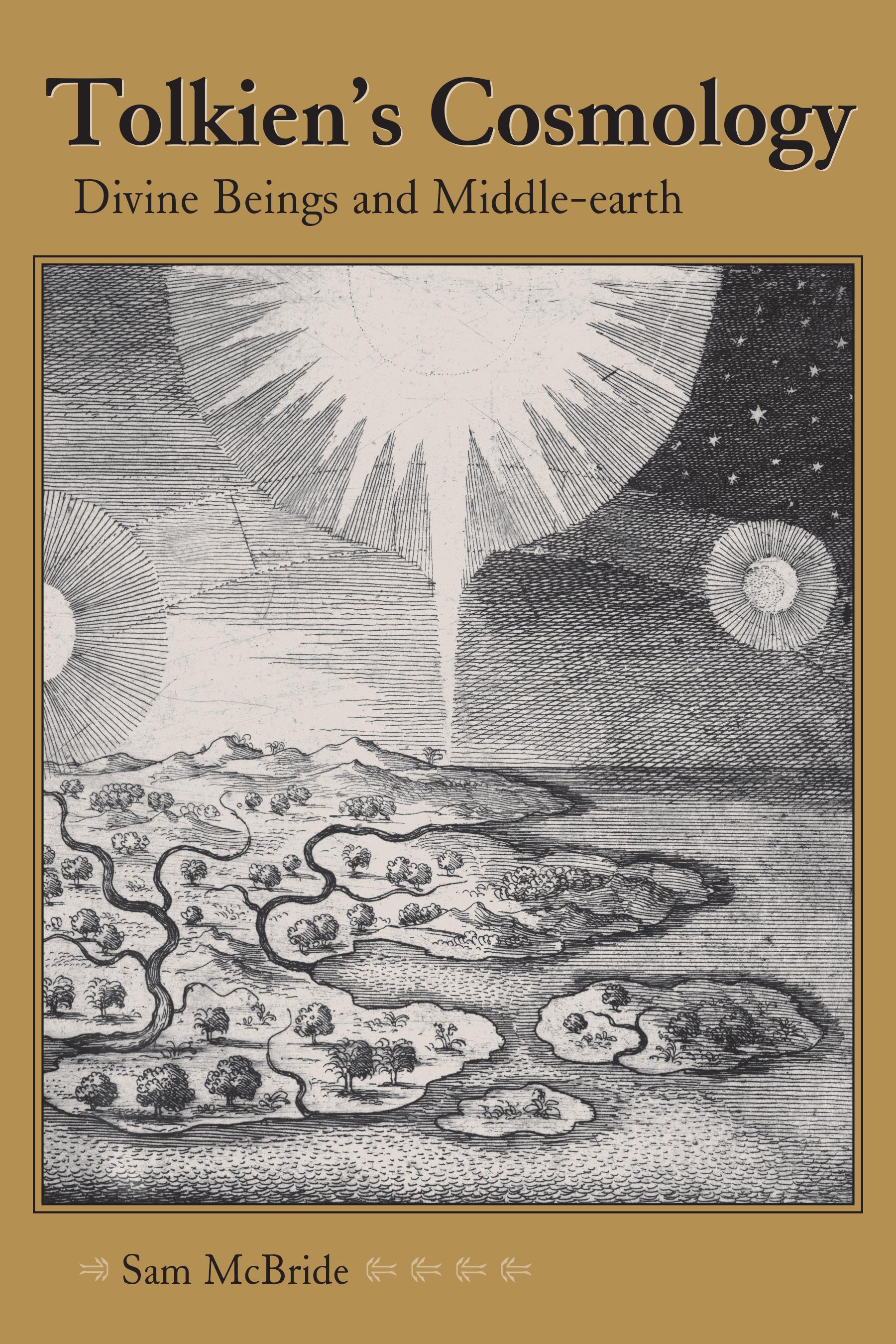
Demonstrating the unity of Tolkien’s created world across Middle-earth’s Ages An in-depth examination of the role of divine beings in Tolkien’s work, Tolkien’s Cosmology: Divine Beings and Middle-earth brings together Tolkien’s many references to such beings and analyzes their involvement within his created world. Unlike many other commentators, Sam McBride asserts that a careful reading of the whole of the author’s corpus shows a coherent, if sometimes contradictory, divine presence in the world.
In The Silmarillion, an epic history of the First Age of Middle-earth, Tolkien describes the Ainur, angelic beings under the direction of Eru Ilúvatar, the legendarium’s god, as creators of physical reality. Some of these divine beings, the Valar and the Maiar, enter physical reality to oversee its development and prepare for the appearance of sentient life forms in Middle-earth: Elves and Humans, Dwarves, and eventually Hobbits. In the early stages of this history, the Valar and Maiar interact directly with Elves and Humans, opposing the work of evil beings led by Melkor.
Yet Tolkien appears, at first glance, to have ignored this pantheon in The Hobbit and The Lord of the Rings, set in the Third Age of Middle-earth. Tolkien’s letters, however, suggest the cosmological structure continues. And representatives of the Valar and Maiar can be seen at work, such as Gandalf and Saruman. Tolkien also introduces hints that his divine beings continue to influence events invisibly, as with the prominence of luck in The Hobbit and fortuitous weather conditions in The Lord of the Rings.
In the end, McBride argues, Tolkien’s cosmology allows room for everything from poor decision-making to evil, suffering, and death, all part of a belief system that will make the final victory of Good much more powerful.
Before Memmo my notes were scattered across PDFs. Now a workspace pulls everything into one place — I see exactly what's still left to study.
Memmo's summaries are gold before exams. I don't have to re-read 800 pages two weeks before — just the important parts.
The AI chat has saved me the night before an exam more than once. I just keep asking until I get it — no waiting on a study group to reply.
The quizzes hit exactly what I need to know. Memmo tracks what I get stuck on — so I only practice what's worth it.
Flashcards with spaced repetition are magic. Memmo knows when I'm about to forget something and brings it back.
The AI podcasts are my favorite. I listen on my way to school and get a recap without sitting at a computer.

Handbok i kvalitativa metoder
281 kr

Hållbar utveckling: en introduktion för ingenjörer och andra problemlösare
334 kr

Brymans Samhällsvetenskapliga metoder
390 kr

Projektledning
491 kr

Den orättvisa hälsan: om socioekonomiska skillnader i hälsa och livslängd
326 kr

Organizational Leadership
429 kr

Vetenskapsteori för nybörjare
196 kr

På väg mot läraryrket
172 kr

Det sociala livet i skolan: Socialpsykologiska perspektiv
253 kr

Betygsättningens didaktik
151 kr

Personality
402 kr

Studying Leadership
404 kr

Managing Innovation
477 kr

Introduktion till samhällsvetenskaplig metod
347 kr

The Psychology of Sex and Gender
698 kr

Evidens och kunskap för socialt arbete
207 kr

Introduction to Leadership
605 kr