
Before Memmo my notes were scattered across PDFs. Now a workspace pulls everything into one place — I see exactly what's still left to study.
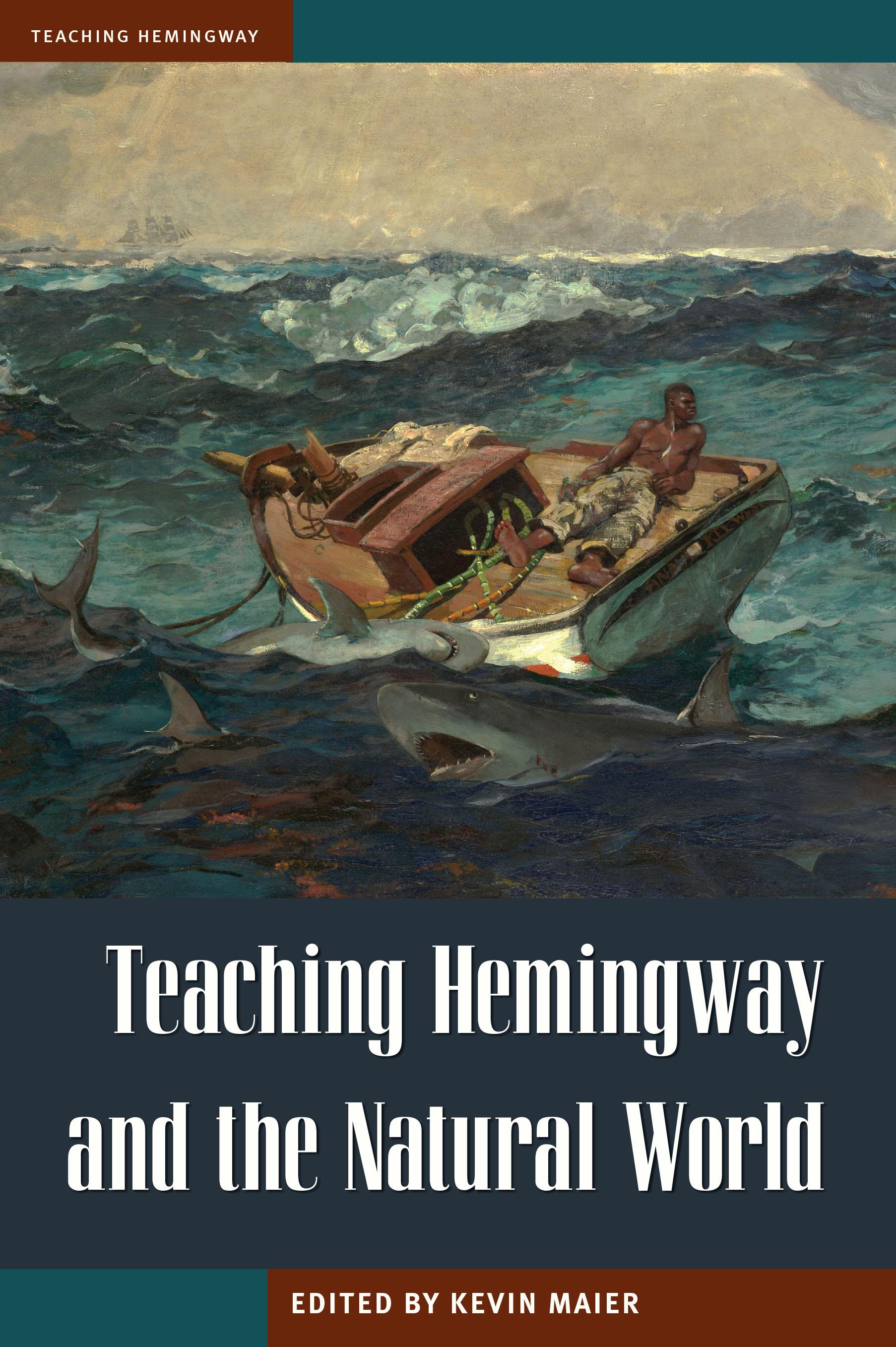
Ernest Hemingway is a writer we often associate with particular places and animals; Michigan’s Upper Peninsula, Spain’s countryside, East Africa’s game reserves, Cuba’s blue water, and Idaho’s sagebrush all come to mind. We can easily visualize the iconic images of Hemingway with fly rod bent by hefty trout, with bulls charging matadors, or of the famous author proudly posing with trophy lions, marlin, and a menagerie of Western American game animals.
As Robert E. Fleming once put it—updating Gertrude Stein’s famous quip that Hemingway looked like a modern and smelled of museums—Hemingway “was also a hunter, fisherman, and naturalist who smelled of libraries.” Hemingway indeed read widely in natural history and science, as well as the literature of field sports. This lifelong interest in the natural world and its inhabitants manifests itself in Hemingway’s writing in myriad ways. From the trout Nick Adams carefully releases to Santiago’s marlin and Robert Jordan’s “heart beating against the pine needle floor of the forest” to Colonel Cantwell’s beloved Italian duck marshes, and from African savannahs to the Gulf Stream, animals and environments are central to Hemingway’s work and life.
While these representations often served as background for broader human-centered matters in early scholarship, contemporary critics have opted to treat animals and environments directly. Teaching Hemingway and the Natural World marks a key entry in Hemingway studies, bringing the questions from the rapidly evolving field of environmental literary studies to bear on Hemingway’s places, animals, and life. It not only advances scholarship on Hemingway’s relationship to the natural world, but it also facilitates bringing this understanding to the classroom.
This latest volume in the Teaching Hemingway series explores how his writing sheds light on broader questions of the human relationship to the nonhuman world. Organized geographically, the 16 essays by leading scholars are divided into five sections about Hemingway’s favorite places. Each essay includes specific classroom advice as well as theoretically sophisticated close readings.
Before Memmo my notes were scattered across PDFs. Now a workspace pulls everything into one place — I see exactly what's still left to study.
Memmo's summaries are gold before exams. I don't have to re-read 800 pages two weeks before — just the important parts.
The AI chat has saved me the night before an exam more than once. I just keep asking until I get it — no waiting on a study group to reply.
The quizzes hit exactly what I need to know. Memmo tracks what I get stuck on — so I only practice what's worth it.
Flashcards with spaced repetition are magic. Memmo knows when I'm about to forget something and brings it back.
The AI podcasts are my favorite. I listen on my way to school and get a recap without sitting at a computer.

Handbok i kvalitativa metoder
281 kr

Hållbar utveckling: en introduktion för ingenjörer och andra problemlösare
334 kr

Brymans Samhällsvetenskapliga metoder
390 kr

Projektledning
491 kr

Den orättvisa hälsan: om socioekonomiska skillnader i hälsa och livslängd
326 kr

Vetenskapsteori för nybörjare
196 kr

Organizational Leadership
429 kr

På väg mot läraryrket
172 kr

Det sociala livet i skolan: Socialpsykologiska perspektiv
253 kr

Betygsättningens didaktik
151 kr

Personality
402 kr

Studying Leadership
404 kr

Managing Innovation
477 kr

Introduktion till samhällsvetenskaplig metod
347 kr

The Psychology of Sex and Gender
698 kr

Evidens och kunskap för socialt arbete
207 kr

Introduction to Leadership
605 kr