
Before Memmo my notes were scattered across PDFs. Now a workspace pulls everything into one place — I see exactly what's still left to study.
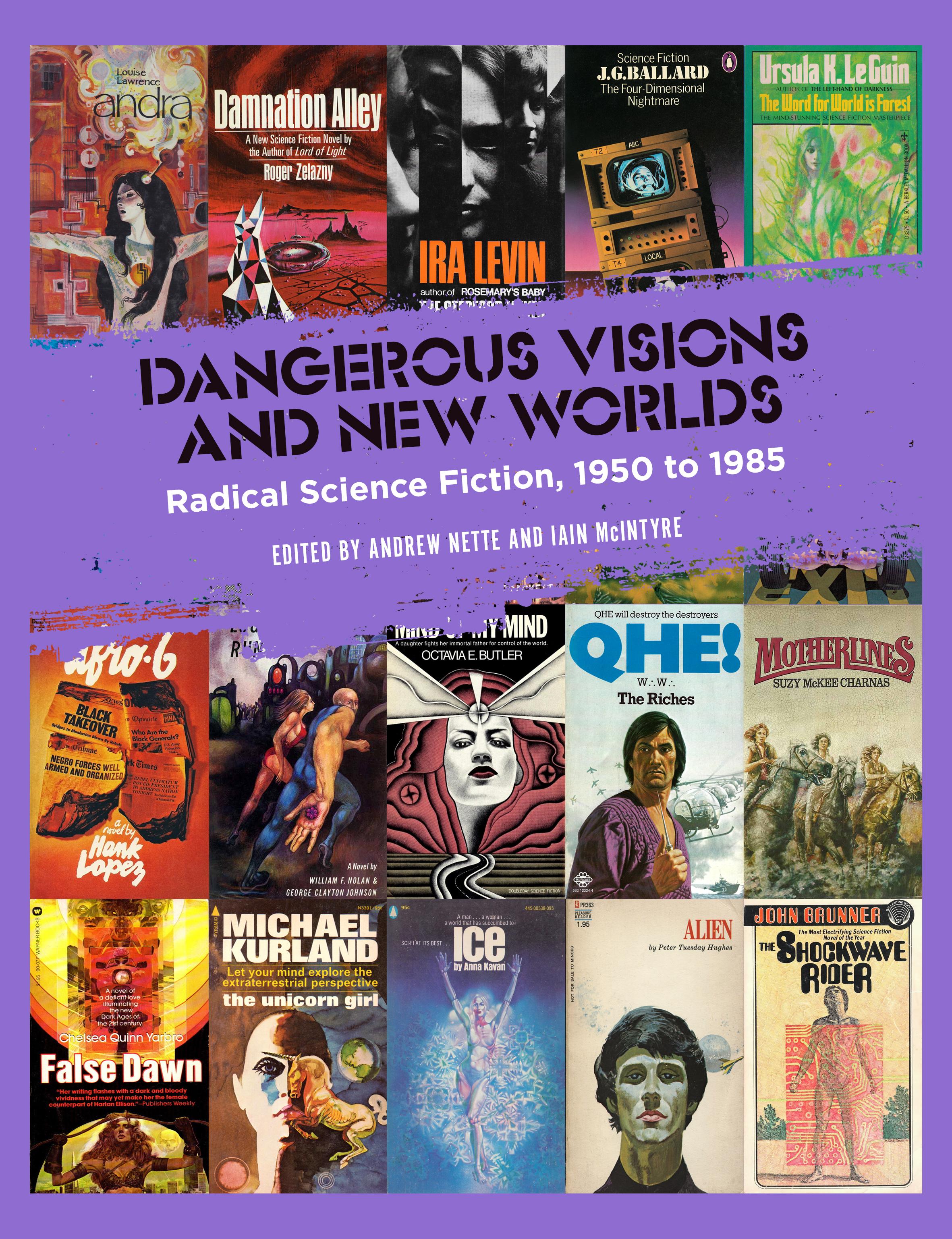
Much has been written about the “long Sixties,” the era of the late 1950s through the early 1970s. It was a period of major social change, most graphically illustrated by the emergence of liberatory and resistance movements focused on inequalities of class, race, gender, sexuality, and beyond, whose challenge represented a major shock to the political and social status quo. With its focus on speculation, alternate worlds and the future, science fiction became an ideal vessel for this upsurge of radical protest.
Dangerous Visions and New Worlds: Radical Science Fiction, 1950 to 1985 details, celebrates, and evaluates how science fiction novels and authors depicted, interacted with, and were inspired by these cultural and political movements in America and Great Britain. It starts with progressive authors who rose to prominence in the conservative 1950s, challenging the so-called Golden Age of science fiction and its linear narratives of technological breakthroughs and space-conquering male heroes. The book then moves through the 1960s, when writers, including those in what has been termed the New Wave, shattered existing writing conventions and incorporated contemporary themes such as modern mass media culture, corporate control, growing state surveillance, the Vietnam War, and rising currents of counterculture, ecological awareness, feminism, sexual liberation, and Black Power. The 1970s, when the genre reflected the end of various dreams of the long Sixties and the faltering of the postwar boom, is also explored along with the first half of the 1980s, which gave rise to new subgenres, such as cyberpunk.
Dangerous Visions and New Worlds contains over twenty chapters written by contemporary authors and critics, and hundreds of full-color cover images, including thirteen thematically organised cover selections. New perspectives on key novels and authors, such as Octavia Butler, Ursula K. Le Guin, Philip K. Dick, John Wyndham, Samuel Delany, J.G. Ballard, John Brunner, Judith Merril, Barry Malzberg, Joanna Russ, and many others are presented alongside excavations of topics, works, and writers who have been largely forgotten or undeservedly ignored.
Before Memmo my notes were scattered across PDFs. Now a workspace pulls everything into one place — I see exactly what's still left to study.
Memmo's summaries are gold before exams. I don't have to re-read 800 pages two weeks before — just the important parts.
The AI chat has saved me the night before an exam more than once. I just keep asking until I get it — no waiting on a study group to reply.
The quizzes hit exactly what I need to know. Memmo tracks what I get stuck on — so I only practice what's worth it.
Flashcards with spaced repetition are magic. Memmo knows when I'm about to forget something and brings it back.
The AI podcasts are my favorite. I listen on my way to school and get a recap without sitting at a computer.

Handbok i kvalitativa metoder
281 kr

Hållbar utveckling: en introduktion för ingenjörer och andra problemlösare
334 kr

Brymans Samhällsvetenskapliga metoder
390 kr

Projektledning
491 kr

Den orättvisa hälsan: om socioekonomiska skillnader i hälsa och livslängd
326 kr

Vetenskapsteori för nybörjare
196 kr

Organizational Leadership
429 kr

På väg mot läraryrket
172 kr

Det sociala livet i skolan: Socialpsykologiska perspektiv
253 kr

Betygsättningens didaktik
151 kr

Personality
402 kr

Studying Leadership
404 kr

Managing Innovation
477 kr

Introduktion till samhällsvetenskaplig metod
347 kr

The Psychology of Sex and Gender
698 kr

Evidens och kunskap för socialt arbete
207 kr

Introduction to Leadership
605 kr