
Before Memmo my notes were scattered across PDFs. Now a workspace pulls everything into one place — I see exactly what's still left to study.
"The Ostrich Paradox boldly addresses a key question of our time: Why are we humans so poor at dealing with disastrous risks, and what can we humans do about it? It is a must-read for everyone who cares about risk."
—Daniel Kahneman, winner of the Nobel Prize in Economics and author of Thinking, Fast and Slow
We fail to evacuate when advised. We rebuild in flood zones. We don't wear helmets. We fail to purchase insurance. We would rather avoid the risk of "crying wolf" than sound an alarm.
Our ability to foresee and protect against natural catastrophes has never been greater; yet, we consistently fail to heed the warnings and protect ourselves and our communities, with devastating consequences. What explains this contradiction?
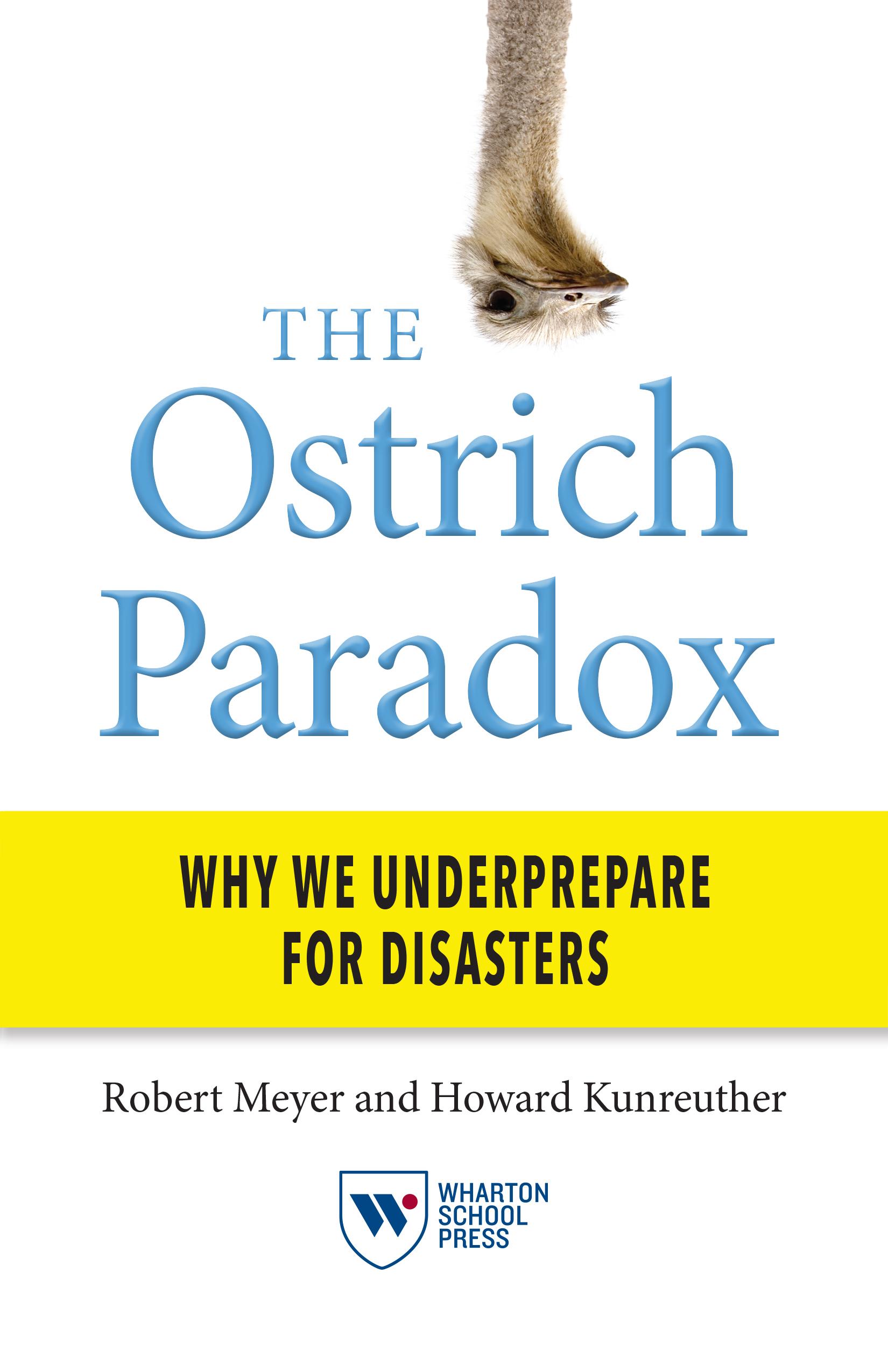
In The Ostrich Paradox, Wharton professors Robert Meyer and Howard Kunreuther draw on years of teaching and research to explain why disaster preparedness efforts consistently fall short. Filled with heartbreaking stories of loss and resilience, the book addresses:
•How people make decisions when confronted with high-consequence, low-probability events—and how these decisions can go awry
•The 6 biases that lead individuals, communities, and institutions to make grave errors that cost lives
•The Behavioral Risk Audit, a systematic approach for improving preparedness by recognizing these biases and designing strategies that anticipate them
•Why, if we are to be better prepared for disasters, we need to learn to be more like ostriches, not less
Fast-reading and critically important, The Ostrich Paradox is a must-read for anyone who wants to understand why we consistently underprepare for disasters, as well as private and public leaders, planners, and policy-makers who want to build more prepared communities.
Before Memmo my notes were scattered across PDFs. Now a workspace pulls everything into one place — I see exactly what's still left to study.
Memmo's summaries are gold before exams. I don't have to re-read 800 pages two weeks before — just the important parts.
The AI chat has saved me the night before an exam more than once. I just keep asking until I get it — no waiting on a study group to reply.
The quizzes hit exactly what I need to know. Memmo tracks what I get stuck on — so I only practice what's worth it.
Flashcards with spaced repetition are magic. Memmo knows when I'm about to forget something and brings it back.
The AI podcasts are my favorite. I listen on my way to school and get a recap without sitting at a computer.

Handbok i kvalitativa metoder
281 kr

Hållbar utveckling: en introduktion för ingenjörer och andra problemlösare
334 kr

Brymans Samhällsvetenskapliga metoder
390 kr

Projektledning
491 kr

Den orättvisa hälsan: om socioekonomiska skillnader i hälsa och livslängd
326 kr

Vetenskapsteori för nybörjare
196 kr

Organizational Leadership
429 kr

På väg mot läraryrket
172 kr

Det sociala livet i skolan: Socialpsykologiska perspektiv
253 kr

Betygsättningens didaktik
151 kr

Personality
402 kr

Studying Leadership
404 kr

Managing Innovation
477 kr

Introduktion till samhällsvetenskaplig metod
347 kr

The Psychology of Sex and Gender
698 kr

Evidens och kunskap för socialt arbete
207 kr

Introduction to Leadership
605 kr