
Before Memmo my notes were scattered across PDFs. Now a workspace pulls everything into one place — I see exactly what's still left to study.
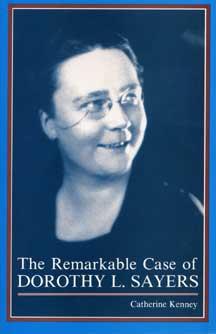
One of the most fascinating comments often made about Dorothy l. Sayers is that she wrote “real” novels. Catherine Kenney considers why Sayers mysteries tend to strike astute readers this way, and in so doing, suggests her place not only in the history of detection, but in the larger tradition of the English novel which she admired. Gaudy Night, for example, bears striking similarities to nineteenth-century English fiction, especially the novels of Jane Austen. The links between these authors have important implications not only for literary and social history, but also for our growing understanding of the subtle relationship between gender and genre.
Unlike earlier book-length studies of Sayers, what Professor Kenney has written is not a biography or a survey, but an assessment of Dorothy Sayer’s main contributions to modern letters and culture. Drawing upon Sayer’s novels, essays, plays, manuscripts, and letters, Kenney demonstrates the organic relationship of the parts of Sayer’s canon and argues persuasively that all of her important themes and concerns are embedded in her best work, her fiction.
Sayer’s three main accomplishments serve as the organizing principle of this book: first, her transformation of the modern detective story into a serious novel of social criticism and moral depth; second, her penetrating critique of the situation of modern women; and finally her compelling work as a lay theologian and interpreter of Christianity. Thus, the book proceeds not only in roughly chronological order, but also from the work that most readers know best what they know least. The author assumes some familiarity with Sayer’s fiction, but The Remarkable Case of Dorothy L. Sayers is not intended for specialists alone. Indeed, it is appropriate for the same reader that DLS had in mind when she wrote. It will appeal to those who already admire her work, and it may bring others to appreciate her as a literary figure of importance.
Before Memmo my notes were scattered across PDFs. Now a workspace pulls everything into one place — I see exactly what's still left to study.
Memmo's summaries are gold before exams. I don't have to re-read 800 pages two weeks before — just the important parts.
The AI chat has saved me the night before an exam more than once. I just keep asking until I get it — no waiting on a study group to reply.
The quizzes hit exactly what I need to know. Memmo tracks what I get stuck on — so I only practice what's worth it.
Flashcards with spaced repetition are magic. Memmo knows when I'm about to forget something and brings it back.
The AI podcasts are my favorite. I listen on my way to school and get a recap without sitting at a computer.

Handbok i kvalitativa metoder
281 kr

Hållbar utveckling: en introduktion för ingenjörer och andra problemlösare
334 kr

Brymans Samhällsvetenskapliga metoder
390 kr

Projektledning
491 kr

Den orättvisa hälsan: om socioekonomiska skillnader i hälsa och livslängd
326 kr

Vetenskapsteori för nybörjare
196 kr

Organizational Leadership
429 kr

På väg mot läraryrket
172 kr

Det sociala livet i skolan: Socialpsykologiska perspektiv
253 kr

Betygsättningens didaktik
151 kr

Personality
402 kr

Studying Leadership
404 kr

Managing Innovation
477 kr

Introduktion till samhällsvetenskaplig metod
347 kr

The Psychology of Sex and Gender
698 kr

Evidens och kunskap för socialt arbete
207 kr

Introduction to Leadership
605 kr