
Before Memmo my notes were scattered across PDFs. Now a workspace pulls everything into one place — I see exactly what's still left to study.
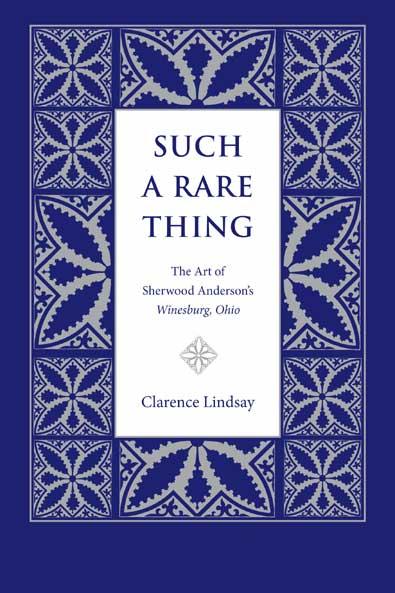
An important contribution to the field of American literary studies
“Groundbreaking work in Anderson scholarship in particular and, on the wider scene, in American literary studies.”
—Robert Dunne, author of A New Book of the Grotesques: Contemporary Approaches to Sherwood Anderson’s Early Fiction
This critical study of Sherwood Anderson’s most famous and perhaps most widely taught work, Winesburg, Ohio, treats it as a thoroughly modernist novel examining the aesthetic nature of romantic identity.
Author Clarence Lindsay argues that Anderson’s famous theory of the Grotesque is a theory of American identity. Each of the small town’s grotesques in effect authors a romantic narrative that privileges the self. In trying to live their lives by that narrative, each enacts a romantic selfhood. Each of these romantic selfhoods is an aesthetic enterprise, complicated by all the aesthetic issues relating to artist and audience. Every crisis in the novel is an aesthetic crisis; every comedy, every tragedy is an aesthetic misstep of some sort. Lindsay proposes that all moral issues in Winesburg, Ohio are aesthetic; all aesthetic issues are moral. Winesburg’s narrator’s careful attention to characters’ romantic narratives of self provides an ironic scrutiny of not only the astonishing varieties of American romantic identity but also a painstaking interrogation of a variety of romantic discourses. Anderson’s radical formal innovation, the interrelated tale, was the perfect American form, not only allowing for the narrator’s “democracy of fascination” with the grotesques’ absolutely equal competing singularities but also providing for the comic juxtaposition of these claims on uniqueness, a jostling that subverts the traditional novel’s emphasis on the singular individual.
This first sustained critical analysis of this American classic restores Anderson to the top rank of American artists, placing him alongside other intense scrutinizers of American romanticism: Hawthorne, Melville, and Hemingway.
Before Memmo my notes were scattered across PDFs. Now a workspace pulls everything into one place — I see exactly what's still left to study.
Memmo's summaries are gold before exams. I don't have to re-read 800 pages two weeks before — just the important parts.
The AI chat has saved me the night before an exam more than once. I just keep asking until I get it — no waiting on a study group to reply.
The quizzes hit exactly what I need to know. Memmo tracks what I get stuck on — so I only practice what's worth it.
Flashcards with spaced repetition are magic. Memmo knows when I'm about to forget something and brings it back.
The AI podcasts are my favorite. I listen on my way to school and get a recap without sitting at a computer.

Handbok i kvalitativa metoder
281 kr

Hållbar utveckling: en introduktion för ingenjörer och andra problemlösare
334 kr

Brymans Samhällsvetenskapliga metoder
390 kr

Projektledning
491 kr

Den orättvisa hälsan: om socioekonomiska skillnader i hälsa och livslängd
326 kr

Vetenskapsteori för nybörjare
196 kr

Organizational Leadership
429 kr

På väg mot läraryrket
172 kr

Det sociala livet i skolan: Socialpsykologiska perspektiv
253 kr

Betygsättningens didaktik
151 kr

Personality
402 kr

Studying Leadership
404 kr

Managing Innovation
477 kr

Introduktion till samhällsvetenskaplig metod
347 kr

The Psychology of Sex and Gender
698 kr

Evidens och kunskap för socialt arbete
207 kr

Introduction to Leadership
605 kr