
Before Memmo my notes were scattered across PDFs. Now a workspace pulls everything into one place — I see exactly what's still left to study.
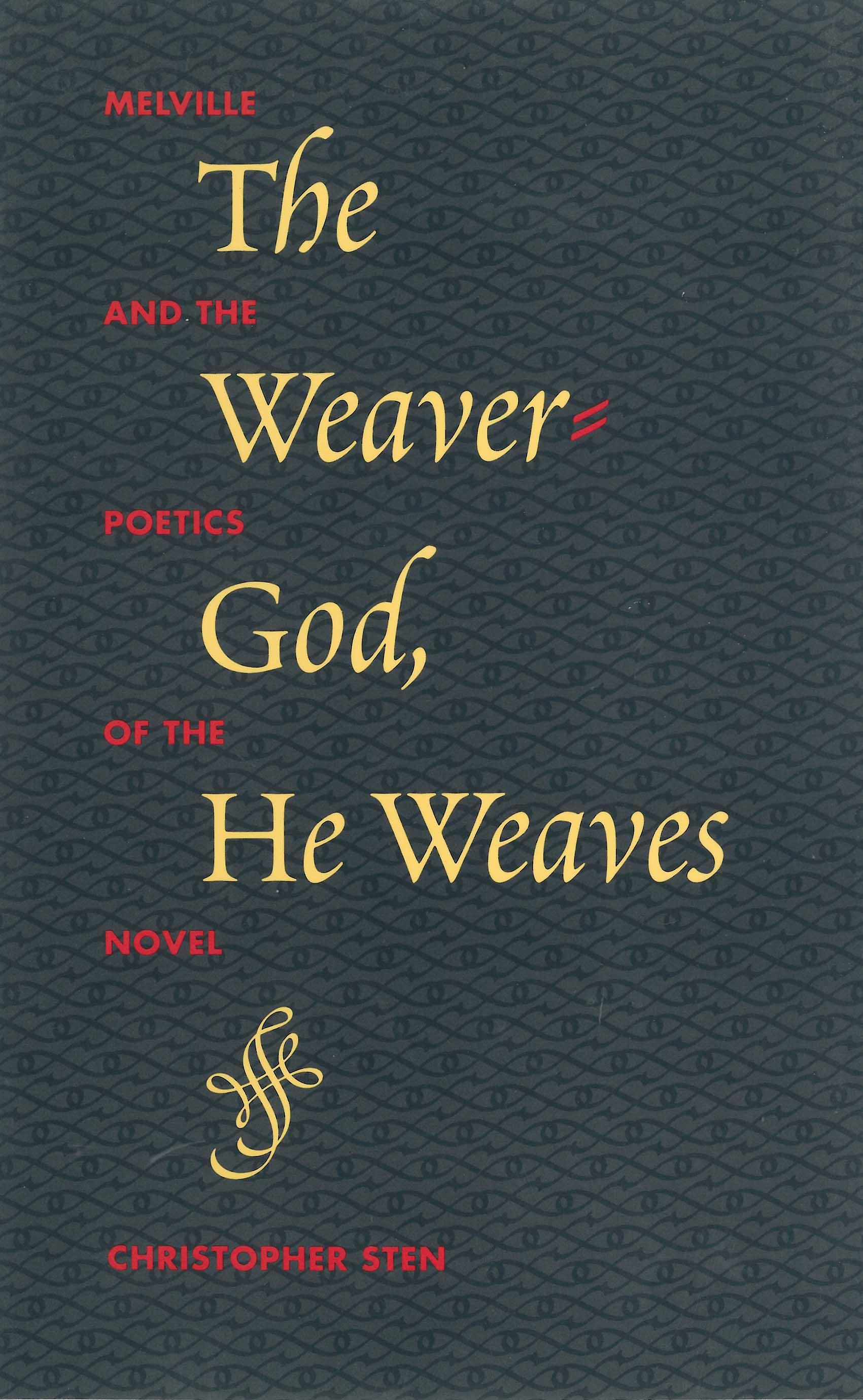
Melville has long been regarded as an author of raw genius who knew, or cared, little about the art of the novel, and even harbored hostility toward its conventions. In The Weaver-God, He Weaves, Christopher Sten sets out to correct this widespread view, showing not only what Melville knew about the novelist’s craft but how he appropriated and transformed a whole series of distinct genres: Typee is presented in the context of the popular romance, with its paired themes of sex and violence; Omoo is viewed in the framework of early Spanish and later French examples of the picaresque novel; and Mardi is seen as an instance of the once widely popular genre of the imaginary voyage. Sten also reveals how Melville radically transformed certain existing genres—the epic novel in Moby-Dick and the historical novel in Israel Potter—or forged profound new directions for genres still in their early stages—the psychological novel in Pierre and the experimental novel in the Confidence-Man. Sten speculates that it is because Melville was so idiosyncratic and inventive that so few critics have understood his close relationship tot eh various novelistic forms. While individual chapters provide discussions of the genre principles Melville employed, Sten’s introduction offers valuable theoretical isnight into the importance of genre study (encompassing recent work by Todorov, Hirsch, Hernadi, Jauss, Culler, Scholes, Fowler, Rosmarin, and others), both in the evaluation of literary texts and in the still more fundamental enterprise of determining their meaning. The Weaver-God, He Weaves thus exposes for the first time the extent of Melville’s contribution to the novel. This work will be of interest to readers of Melville, 19th-century American literature, literature of the sea, experimental fiction, and to those who work in the field of genre studies.
Before Memmo my notes were scattered across PDFs. Now a workspace pulls everything into one place — I see exactly what's still left to study.
Memmo's summaries are gold before exams. I don't have to re-read 800 pages two weeks before — just the important parts.
The AI chat has saved me the night before an exam more than once. I just keep asking until I get it — no waiting on a study group to reply.
The quizzes hit exactly what I need to know. Memmo tracks what I get stuck on — so I only practice what's worth it.
Flashcards with spaced repetition are magic. Memmo knows when I'm about to forget something and brings it back.
The AI podcasts are my favorite. I listen on my way to school and get a recap without sitting at a computer.

Handbok i kvalitativa metoder
281 kr

Hållbar utveckling: en introduktion för ingenjörer och andra problemlösare
334 kr

Brymans Samhällsvetenskapliga metoder
390 kr

Projektledning
491 kr

Den orättvisa hälsan: om socioekonomiska skillnader i hälsa och livslängd
326 kr

Vetenskapsteori för nybörjare
196 kr

Organizational Leadership
429 kr

På väg mot läraryrket
172 kr

Det sociala livet i skolan: Socialpsykologiska perspektiv
253 kr

Betygsättningens didaktik
151 kr

Personality
402 kr

Studying Leadership
404 kr

Managing Innovation
477 kr

Introduktion till samhällsvetenskaplig metod
347 kr

The Psychology of Sex and Gender
698 kr

Evidens och kunskap för socialt arbete
207 kr

Introduction to Leadership
605 kr