
Before Memmo my notes were scattered across PDFs. Now a workspace pulls everything into one place — I see exactly what's still left to study.
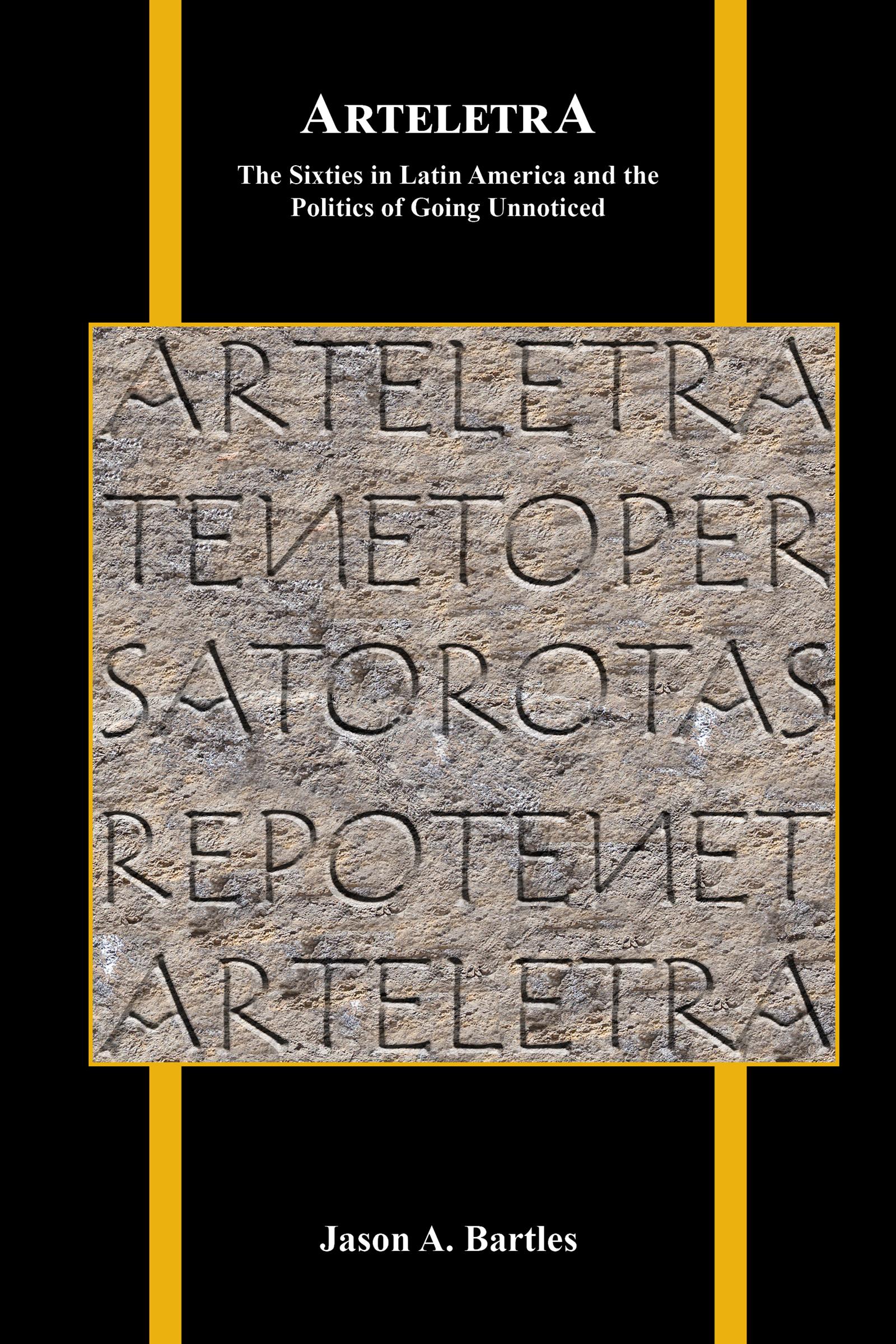
ArteletrA analyzes the Sixties in Latin America in order to revisit the core claim of literary and cultural studies to political relevancy in the contemporary world: the task of making visible the invisible. Though visibility can secure rights for the disenfranchised, it also risks subjecting them to the biopolitical and capitalist arrangements of space. What is at stake in this book is a series of aesthetic and ethical tools for engaging in politics—defined here as the potential to disagree—without first passing through visibility. These tools cohere around a practice Bartles calls “the politics of going unnoticed,” which he derives from an archive of three noteworthy, though under-appreciated, authors who wrote during the Sixties: Calvert Casey (1924–69), Juan Filloy (1894–2000), and Armonía Somers (1914–94). For the first time ever, Casey, Filloy, and Somers are put in dialogue with one another to further demonstrate the unique contributions of Latin American writers to contemporary debates about the crossroads of literatures and politics. What unites them is their shared investment in stories about those who go unnoticed. As a practice, going unnoticed creates space and opportunities for queer, rural, and female subjects, among others, to step back from unjust institutions. As a political discourse, going unnoticed deactivates the binary structures of biopolitics (e.g., visible/invisible, pure/filthy, friend/enemy) that divide humans from one another in the service of power and economic inequality. Though the politics of going unnoticed was ignored during the Sixties for its apparent individualism, these three writers work through alternatives to the politics of visibility that has animated political discourse on the left for the last half-century. More than a self-interested critique, going unnoticed opens new possibilities for engaging in the messy business of politics while imagining and creating better communities.
Before Memmo my notes were scattered across PDFs. Now a workspace pulls everything into one place — I see exactly what's still left to study.
Memmo's summaries are gold before exams. I don't have to re-read 800 pages two weeks before — just the important parts.
The AI chat has saved me the night before an exam more than once. I just keep asking until I get it — no waiting on a study group to reply.
The quizzes hit exactly what I need to know. Memmo tracks what I get stuck on — so I only practice what's worth it.
Flashcards with spaced repetition are magic. Memmo knows when I'm about to forget something and brings it back.
The AI podcasts are my favorite. I listen on my way to school and get a recap without sitting at a computer.

Handbok i kvalitativa metoder
281 kr

Hållbar utveckling: en introduktion för ingenjörer och andra problemlösare
334 kr

Brymans Samhällsvetenskapliga metoder
390 kr

Projektledning
491 kr

Den orättvisa hälsan: om socioekonomiska skillnader i hälsa och livslängd
326 kr

Vetenskapsteori för nybörjare
196 kr

Organizational Leadership
429 kr

På väg mot läraryrket
172 kr

Det sociala livet i skolan: Socialpsykologiska perspektiv
253 kr

Betygsättningens didaktik
151 kr

Personality
402 kr

Studying Leadership
404 kr

Managing Innovation
477 kr

Introduktion till samhällsvetenskaplig metod
347 kr

The Psychology of Sex and Gender
698 kr

Evidens och kunskap för socialt arbete
207 kr

Introduction to Leadership
605 kr