
Before Memmo my notes were scattered across PDFs. Now a workspace pulls everything into one place — I see exactly what's still left to study.
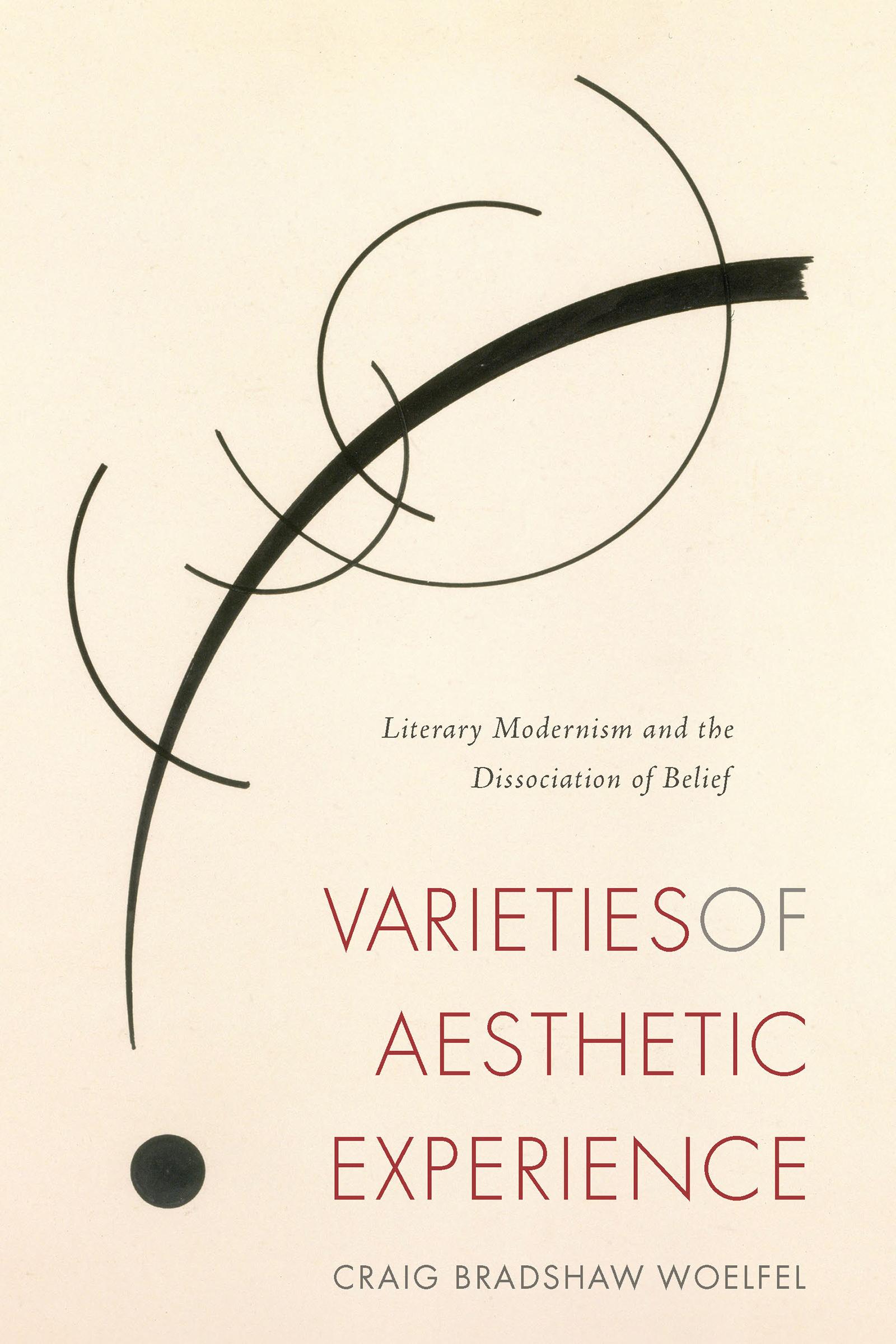
An exploration of belief as an experience, both secular and religious, through the study of major literary works
At the height of modernism in the 1920s, what did it mean to believe and how was it experienced? Craig Woelfel seeks to answer this pivotal question in Varieties of Aesthetic Experience: Literary Modernism and Dissociation of Belief, a groundbreaking exploration of the relationship between secular modernity and religious engagement.
Woelfel hinges his argument on the unlikely comparison of two revered modern writers: T. S. Eliot and E. M. Forster. They had vastly different experiences with religion, as Eliot converted to Christianity later in life and Forster became a steadfast nonbeliever over time, but Woelfel contends that their stories offer a compelling model for belief as broken and ambivalent rather than constant. Narratives of faith—its loss or gain—are no longer linear but instead are just as fractured and varied as the modernists themselves. Drawing from Eliot's and Forster's major and minor creative and critical works, Woelfel makes the case for a "dissociation of belief" during the modern era—a separation of emotional and spiritual religious experience from its reduction to forms. He contextualizes belief in the modern era alongside modernist religious studies scholarship and current secularization theory, with particular attention to Charles Taylor's A Secular Age, paving the way for a more nuanced understanding of religious engagement at the time.
In Varieties of Aesthetic Experience, Woelfel considers major literary works—including Eliot's The Waste Land and Forster's A Passage to India—as well as the Cambridge Clark Lectures and previously unstudied personal writings from both authors. The volume revolves around a line from Eliot himself, from a lecture in which he said that he wanted "to see art, and to see it whole." Rather than excluding belief from the conversation, Woelfel contends that modernist art can become a critical liminal space for exploring what it means to believe in a secular age.
Before Memmo my notes were scattered across PDFs. Now a workspace pulls everything into one place — I see exactly what's still left to study.
Memmo's summaries are gold before exams. I don't have to re-read 800 pages two weeks before — just the important parts.
The AI chat has saved me the night before an exam more than once. I just keep asking until I get it — no waiting on a study group to reply.
The quizzes hit exactly what I need to know. Memmo tracks what I get stuck on — so I only practice what's worth it.
Flashcards with spaced repetition are magic. Memmo knows when I'm about to forget something and brings it back.
The AI podcasts are my favorite. I listen on my way to school and get a recap without sitting at a computer.

Handbok i kvalitativa metoder
281 kr

Hållbar utveckling: en introduktion för ingenjörer och andra problemlösare
334 kr

Brymans Samhällsvetenskapliga metoder
390 kr

Projektledning
491 kr

Den orättvisa hälsan: om socioekonomiska skillnader i hälsa och livslängd
326 kr

Organizational Leadership
429 kr

Vetenskapsteori för nybörjare
196 kr

På väg mot läraryrket
172 kr

Det sociala livet i skolan: Socialpsykologiska perspektiv
253 kr

Betygsättningens didaktik
151 kr

Personality
402 kr

Studying Leadership
404 kr

Managing Innovation
477 kr

Introduktion till samhällsvetenskaplig metod
347 kr

The Psychology of Sex and Gender
698 kr

Evidens och kunskap för socialt arbete
207 kr

Introduction to Leadership
605 kr