
Before Memmo my notes were scattered across PDFs. Now a workspace pulls everything into one place — I see exactly what's still left to study.
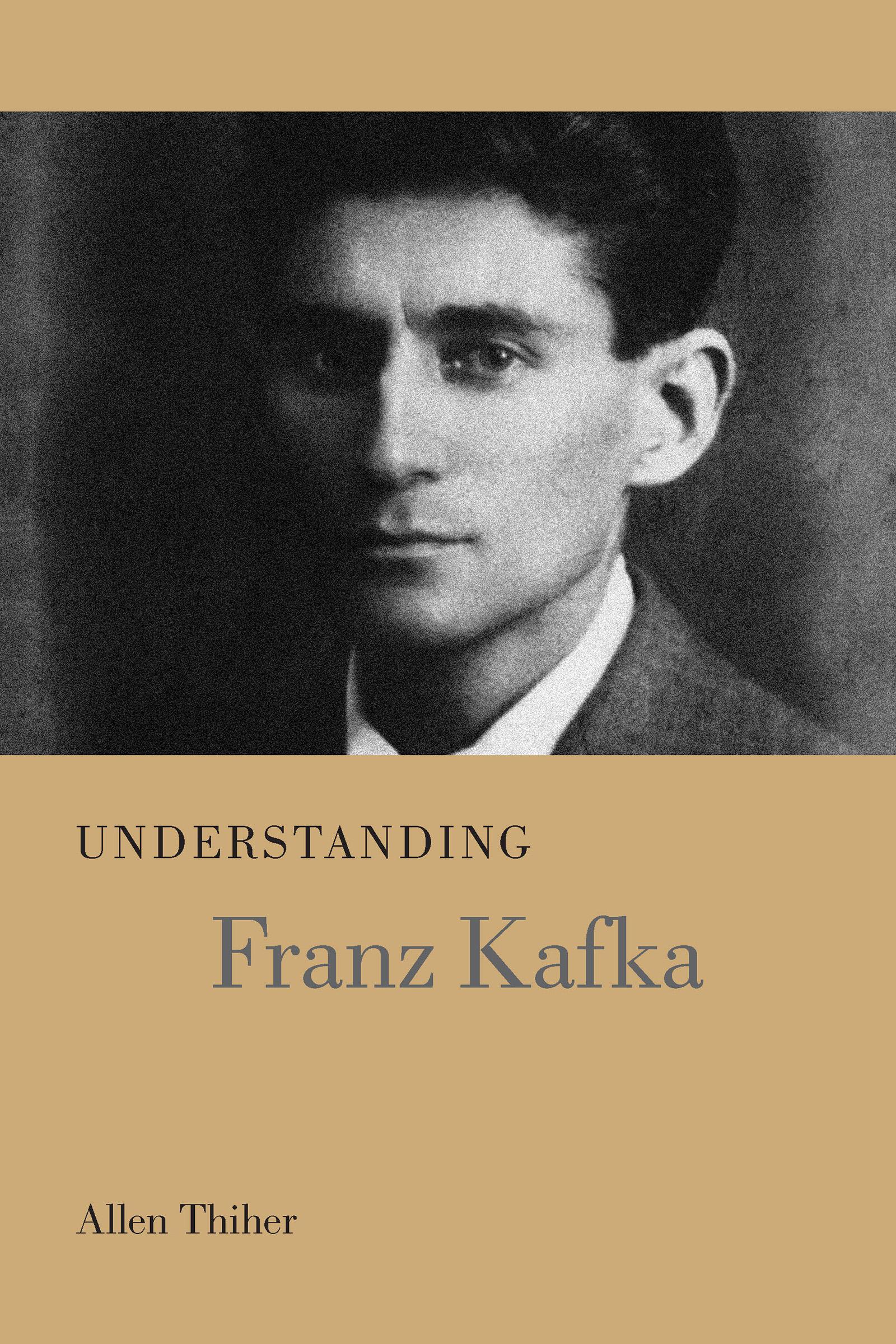
A chronological analysis of the various phases of this eccentric writer's short life and his quest for meaning
Franz Kafka is without question one of the most influential writers of the twentieth century despite the fact that much of his work remained unpublished when he died at a relatively young age in 1924. Kafka's eccentric methods of composition and his diffident attitude toward publishing left most of his writing to be edited and published after his death by his literary executor, Max Brod.
In Understanding Franz Kafka, Allen Thiher addresses the development of Kafka's work by analyzing it in terms of its chronological unfolding, emphasizing the various phases in Kafka's life that can be discerned in his constant quest to find a meaning for his writing. Thiher also shows that Kafka's work, frequently self-referential, explores the ways literature can have meaning in a world in which writing is a dubious activity.
After outlining Kafka's life using new biographical information, Thiher examines Kafka's first attempts at writing, often involving nearly farcical experiments. The study then shows how Kafka's work developed through twists and turns, beginning with the breakthrough stories "The Judgment" and "The Metamorphosis," continuing with his first attempt at a novel with Amerika, and followed by Kafka's shifting back and forth between short fiction and two other unpublished novels, The Trial and The Castle.
Thiher also calls on Kafka's notebooks and diaries. These help demonstrate that Kafka never stopped experimenting in his attempt to find a literary form that might satisfy his desire to create some kind of transcendental literary text in an era in which the transcendent is at best an object of nostalgia or of comic derision. In short, Thiher contends, Kafka constantly sought the grounds for writing in a world in which all appears groundless.
Before Memmo my notes were scattered across PDFs. Now a workspace pulls everything into one place — I see exactly what's still left to study.
Memmo's summaries are gold before exams. I don't have to re-read 800 pages two weeks before — just the important parts.
The AI chat has saved me the night before an exam more than once. I just keep asking until I get it — no waiting on a study group to reply.
The quizzes hit exactly what I need to know. Memmo tracks what I get stuck on — so I only practice what's worth it.
Flashcards with spaced repetition are magic. Memmo knows when I'm about to forget something and brings it back.
The AI podcasts are my favorite. I listen on my way to school and get a recap without sitting at a computer.

Handbok i kvalitativa metoder
281 kr

Hållbar utveckling: en introduktion för ingenjörer och andra problemlösare
334 kr

Brymans Samhällsvetenskapliga metoder
390 kr

Projektledning
491 kr

Den orättvisa hälsan: om socioekonomiska skillnader i hälsa och livslängd
326 kr

Organizational Leadership
429 kr

Vetenskapsteori för nybörjare
196 kr

På väg mot läraryrket
172 kr

Det sociala livet i skolan: Socialpsykologiska perspektiv
253 kr

Betygsättningens didaktik
151 kr

Personality
402 kr

Studying Leadership
404 kr

Managing Innovation
477 kr

Introduktion till samhällsvetenskaplig metod
347 kr

The Psychology of Sex and Gender
698 kr

Evidens och kunskap för socialt arbete
207 kr

Introduction to Leadership
605 kr