
Before Memmo my notes were scattered across PDFs. Now a workspace pulls everything into one place — I see exactly what's still left to study.
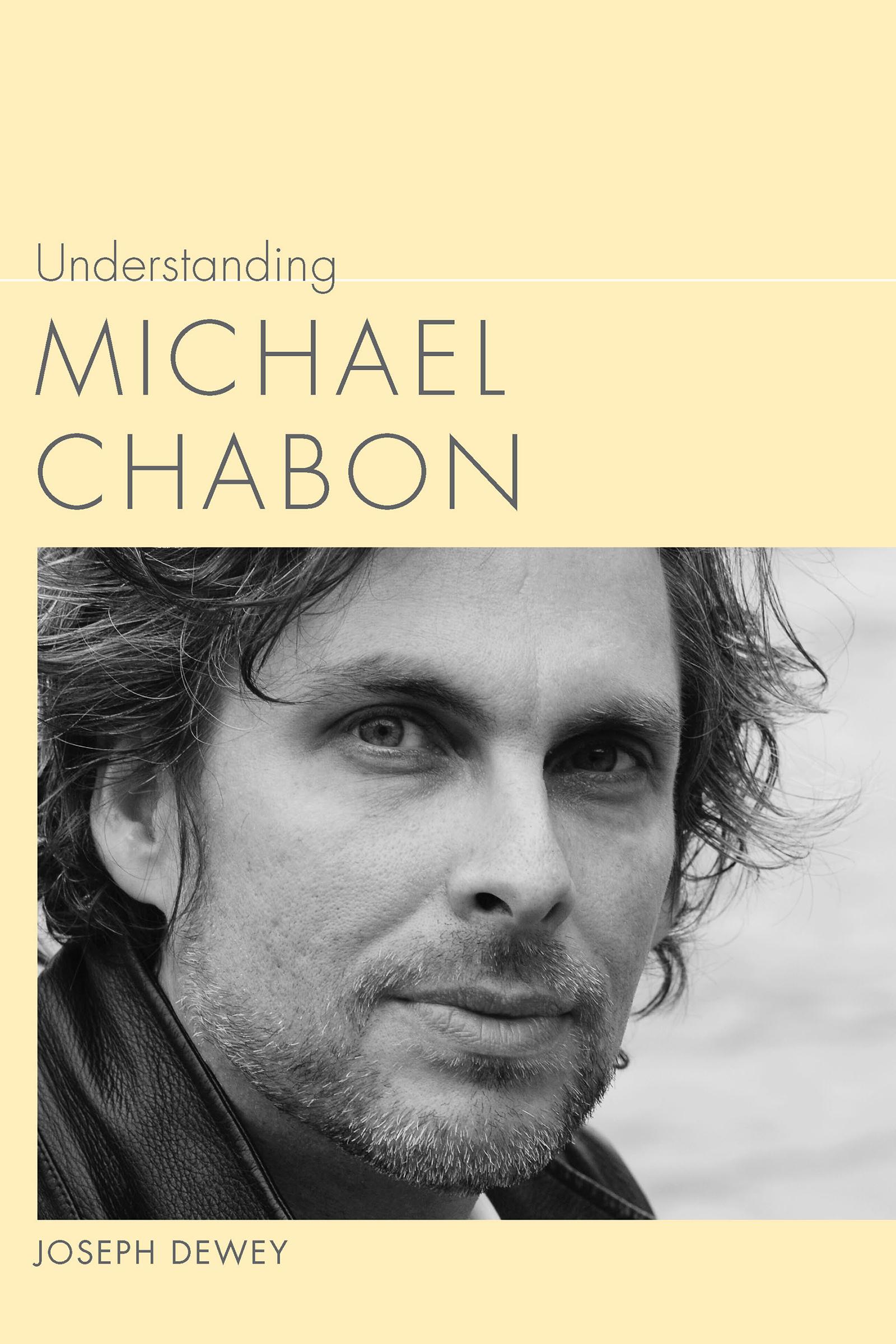
An exploration of Chabon's career-long fascination with the consolations—and dangers—of the imagination
Pulitzer Prize-winning author Michael Chabon has emerged as one of the most daring writers of American fiction in the post-Pynchon era. Joseph Dewey examines how Chabon's narratives have sought to bring together the defining elements of the two principal expressions of the American narrative that his generation inherited: the formal extravagances of postmodernism and the compelling storytelling of psychological realism.
Like the audacious, self-conscious excesses of Pynchon and his postmodern disciples, Dewey argues, Chabon's fictions are extravagant, often ironic, experiments into form animated by dense verbal and linguistic energy. As with the probing texts of psychological realism by Updike and his faithful, Chabon's fictions center on keenly drawn, recognizable characters caught up in familiar, heartbreaking dilemmas; enthralling storylines compelled by suspense, enriched with suggestive symbols; and humane themes about love and death, work and family, and sexuality and religion.
Evolving over three decades, this hybrid fiction has made Chabon not only one of the most widely read composers of serious fiction of his guild but one of the most critically respected writers as well, thus positioning Chabon as a representative voice of the generation. Dewey's study, the first to examine the full breadth of Chabon's fiction from his landmark debut novel, The Mysteries of Pittsburgh, to his controversial 2012 best seller, Telegraph Avenue, places Chabon's fictional sensibility, for all its hipness, within what has been the defining theme of American literature since the provocative romances of Hawthorne and Melville: the anxious tension between escape and engagement; between the sweet, centripetal pull of the redemptive imagination as a splendid, if imperfect, engine of retreat and the harsh, centrifugal pull of real life itself, recklessly deformed by the crude handiwork of surprise and chance and unable to coax even the simplest appearance of logic.
Before Memmo my notes were scattered across PDFs. Now a workspace pulls everything into one place — I see exactly what's still left to study.
Memmo's summaries are gold before exams. I don't have to re-read 800 pages two weeks before — just the important parts.
The AI chat has saved me the night before an exam more than once. I just keep asking until I get it — no waiting on a study group to reply.
The quizzes hit exactly what I need to know. Memmo tracks what I get stuck on — so I only practice what's worth it.
Flashcards with spaced repetition are magic. Memmo knows when I'm about to forget something and brings it back.
The AI podcasts are my favorite. I listen on my way to school and get a recap without sitting at a computer.

Handbok i kvalitativa metoder
281 kr

Hållbar utveckling: en introduktion för ingenjörer och andra problemlösare
334 kr

Brymans Samhällsvetenskapliga metoder
390 kr

Projektledning
491 kr

Den orättvisa hälsan: om socioekonomiska skillnader i hälsa och livslängd
326 kr

Organizational Leadership
429 kr

Vetenskapsteori för nybörjare
196 kr

På väg mot läraryrket
172 kr

Det sociala livet i skolan: Socialpsykologiska perspektiv
253 kr

Betygsättningens didaktik
151 kr

Personality
402 kr

Studying Leadership
404 kr

Managing Innovation
477 kr

Introduktion till samhällsvetenskaplig metod
347 kr

The Psychology of Sex and Gender
698 kr

Evidens och kunskap för socialt arbete
207 kr

Introduction to Leadership
605 kr