
Before Memmo my notes were scattered across PDFs. Now a workspace pulls everything into one place — I see exactly what's still left to study.
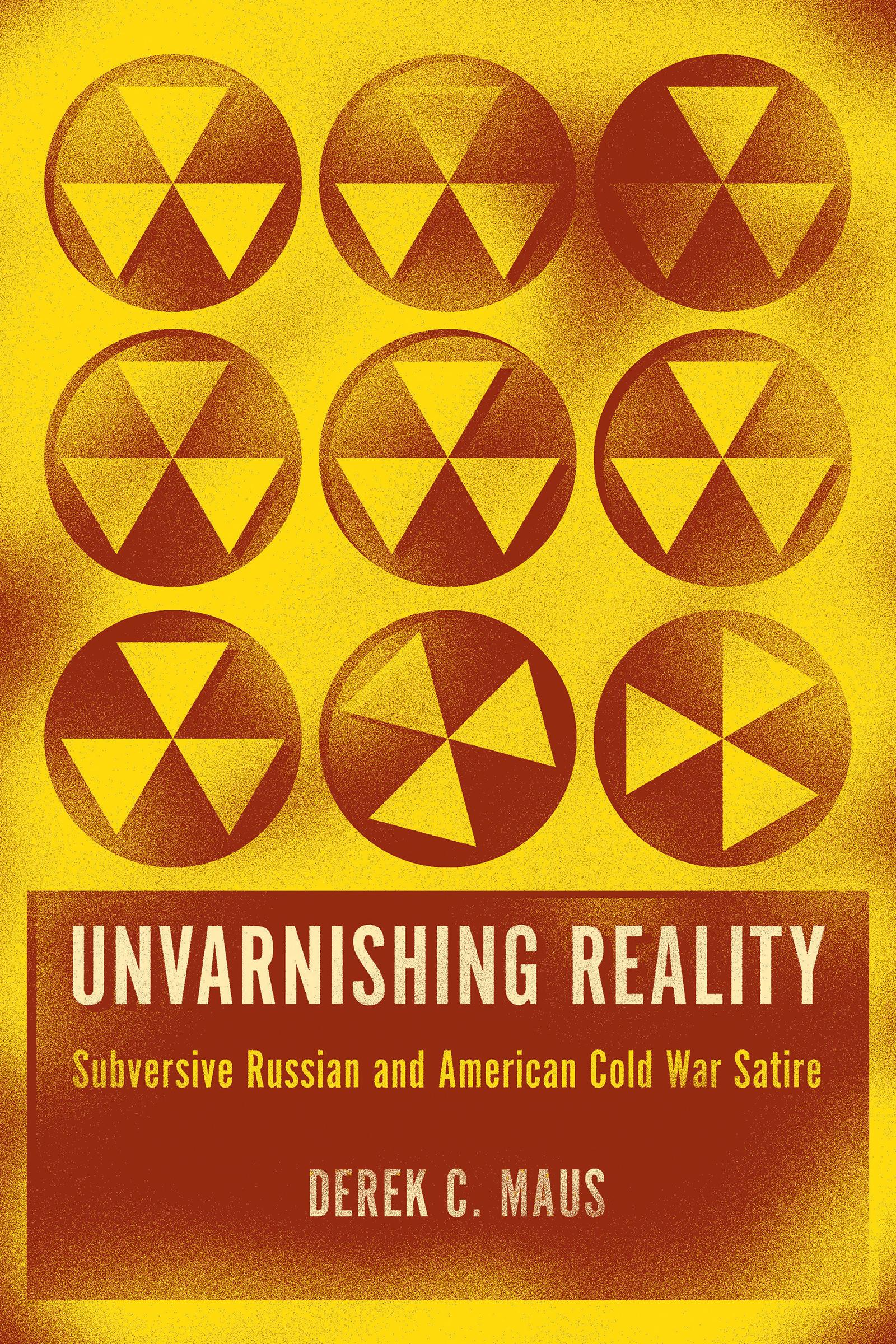
An interdisciplinary approach to understanding superpower satire
Unvarnishing Reality draws original insight to the literature, politics, history, and culture of the cold war by closely examining the themes and goals of American and Russian satirical fiction. As Derek C. Maus illustrates, the paranoia of nuclear standoff provided a subversive storytelling mode for authors from both nations—including Thomas Pynchon, Robert Coover, John Barth, Walker Percy, Don DeLillo, Kurt Vonnegut Jr., Vasily Aksyonov, Yuz Aleshkovsky, Alexander Zinoviev, Vladimir Voinovich, Fazil Iskander, and Sasha Sokolov.
Maus surveys the background of each nation's culture, language, sociology, politics, and philosophy to map the foundation on which cold war satire was built. By highlighting common themes of utopianism, technology, and propaganda, Maus effectively shows the ultimate motive of satirists on both sides was to question the various forces contributing to the cold war and to expose the absurdity of the continuous tension that pulsed between the United States and the Soviet Union for nearly half a century. Although cold war literature has been studied extensively, few critics have focused so keenly on comparisons of satirical fictions by Russian and American writers that condemn and subvert the polarizing ideologies inherent in superpower rivalry. Such a comparison reveals thematic and structural similarities that transcend specific national and cultural origins. In considering these works together, Maus locates a thoroughgoing humanistic refutation of the cold war and its operative doctrines as well as a range of proposed alternatives. Just as the cold war combatants ultimately reconciled in 1991 with the fall of the Soviet Union, Maus seeks to bring these two literary canons together now. Their thematic scope transcends cultural differences, and, as Maus demonstrates, these writers saw that there was not only the atomic bomb to fear, but also the dangers of complete national militarization and the constant polarizing threat of emergency. Thus their cold war critiques still resonate today and invite further comparative studies such as this one.
Before Memmo my notes were scattered across PDFs. Now a workspace pulls everything into one place — I see exactly what's still left to study.
Memmo's summaries are gold before exams. I don't have to re-read 800 pages two weeks before — just the important parts.
The AI chat has saved me the night before an exam more than once. I just keep asking until I get it — no waiting on a study group to reply.
The quizzes hit exactly what I need to know. Memmo tracks what I get stuck on — so I only practice what's worth it.
Flashcards with spaced repetition are magic. Memmo knows when I'm about to forget something and brings it back.
The AI podcasts are my favorite. I listen on my way to school and get a recap without sitting at a computer.

Handbok i kvalitativa metoder
281 kr

Hållbar utveckling: en introduktion för ingenjörer och andra problemlösare
334 kr

Brymans Samhällsvetenskapliga metoder
390 kr

Projektledning
491 kr

Den orättvisa hälsan: om socioekonomiska skillnader i hälsa och livslängd
326 kr

Vetenskapsteori för nybörjare
196 kr

Organizational Leadership
429 kr

På väg mot läraryrket
172 kr

Det sociala livet i skolan: Socialpsykologiska perspektiv
253 kr

Betygsättningens didaktik
151 kr

Personality
402 kr

Studying Leadership
404 kr

Managing Innovation
477 kr

Introduktion till samhällsvetenskaplig metod
347 kr

The Psychology of Sex and Gender
698 kr

Evidens och kunskap för socialt arbete
207 kr

Introduction to Leadership
605 kr