
Before Memmo my notes were scattered across PDFs. Now a workspace pulls everything into one place — I see exactly what's still left to study.
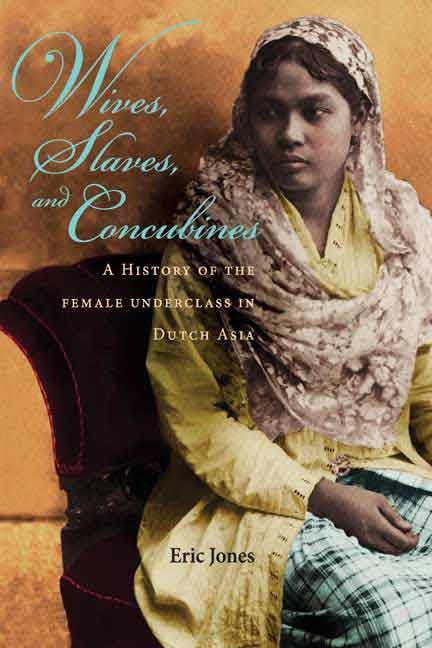
Wives, Slaves, and Concubines argues that Dutch colonial practices and law created a new set of social and economic divisions in Batavia-Jakarta, modern-day Indonesia, to deal with difficult realities in Southeast Asia. Jones uses compelling stories from ordinary Asian women to explore the profound structural changes occurring at the end of the early colonial period—changes that helped birth the modern world order. Based on previously untapped criminal proceedings and testimonies by women who appeared before the Dutch East India Company's Court of Alderman, this fascinating study details the ways in which demographic and economic realities transformed the social and legal landscape of eighteenth-century Batavia-Jakarta. Southeast Asian women played an inordinately important role in the functioning of the early modern Asia Trade and in the short- and long-term operations of the Dutch East India Company (VOC). Southeast Asia was a place where most individuals operated within an intricate web of multiple, fluid, situational, and reciprocal social relationships ranging from dependence to bondedness to slavery. The eighteenth century represents an important turning point: the relatively open and autonomous Asia Trade that prompted Columbus to set sail had begun to give way to an age of high imperialism and European economic hegemony. How did these changes affect life for ordinary women in early modern Dutch Asia, and how did the transformations wrought by Dutch colonialism alter their lives? The VOC created a legal division that favored members of mixed VOC families, those in which Asian women married men employed by the VOC. Thus, employment—not race—became the path to legal preference, a factor that disadvantaged the rest of the Asian women. In short, colonialism created a new underclass in Asia, one that had a particularly female cast. By the latter half of the eighteenth century, an increasingly operational dichotomy of slave and free supplanted an otherwise fluid system of reciprocal bondedness. The inherent divisions of this new system engendered social friction, especially as the emergent early modern economic order demanded new, tractable forms of labor. Dutch domestic law gave power to female elites in Dutch Asia, but it left the majority of women vulnerable to the more privileged on both sides of this legal divide. Slaves fled and violence erupted when traditional expectations of social mobility collided with new demands from the masters and the state.
Before Memmo my notes were scattered across PDFs. Now a workspace pulls everything into one place — I see exactly what's still left to study.
Memmo's summaries are gold before exams. I don't have to re-read 800 pages two weeks before — just the important parts.
The AI chat has saved me the night before an exam more than once. I just keep asking until I get it — no waiting on a study group to reply.
The quizzes hit exactly what I need to know. Memmo tracks what I get stuck on — so I only practice what's worth it.
Flashcards with spaced repetition are magic. Memmo knows when I'm about to forget something and brings it back.
The AI podcasts are my favorite. I listen on my way to school and get a recap without sitting at a computer.

Handbok i kvalitativa metoder
281 kr

Hållbar utveckling: en introduktion för ingenjörer och andra problemlösare
334 kr

Brymans Samhällsvetenskapliga metoder
390 kr

Projektledning
491 kr

Den orättvisa hälsan: om socioekonomiska skillnader i hälsa och livslängd
326 kr

Vetenskapsteori för nybörjare
196 kr

Organizational Leadership
429 kr

På väg mot läraryrket
172 kr

Det sociala livet i skolan: Socialpsykologiska perspektiv
253 kr

Betygsättningens didaktik
151 kr

Personality
402 kr

Studying Leadership
404 kr

Managing Innovation
477 kr

Introduktion till samhällsvetenskaplig metod
347 kr

The Psychology of Sex and Gender
698 kr

Evidens och kunskap för socialt arbete
207 kr

Introduction to Leadership
605 kr