
Before Memmo my notes were scattered across PDFs. Now a workspace pulls everything into one place — I see exactly what's still left to study.
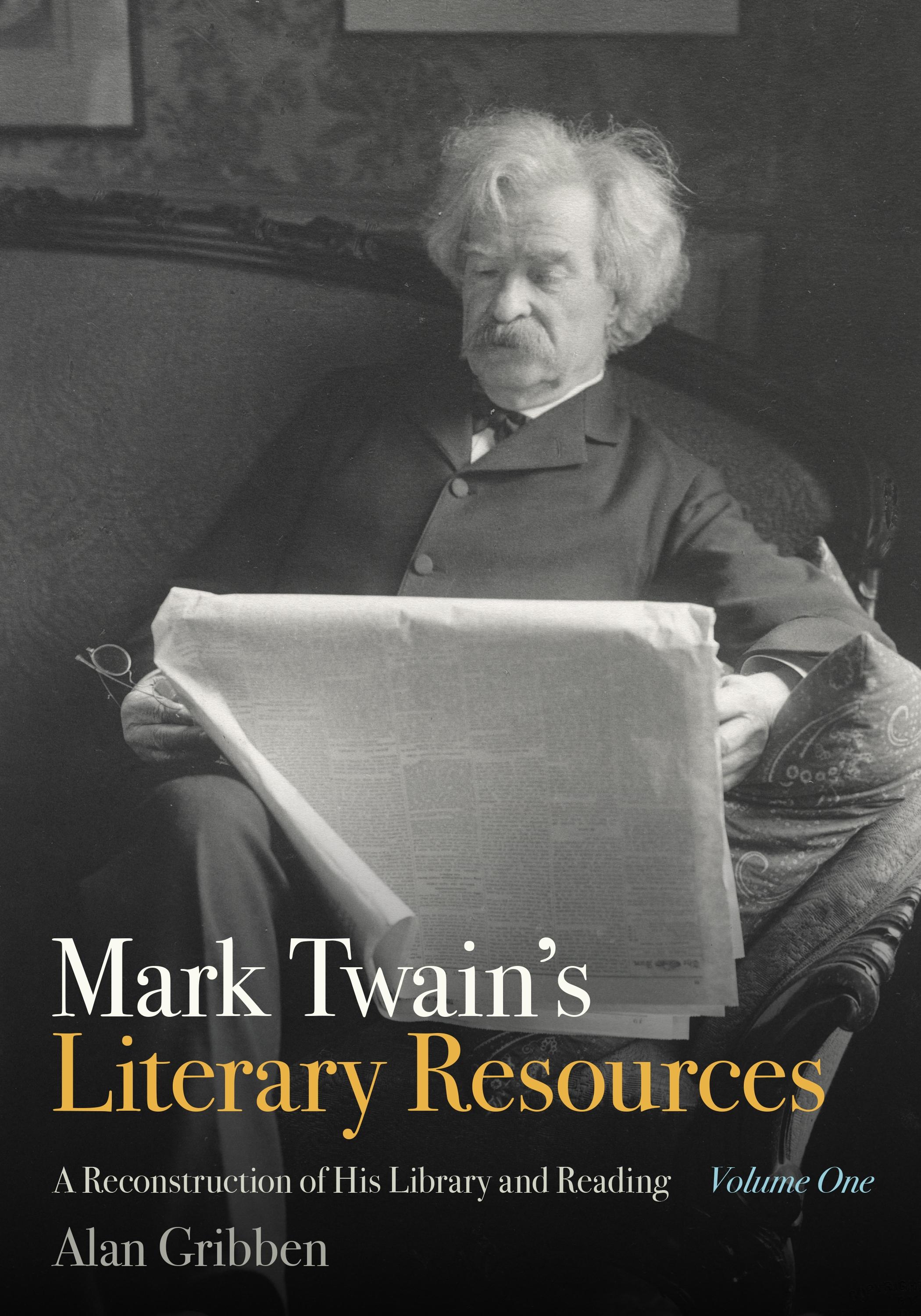
This first installment of the new multi-volume Mark Twain’s Literary Resources: A Reconstruction of His Library and Reading recounts Dr. Alan Gribben’s fascinating 45-year search for surviving volumes from the large library assembled by Twain and his family. That collection of more than 3,000 titles was dispersed through impromptu donations and abrupt public auctions, but over the years nearly a thousand volumes have been recovered. Gribben’s research also encompasses many hundreds of other books, stories, essays, poems, songs, plays, operas, newspapers, and magazines with which Mark Twain was demonstrably familiar.
Gribben published the original edition of Mark Twain’s Library in 1980. Hailed by the eminent Twain scholar Louis J. Budd as “a superb job that will last for generations,” the work nevertheless soon went out of print and for three decades has been a hard-to-find item on the rare book market. Meanwhile, over a distinguished career of writing, teaching, and research on Twain, Gribben continued to annotate, revise, and expand the content such that it has become his life’s masterwork. Thoroughly revised, enlarged, and retitled, Mark Twain’s Literary Resources: A Reconstruction of His Library and Reading now reappears, to greatly expand our comprehension of the incomparable author’s reading tastes and influences.
Volume I traces Twain’s extensive use of public libraries. It identifies Twain’s favorite works, but also reveals his strong dislikes—Chapter 10 is devoted to his “Library of Literary Hogwash,” specimens of atrocious poetry and prose that he delighted in ridiculing. In describing Twain’s habit of annotating his library books, Gribben reveals his methods of detecting forged autographs and marginal notes that have fooled booksellers, collectors, and libraries. The volume’s 25 chapters trace from various perspectives the patterns of Twain’s voracious reading and relate what he read to his own literary outpouring. A “Critical Bibliography” evaluates the numerous scholarly books and articles that have studied Twain’s reading, and an index guides readers to the volume’s diverse subjects.
Twain enjoyed cultivating a public image as a largely unread natural talent; on occasion he even denied being acquainted with titles that he had owned, inscribed, and annotated in his own personal library. He convinced many friends and interviewers that he had no appetite for fiction, poetry, drama, or belles-lettres, yet Gribben reveals volumes of evidence to the contrary. He examines this unlettered pose that Twain affected and speculates about the reasons behind it. In reality, whether Twain was memorizing the classic writings of ancient Rome or the more contemporary works of Milton, Byron, Shelley, Dickens, and Tennyson—or, for that matter, quoting from the best-selling fiction and poetry of his day—he exhibited a lifelong hunger to overcome the brevity of his formal education. Several of Gribben’s chapters explore the connections between Twain’s knowledge of authors such as Malory, Shakespeare, Poe, and Browning, and his own literary works, group readings, and family activities.
Volumes II and III of Mark Twain’s Literary Resources: A Reconstruction of His Library and Reading will be released in 2019 and will deliver an “Annotated Catalog” arranged from A to Z, documenting in detail the staggering scope of Twain’s reading.
Before Memmo my notes were scattered across PDFs. Now a workspace pulls everything into one place — I see exactly what's still left to study.
Memmo's summaries are gold before exams. I don't have to re-read 800 pages two weeks before — just the important parts.
The AI chat has saved me the night before an exam more than once. I just keep asking until I get it — no waiting on a study group to reply.
The quizzes hit exactly what I need to know. Memmo tracks what I get stuck on — so I only practice what's worth it.
Flashcards with spaced repetition are magic. Memmo knows when I'm about to forget something and brings it back.
The AI podcasts are my favorite. I listen on my way to school and get a recap without sitting at a computer.

Handbok i kvalitativa metoder
281 kr

Hållbar utveckling: en introduktion för ingenjörer och andra problemlösare
334 kr

Brymans Samhällsvetenskapliga metoder
390 kr

Projektledning
491 kr

Den orättvisa hälsan: om socioekonomiska skillnader i hälsa och livslängd
326 kr

Vetenskapsteori för nybörjare
196 kr

Organizational Leadership
429 kr

På väg mot läraryrket
172 kr

Det sociala livet i skolan: Socialpsykologiska perspektiv
253 kr

Betygsättningens didaktik
151 kr

Personality
402 kr

Studying Leadership
404 kr

Managing Innovation
477 kr

Introduktion till samhällsvetenskaplig metod
347 kr

The Psychology of Sex and Gender
698 kr

Evidens och kunskap för socialt arbete
207 kr

Introduction to Leadership
605 kr