
Before Memmo my notes were scattered across PDFs. Now a workspace pulls everything into one place — I see exactly what's still left to study.
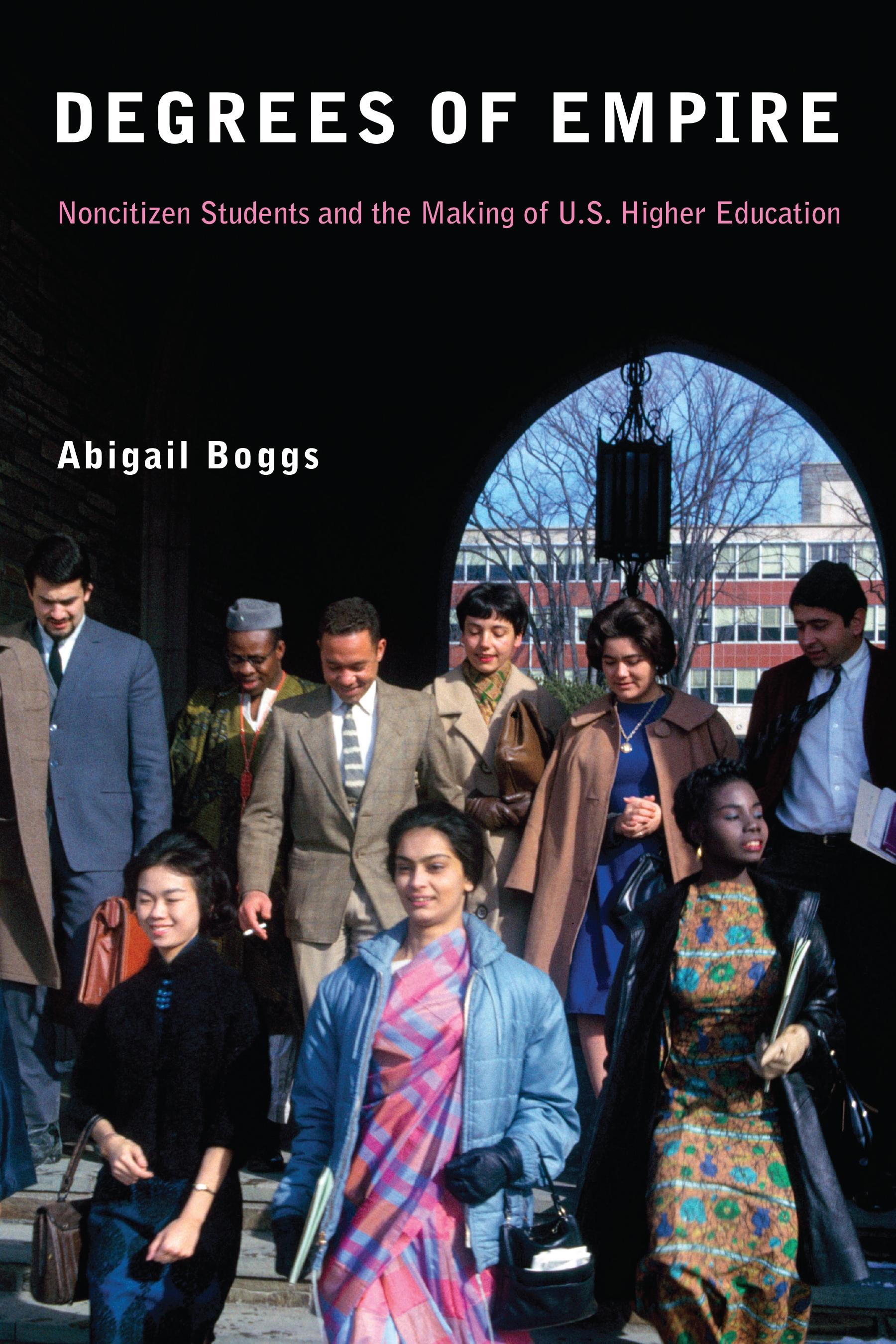
A sweeping history of how noncitizen students shaped U.S. universities
From colonial missionary schools to the globalized university of the twentieth century, U.S. higher education has long depended on students who were never meant to belong. Degrees of Empire tells the untold history of how noncitizen students—Indigenous youth, students from Asia, Africa, and the Caribbean, and others positioned outside the boundaries of citizenship—have been central to the making of American universities and the expansion of U.S. power.
Tracing the intertwined development of higher education, immigration law, and imperial governance from the seventeenth century through the mid-twentieth, Abigail Boggs shows how universities functioned as fundamental instruments of empire. Noncitizen students were recruited and educated under conditions of surveillance, restriction, and impermanence, trained to circulate knowledge, labor, and political ideals on behalf of the United States even as they were denied full political membership and exposed to constant threat of exclusion or deportation.
Drawing on archival records, immigration policy, institutional documents, and the writings of students themselves, Degrees of Empire demonstrates how universities helped produce racial hierarchies, manage populations, and naturalize liberal ideals of merit and mobility. By examining the figure of the noncitizen student genealogically across time, Boggs reveals a fundamental contradiction at the heart of U.S. higher education: institutions that present themselves as open and universal have long relied on selective inclusion structured by race, citizenship, and capital.
At a moment when immigration and higher education are once again sites of intense political struggle, this book offers a powerful rethinking of the American university—not as a neutral engine of opportunity, but as a central technology of empire and a contested space in which alternative futures may yet be imagined.
Before Memmo my notes were scattered across PDFs. Now a workspace pulls everything into one place — I see exactly what's still left to study.
Memmo's summaries are gold before exams. I don't have to re-read 800 pages two weeks before — just the important parts.
The AI chat has saved me the night before an exam more than once. I just keep asking until I get it — no waiting on a study group to reply.
The quizzes hit exactly what I need to know. Memmo tracks what I get stuck on — so I only practice what's worth it.
Flashcards with spaced repetition are magic. Memmo knows when I'm about to forget something and brings it back.
The AI podcasts are my favorite. I listen on my way to school and get a recap without sitting at a computer.

Handbok i kvalitativa metoder
281 kr

Hållbar utveckling: en introduktion för ingenjörer och andra problemlösare
334 kr

Brymans Samhällsvetenskapliga metoder
390 kr

Projektledning
491 kr

Den orättvisa hälsan: om socioekonomiska skillnader i hälsa och livslängd
326 kr

Organizational Leadership
429 kr

Vetenskapsteori för nybörjare
196 kr

På väg mot läraryrket
172 kr

Det sociala livet i skolan: Socialpsykologiska perspektiv
253 kr

Betygsättningens didaktik
151 kr

Personality
402 kr

Studying Leadership
404 kr

Managing Innovation
477 kr

Introduktion till samhällsvetenskaplig metod
347 kr

The Psychology of Sex and Gender
698 kr

Evidens och kunskap för socialt arbete
207 kr

Introduction to Leadership
605 kr