
Before Memmo my notes were scattered across PDFs. Now a workspace pulls everything into one place — I see exactly what's still left to study.
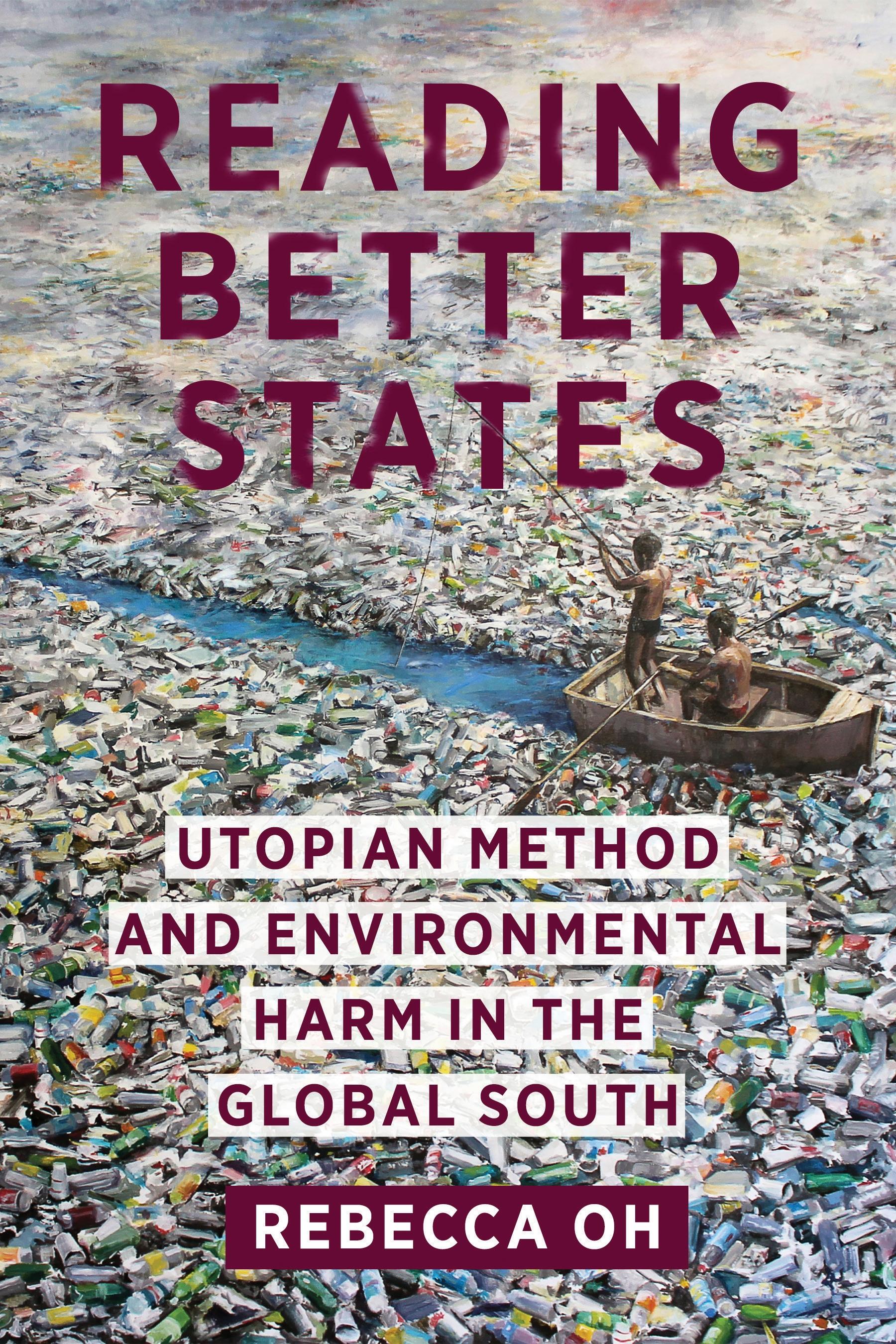
Reading Better States traces the persistence of desires for the postcolonial state in an era of environmental harms and climate catastrophe. As pollution, toxicity, drought, and flood increasingly threaten peoples and environments across the global South, postcolonial writers and ordinary citizens alike have not ceded their futures to the damaged presents they inhabit. Rather, Reading Better States shows how they turn to the state as a resource, imagining postcolonial states as powerful actors and calling upon them to intervene in processes like global capitalism and environmental racism, or to provide environmental protections and basic material necessities. These utopic possibilities are concrete rather than grand, limited and situated rather than totalizing. But they are no less utopic for being quotidian.
Reading Better States challenges the anti-statism prevalent in postcolonial studies and the environmental humanities, where states are predominantly defined through violence. Seeing postcolonial states beyond their bad surfaces requires a utopian method of reading, a way of seeing the state that reads its negativity against the grain for alternative possibilities. In Reading Better States the state is Janus-faced. It is a bad actor, but it is also a site of collective hopes and concrete utopian visions. Using a wide-ranging archive of novels, films, court decisions, legislation, poetry, and testimony, Reading Better States reveals the importance of environmental concrete utopias in the present and reconsiders the postcolonial state for its interventionist possibilities as well as its violence. It does this through a utopian method that, like concrete utopias themselves, attends to negativity while stretching beyond it, seeking out visions of surplus which exceed, even if they cannot escape, the damage and disappointment of the present earth.
Before Memmo my notes were scattered across PDFs. Now a workspace pulls everything into one place — I see exactly what's still left to study.
Memmo's summaries are gold before exams. I don't have to re-read 800 pages two weeks before — just the important parts.
The AI chat has saved me the night before an exam more than once. I just keep asking until I get it — no waiting on a study group to reply.
The quizzes hit exactly what I need to know. Memmo tracks what I get stuck on — so I only practice what's worth it.
Flashcards with spaced repetition are magic. Memmo knows when I'm about to forget something and brings it back.
The AI podcasts are my favorite. I listen on my way to school and get a recap without sitting at a computer.

Handbok i kvalitativa metoder
281 kr

Hållbar utveckling: en introduktion för ingenjörer och andra problemlösare
334 kr

Brymans Samhällsvetenskapliga metoder
390 kr

Projektledning
491 kr

Den orättvisa hälsan: om socioekonomiska skillnader i hälsa och livslängd
326 kr

Organizational Leadership
429 kr

Vetenskapsteori för nybörjare
196 kr

På väg mot läraryrket
172 kr

Det sociala livet i skolan: Socialpsykologiska perspektiv
253 kr

Betygsättningens didaktik
151 kr

Personality
402 kr

Studying Leadership
404 kr

Managing Innovation
477 kr

Introduktion till samhällsvetenskaplig metod
347 kr

The Psychology of Sex and Gender
698 kr

Evidens och kunskap för socialt arbete
207 kr

Introduction to Leadership
605 kr