
Before Memmo my notes were scattered across PDFs. Now a workspace pulls everything into one place — I see exactly what's still left to study.
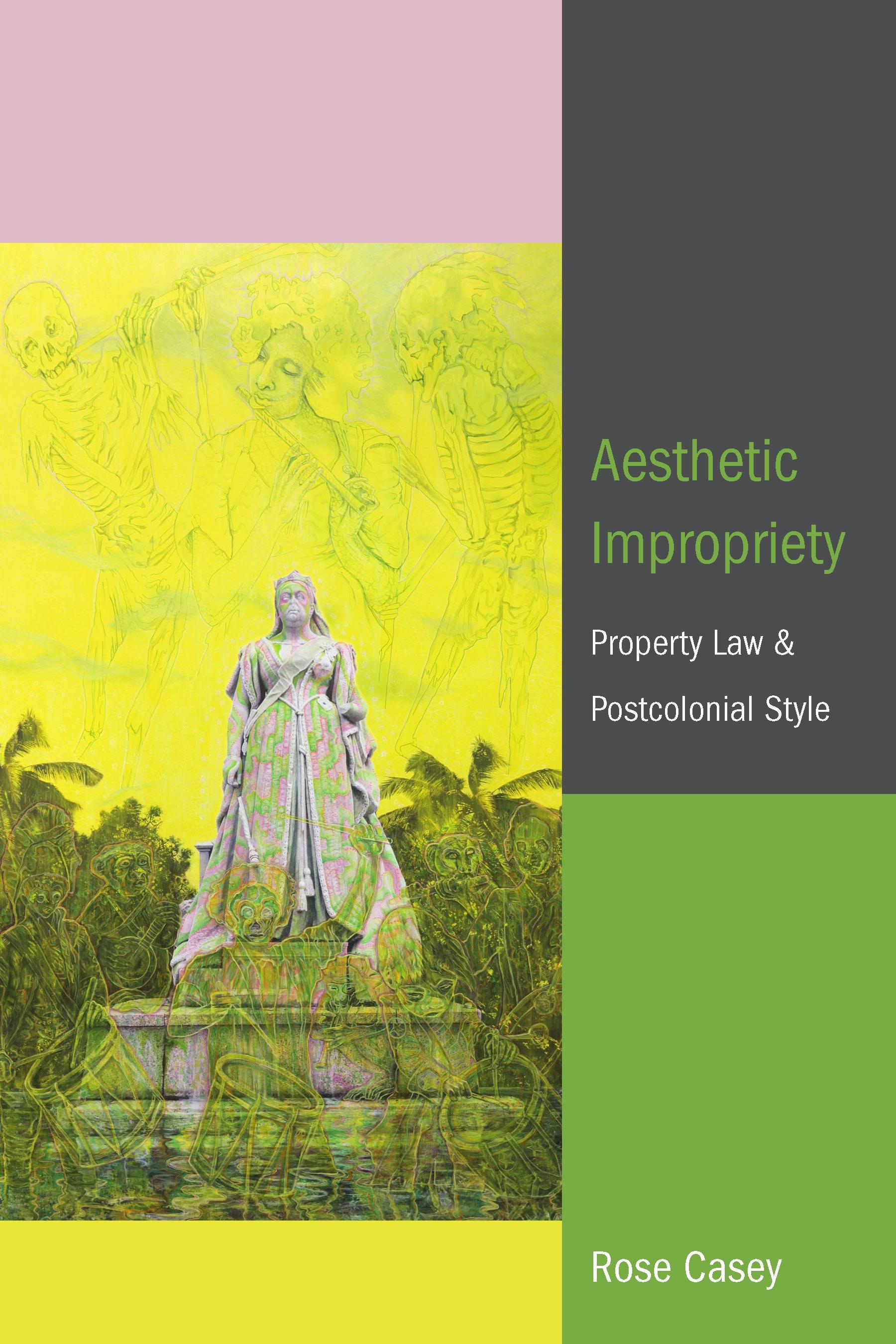
Across Africa, Asia, and the Americas, colonial Britain’s property laws are in the process of being transformed. Aesthetic Impropriety analyzes vanguard legal actions and literary innovations to reveal contemporary reforms to property law that are undoing law’s colonial legacies. Casey traces precise legal histories across distinct jurisdictions throughout the anglophone world, revealing the connection between land law and petroleum extraction in the Niger Delta, inheritance and divorce laws and gender inequality in India, intellectual property law and Indigenous dispossession in South Africa, and admiralty law and racialized non-personhood in the English Atlantic. In response to these manifold forms of dispossession, significant reforms are underway, including through common law suits, statutory reform, and proposed changes to legal doctrine.
Casey develops the concept of aesthetic impropriety to identify shared structures of thought across legal and literary venues. She shows that writers of poetry and prose are also transforming harmful property laws: in Nigeria, Ben Okri and Chigozie Obioma have articulated symbiotic ecological relationships that are also evidenced in recent actions against petroleum companies; in India, Arundhati Roy’s challenge to divorce laws has preempted similar attempts at reform in Parliament; in South Africa, Zoë Wicomb theorized protections for Indigenous modes of creative production nineteen years before they were signed into law; and in the Americas, M. NourbeSe Philip has proposed a novel method of achieving justice for the one hundred fifty enslaved people who were killed in the 1781 Zong massacre.
Aesthetic Impropriety makes a convincing case for literature’s generative capacities and registers the enduring significance of the postcolonial as a necessary framework for understanding globalized inequality in the twenty-first century. By analyzing shared legal and aesthetic transformations, Aesthetic Impropriety argues that law and literature play vital roles in creating anticolonial world orders.
Before Memmo my notes were scattered across PDFs. Now a workspace pulls everything into one place — I see exactly what's still left to study.
Memmo's summaries are gold before exams. I don't have to re-read 800 pages two weeks before — just the important parts.
The AI chat has saved me the night before an exam more than once. I just keep asking until I get it — no waiting on a study group to reply.
The quizzes hit exactly what I need to know. Memmo tracks what I get stuck on — so I only practice what's worth it.
Flashcards with spaced repetition are magic. Memmo knows when I'm about to forget something and brings it back.
The AI podcasts are my favorite. I listen on my way to school and get a recap without sitting at a computer.

Handbok i kvalitativa metoder
281 kr

Hållbar utveckling: en introduktion för ingenjörer och andra problemlösare
334 kr

Brymans Samhällsvetenskapliga metoder
390 kr

Projektledning
491 kr

Den orättvisa hälsan: om socioekonomiska skillnader i hälsa och livslängd
326 kr

Organizational Leadership
429 kr

Vetenskapsteori för nybörjare
196 kr

På väg mot läraryrket
172 kr

Det sociala livet i skolan: Socialpsykologiska perspektiv
253 kr

Betygsättningens didaktik
151 kr

Personality
402 kr

Studying Leadership
404 kr

Managing Innovation
477 kr

Introduktion till samhällsvetenskaplig metod
347 kr

The Psychology of Sex and Gender
698 kr

Evidens och kunskap för socialt arbete
207 kr

Introduction to Leadership
605 kr