
Before Memmo my notes were scattered across PDFs. Now a workspace pulls everything into one place — I see exactly what's still left to study.
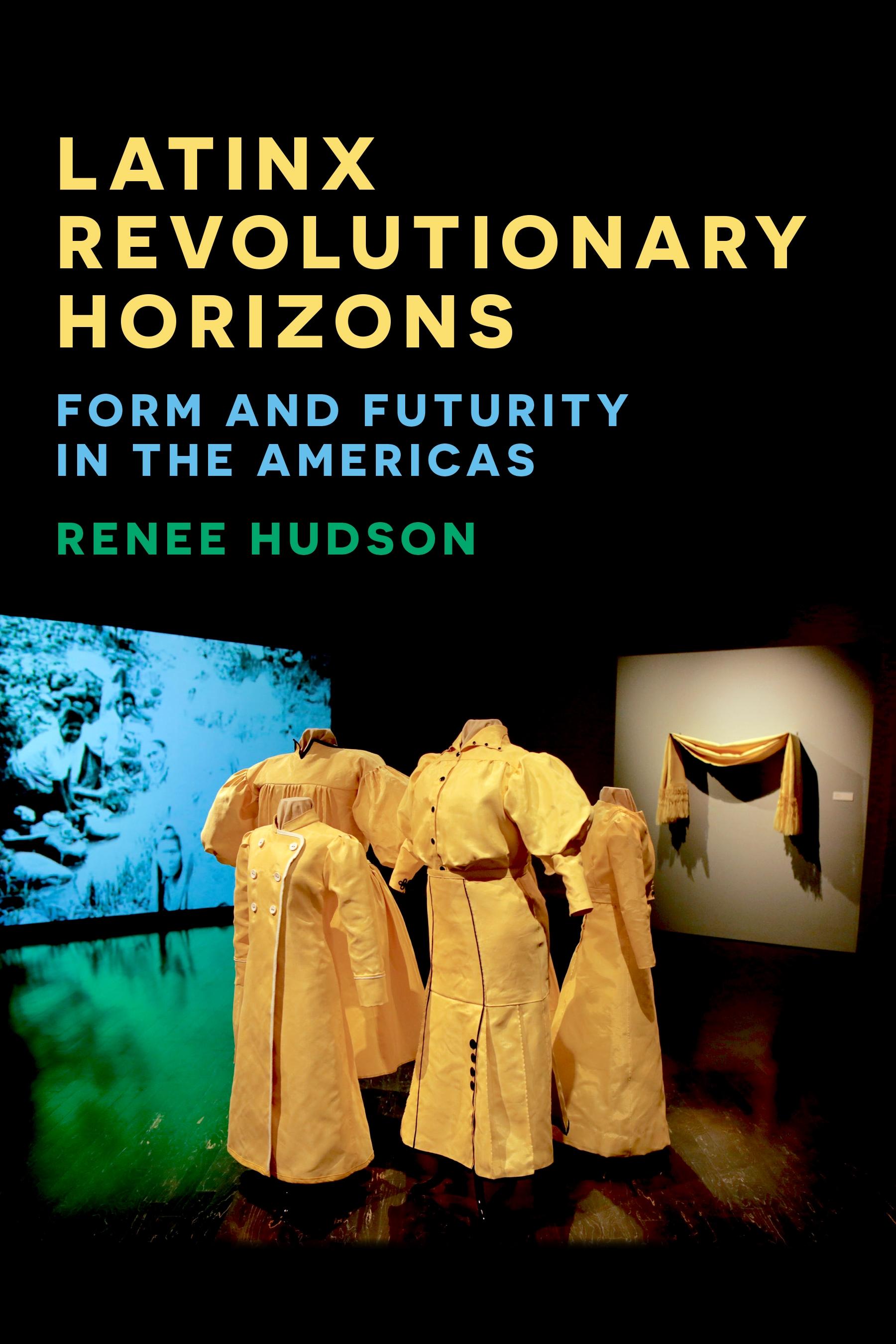
A necessary reconceptualization of Latinx identity, literature, and politics
In Latinx Revolutionary Horizons, Renee Hudson theorizes a liberatory latinidad that is not yet here and conceptualizes a hemispheric project in which contemporary Latinx authors return to earlier moments of revolution. Rather than viewing Latinx as solely a category of identification, she argues for an expansive, historicized sense of the term that illuminates its political potential.
Claiming the “x” in Latinx as marking the suspension and tension between how Latin American descended people identify and the future politics the “x” points us toward, Hudson contends that latinidad can signal a politics grounded in shared struggles and histories rather than merely a mode of identification. In this way, Latinx Revolutionary Horizons reads against current calls for cancelling latinidad based on its presumed anti-Black and anti-Indigenous framework. Instead, she examines the not-yet-here of latinidad to investigate the connection between the revolutionary history of the Americas and the creation of new genres in the hemisphere, from conversion narratives and dictator novels to neoslave narratives and testimonios.
By comparing colonialisms, she charts a revolutionary genealogy across a range of movements such as the Mexican Revolution, the Filipino People Power Revolution, resistance to Trujillo in the Dominican Republic, and the Cuban Revolution. In pairing nineteenth-century authors alongside contemporary Latinx ones, Hudson examines a longer genealogy of Latinx resistance while expanding its literary canon, from the works of José Rizal and Martin Delany to those of Julia Alvarez, Jessica Hagedorn, and Leslie Marmon Silko. In imagining a truly transnational latinidad, Latinx Revolutionary Horizons thus rewrites our understanding of the nationalist formations that continue to characterize Latinx Studies.
Before Memmo my notes were scattered across PDFs. Now a workspace pulls everything into one place — I see exactly what's still left to study.
Memmo's summaries are gold before exams. I don't have to re-read 800 pages two weeks before — just the important parts.
The AI chat has saved me the night before an exam more than once. I just keep asking until I get it — no waiting on a study group to reply.
The quizzes hit exactly what I need to know. Memmo tracks what I get stuck on — so I only practice what's worth it.
Flashcards with spaced repetition are magic. Memmo knows when I'm about to forget something and brings it back.
The AI podcasts are my favorite. I listen on my way to school and get a recap without sitting at a computer.

Handbok i kvalitativa metoder
281 kr

Hållbar utveckling: en introduktion för ingenjörer och andra problemlösare
334 kr

Brymans Samhällsvetenskapliga metoder
390 kr

Projektledning
491 kr

Den orättvisa hälsan: om socioekonomiska skillnader i hälsa och livslängd
326 kr

Organizational Leadership
429 kr

Vetenskapsteori för nybörjare
196 kr

På väg mot läraryrket
172 kr

Det sociala livet i skolan: Socialpsykologiska perspektiv
253 kr

Betygsättningens didaktik
151 kr

Personality
402 kr

Studying Leadership
404 kr

Managing Innovation
477 kr

Introduktion till samhällsvetenskaplig metod
347 kr

The Psychology of Sex and Gender
698 kr

Evidens och kunskap för socialt arbete
207 kr

Introduction to Leadership
605 kr