
Before Memmo my notes were scattered across PDFs. Now a workspace pulls everything into one place — I see exactly what's still left to study.
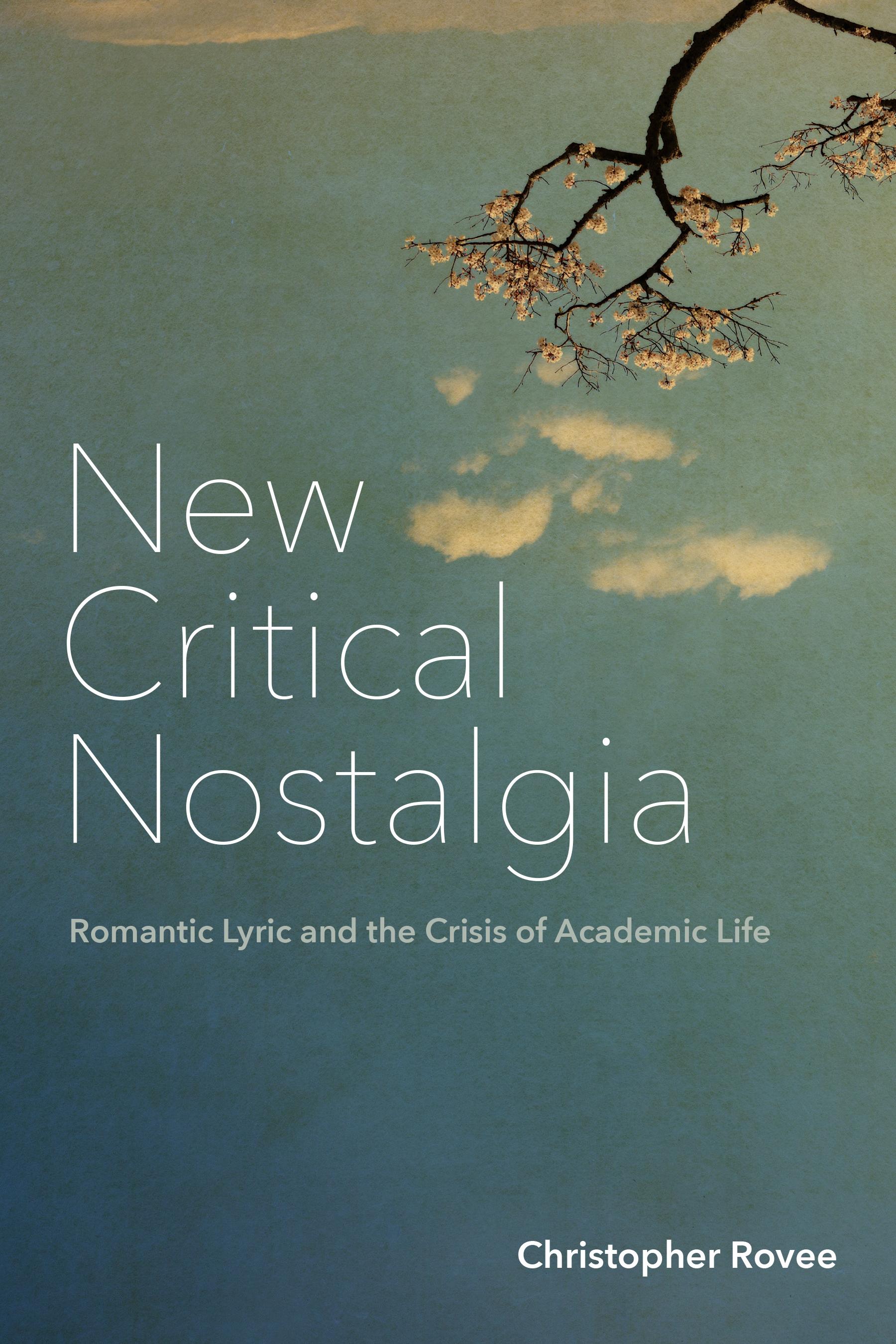
New Critical Nostalgia weighs the future of literary study by reassessing its past. It tracks today's impassioned debates about method back to the discipline’s early professional era, when an unprecedented makeover of American higher education with far-reaching social consequences resulted in what we might call our first crisis of academic life. Rovee probes literary study’s nostalgic attachments to this past, by recasting an essential episode in the historiography of English—the vigorous rejection of romanticism by American New Critics—in the new light of the American university’s tectonic growth. In the process, he demonstrates literary study’s profound investment in romanticism and reveals the romantic lyric’s special affect, nostalgia, as having been part of English’s professional identity all along.
New Critical Nostalgia meticulously shows what is lost in reducing mid-century American criticism and the intense, quirky, and unpredictable writings of central figures, such as Cleanth Brooks, Josephine Miles, and W. K. Wimsatt, to a glib monolith of New Critical anti-romanticism. In Rovee’s historically rich account, grounded in analysis of critical texts and enlivened by archival study, readers discover John Crowe Ransom’s and William Wordsworth’s shared existential nostalgia, witness the demolition of the “immature” Percy Shelley in the revolutionary textbook Understanding Poetry, explore the classroom give-and-take prompted by the close reading of John Keats, consider the strange ambivalence toward Lord Byron on the part of formalist critics and romantic scholars alike, and encounter the strikingly contemporary quantitative studies by one of the mid-century’s preeminent poetry scholars, Josephine Miles. These complex and enthralling engagements with the romantic lyric introduce the reader to a dynamic intellectual milieu, in which professionals with varying methodological commitments (from New Critics to computationalists), working in radically different academic locales (from Nashville and New Haven to Baton Rouge and Berkeley), wrangled over what it means to read, with nothing less than the future of the discipline at stake.
Before Memmo my notes were scattered across PDFs. Now a workspace pulls everything into one place — I see exactly what's still left to study.
Memmo's summaries are gold before exams. I don't have to re-read 800 pages two weeks before — just the important parts.
The AI chat has saved me the night before an exam more than once. I just keep asking until I get it — no waiting on a study group to reply.
The quizzes hit exactly what I need to know. Memmo tracks what I get stuck on — so I only practice what's worth it.
Flashcards with spaced repetition are magic. Memmo knows when I'm about to forget something and brings it back.
The AI podcasts are my favorite. I listen on my way to school and get a recap without sitting at a computer.

Handbok i kvalitativa metoder
281 kr

Hållbar utveckling: en introduktion för ingenjörer och andra problemlösare
334 kr

Brymans Samhällsvetenskapliga metoder
390 kr

Projektledning
491 kr

Den orättvisa hälsan: om socioekonomiska skillnader i hälsa och livslängd
326 kr

Vetenskapsteori för nybörjare
196 kr

Organizational Leadership
429 kr

På väg mot läraryrket
172 kr

Det sociala livet i skolan: Socialpsykologiska perspektiv
253 kr

Betygsättningens didaktik
151 kr

Personality
402 kr

Studying Leadership
404 kr

Managing Innovation
477 kr

Introduktion till samhällsvetenskaplig metod
347 kr

The Psychology of Sex and Gender
698 kr

Evidens och kunskap för socialt arbete
207 kr

Introduction to Leadership
605 kr