
Before Memmo my notes were scattered across PDFs. Now a workspace pulls everything into one place — I see exactly what's still left to study.
CHOICE: OUTSTANDING ACADEMIC TITLE
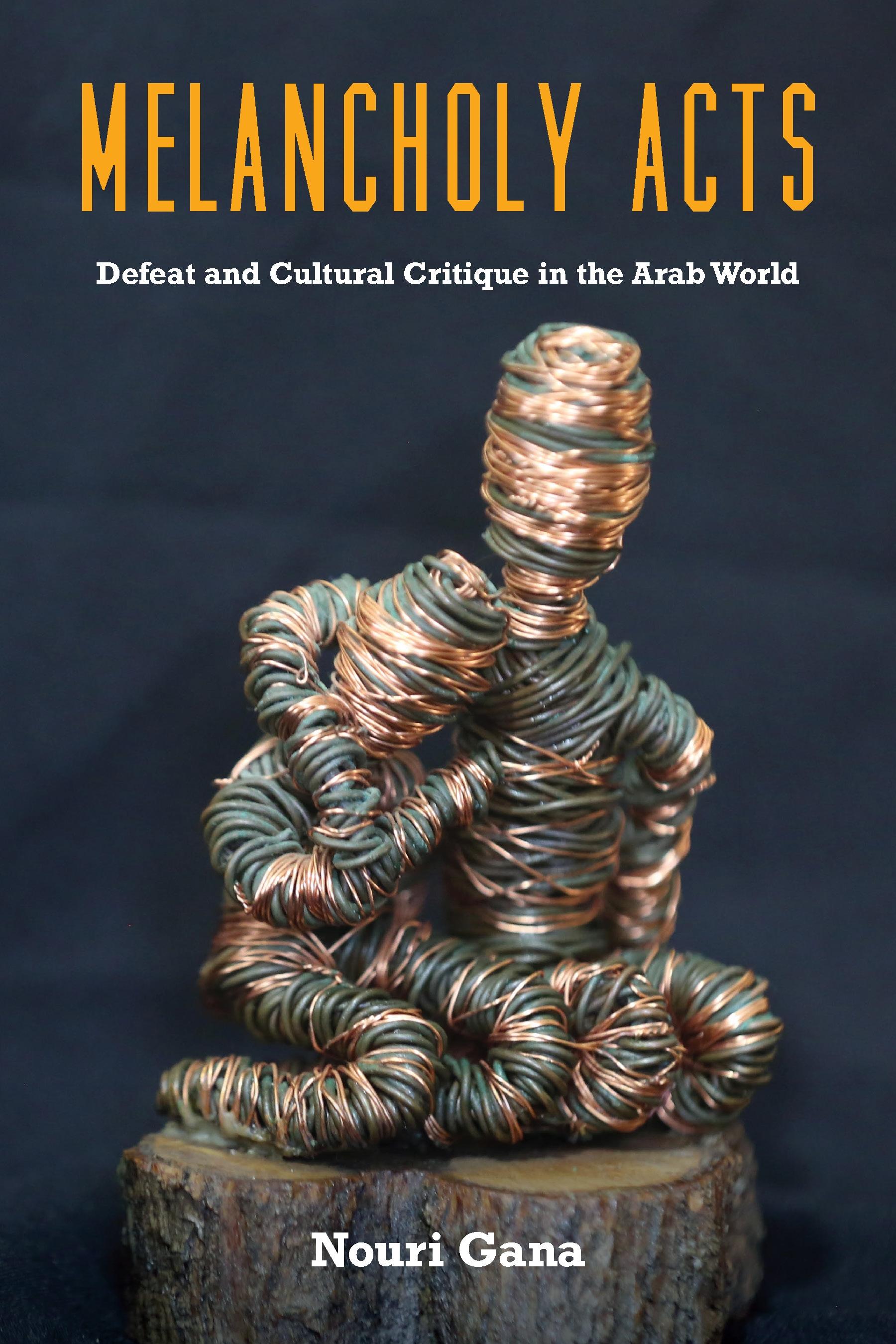
How do the literatures and cultures of oppressed societies survive and flourish in spite of the overdetermining conditions of precarity and injustice of which they are a product and against which they protest? Might the symptom of oppression become simultaneously the agent of its critique? Melancholy Acts offers richly nuanced reflections on these questions through a series of wide-ranging engagements with Arab thought, literature, and film in the aftermath of the 1948 dispossession of Palestinians and the 1967 military defeat of Arab armies.
Melancholy Acts offers a psychoaffective theory of cultural production that arises out of the disjunction between political impoverishment and cultural resistance to colonial and neoliberal oppression. Such a theory allows the author to trace the melancholy disposition of Arabic literary and filmic productions and to discern the precarious rhetorical modes of their critical intervention in a culture that is continually strained to its breaking point. Across six chapters, Melancholy Acts reads with rigor and sensitivity contentious topics of Arab contemporaneity such as secular modernity and manhood, Arab nationalism and leftism, literary and artistic iltizām, or commitment, Islamism, and martyrdom. The book tracks the melancholy politics that inform the literary and cultural projects of a multitude of Arab novelists (Ghassan Kanafani and Naguib Mahfouz); poets and playwrights (Mahmoud Darwish, Nizar Qabbani, and Saadallah Wannous); filmmakers (Nouri Bouzid, Moufida Tlatli, Youssef Chahine, and Hany Abu Assad); alongside the work of such intellectuals as Hussein Muruwwa, Malek Bennabi, Karima Lazali, George Tarabishi, and Fethi Benslama, from within the Arab world, as well as such non-Arab thinkers as Freud, Lacan, Adorno, Fanon, Spivak, Butler, and Žižek.
Melancholy Acts charts a fresh and bold new approach to Arabic and comparative literature that combines in interlaced simultaneity a high sensitivity to local idioms, as they swerve between symptom and critique, with nuanced knowledge of the geopolitics of theory and psychoanalysis.
Before Memmo my notes were scattered across PDFs. Now a workspace pulls everything into one place — I see exactly what's still left to study.
Memmo's summaries are gold before exams. I don't have to re-read 800 pages two weeks before — just the important parts.
The AI chat has saved me the night before an exam more than once. I just keep asking until I get it — no waiting on a study group to reply.
The quizzes hit exactly what I need to know. Memmo tracks what I get stuck on — so I only practice what's worth it.
Flashcards with spaced repetition are magic. Memmo knows when I'm about to forget something and brings it back.
The AI podcasts are my favorite. I listen on my way to school and get a recap without sitting at a computer.

Handbok i kvalitativa metoder
281 kr

Hållbar utveckling: en introduktion för ingenjörer och andra problemlösare
334 kr

Brymans Samhällsvetenskapliga metoder
390 kr

Projektledning
491 kr

Den orättvisa hälsan: om socioekonomiska skillnader i hälsa och livslängd
326 kr

Vetenskapsteori för nybörjare
196 kr

Organizational Leadership
429 kr

På väg mot läraryrket
172 kr

Det sociala livet i skolan: Socialpsykologiska perspektiv
253 kr

Betygsättningens didaktik
151 kr

Personality
402 kr

Studying Leadership
404 kr

Managing Innovation
477 kr

Introduktion till samhällsvetenskaplig metod
347 kr

The Psychology of Sex and Gender
698 kr

Evidens och kunskap för socialt arbete
207 kr

Introduction to Leadership
605 kr