
Before Memmo my notes were scattered across PDFs. Now a workspace pulls everything into one place — I see exactly what's still left to study.
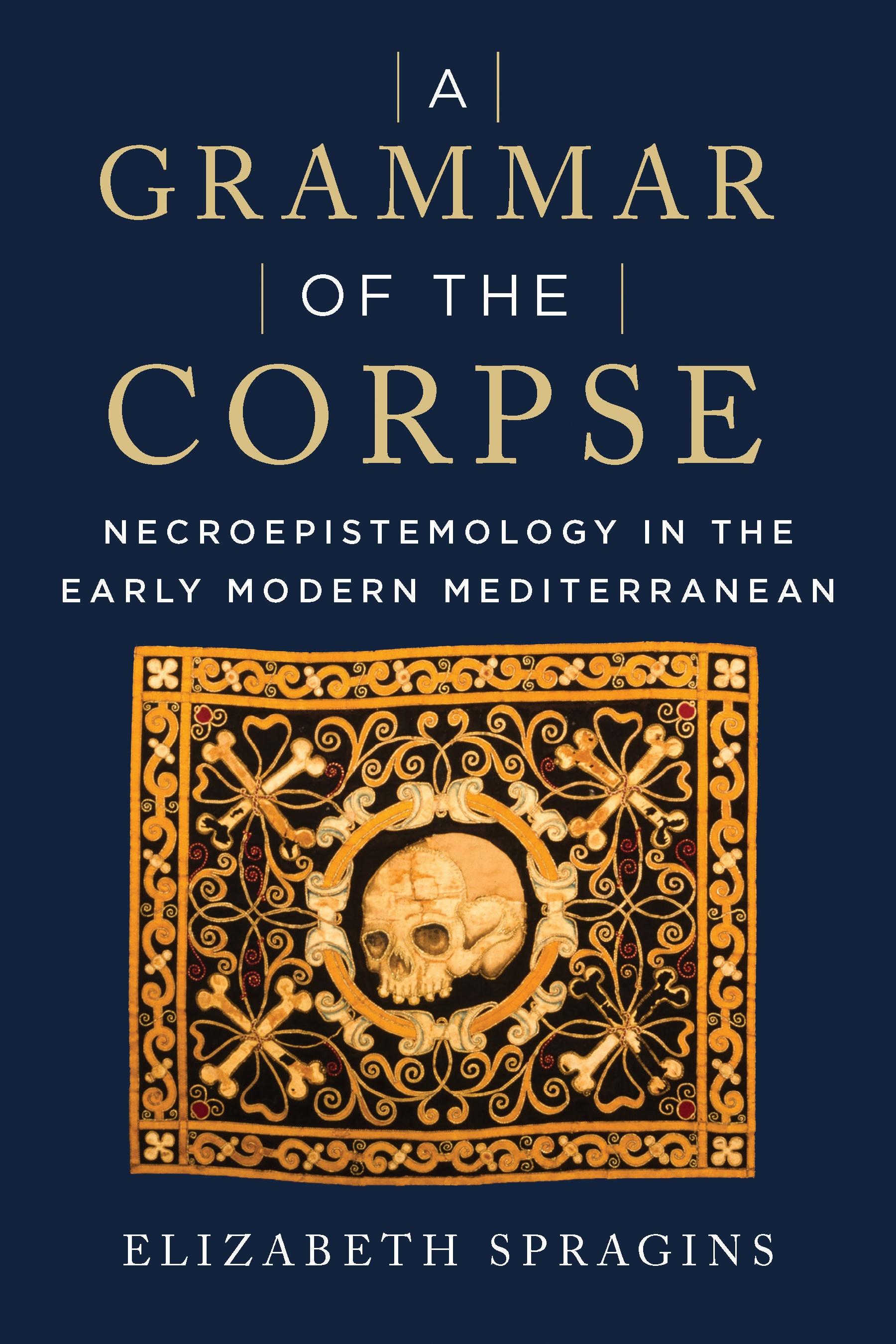
No matter when or where one starts telling the story of the battle of al-Qasr al-Kabir (August 4, 1578), the precipitating event for the formation of the Iberian Union, one always stumbles across dead bodies—rotting in the sun on abandoned battlefields, publicly displayed in marketplaces, exhumed and transported for political uses. A Grammar of the Corpse: Necroepistemology in the Early Modern Mediterranean proposes an approach to understanding how dead bodies anchored the construction of knowledge within early modern Mediterranean historiography.
A Grammar of the Corpse argues that the presence of the corpse in historical narrative is not incidental. It fills a central gap in testimonial narrative: providing tangible evidence of the narrator’s reliability while provoking an affective response in the audience. The use of corpses as a source of narrative authority mobilizes what cultural historians, philosophers, and social anthropologists have pointed to as the latent power of the dead for generating social and political meaning and knowledge. A Grammar of the Corpse analyzes the literary, semiotic, and epistemological function these bodies serve within text and through language. It finds that corpses are indexically present and yet disturbingly absent, a tension that informs their fraught relationship to their narrators’ own bodies and makes them useful but subversive tools of communication and knowledge.
A Grammar of the Corpse complements recent work in medieval and early modern Iberian and Mediterranean studies to account for the confessional, ethnic, linguistic, and political diversity of the region. By reading Arabic texts alongside Portuguese and Spanish accounts of this key event, the book responds to the fundamental provocation of Mediterranean studies to work beyond the linguistic limitations of modern national boundaries.
Before Memmo my notes were scattered across PDFs. Now a workspace pulls everything into one place — I see exactly what's still left to study.
Memmo's summaries are gold before exams. I don't have to re-read 800 pages two weeks before — just the important parts.
The AI chat has saved me the night before an exam more than once. I just keep asking until I get it — no waiting on a study group to reply.
The quizzes hit exactly what I need to know. Memmo tracks what I get stuck on — so I only practice what's worth it.
Flashcards with spaced repetition are magic. Memmo knows when I'm about to forget something and brings it back.
The AI podcasts are my favorite. I listen on my way to school and get a recap without sitting at a computer.

Handbok i kvalitativa metoder
281 kr

Hållbar utveckling: en introduktion för ingenjörer och andra problemlösare
334 kr

Brymans Samhällsvetenskapliga metoder
390 kr

Projektledning
491 kr

Den orättvisa hälsan: om socioekonomiska skillnader i hälsa och livslängd
326 kr

Vetenskapsteori för nybörjare
196 kr

Organizational Leadership
429 kr

På väg mot läraryrket
172 kr

Det sociala livet i skolan: Socialpsykologiska perspektiv
253 kr

Betygsättningens didaktik
151 kr

Personality
402 kr

Studying Leadership
404 kr

Managing Innovation
477 kr

Introduktion till samhällsvetenskaplig metod
347 kr

The Psychology of Sex and Gender
698 kr

Evidens och kunskap för socialt arbete
207 kr

Introduction to Leadership
605 kr