
Before Memmo my notes were scattered across PDFs. Now a workspace pulls everything into one place — I see exactly what's still left to study.
Winner, 2024 L. Carl Brown AIMS Book Prize in North African Studies
Honorable Mention, 2024 MELA Book Awards
Finalist, 2024 ASA Best Book Prize
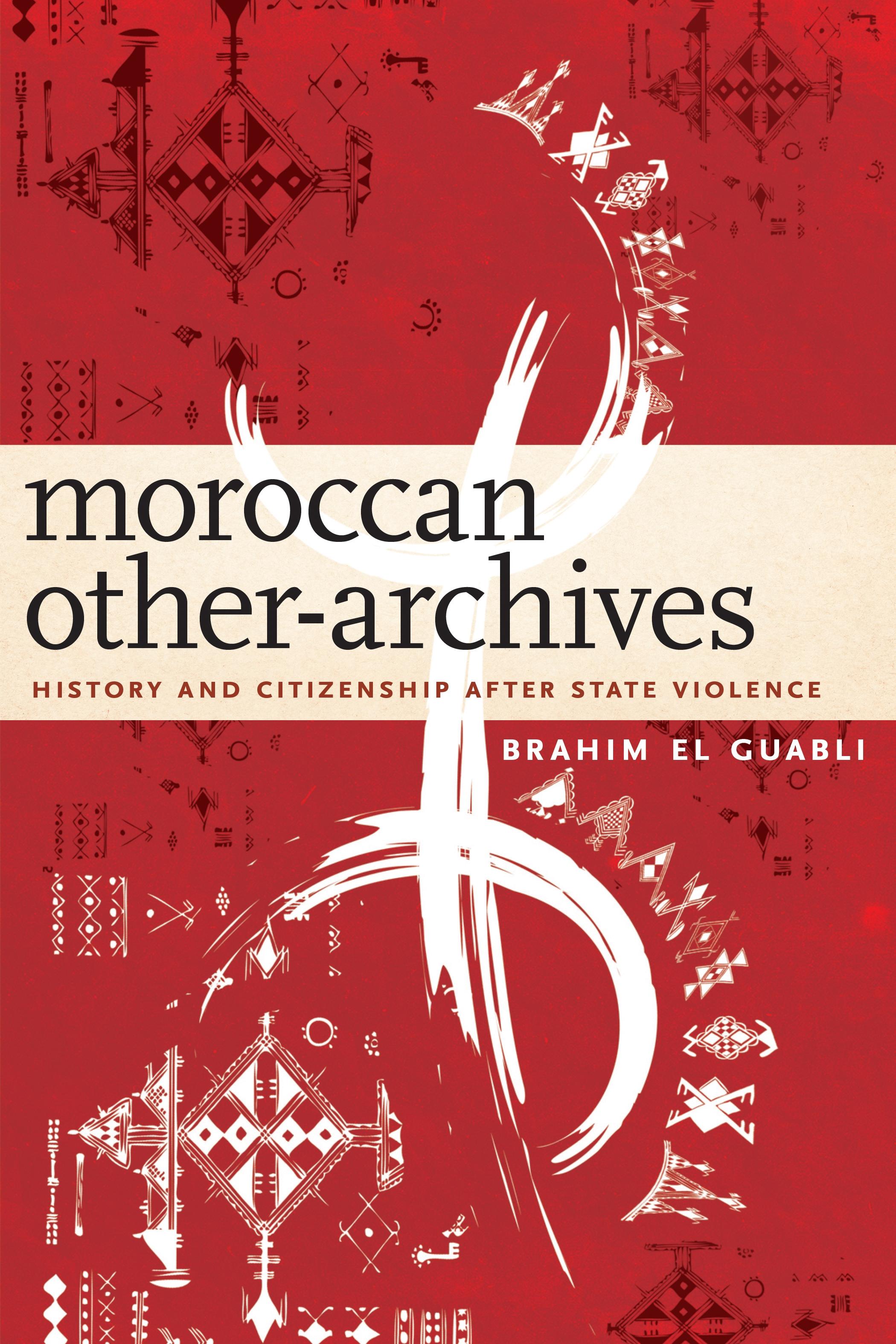
Moroccan Other-Archives investigates how histories of exclusion and silencing are written and rewritten in a postcolonial context that lacks organized and accessible archives. The book draws on cultural production concerning the “years of lead”—a period of authoritarianism and political violence between Morocco’s independence in 1956 and the death of King Hassan II in 1999—to examine the transformative roles memory and trauma play in reconstructing stories of three historically marginalized groups in Moroccan history: Berbers/Imazighen, Jews, and political prisoners.
The book shows how Moroccan cultural production has become an other-archive: a set of textual, sonic, embodied, and visual sites that recover real or reimagined voices of these formerly suppressed and silenced constituencies of Moroccan society. Combining theoretical discussions with close reading of literary works, the book reenvisions both archives and the nation in postcolonial Morocco. By producing other-archives, Moroccan cultural creators transform the losses state violence inflicted on society during the years of lead into a source of civic engagement and historiographical agency, enabling the writing of histories about those Moroccans who have been excluded from official documentation and state-sanctioned histories.
The book is multilingual and interdisciplinary, examining primary sources in Amazigh/Berber, Arabic, Darija, and French, and drawing on memory studies, literary theory, archival studies, anthropology, and historiography. In addition to showing how other-archives are created and operate, El Guabli elaborates how language, gender, class, race, and geographical distribution are co-constitutive of a historical and archival unsilencing that is foundational to citizenship in Morocco today.
Before Memmo my notes were scattered across PDFs. Now a workspace pulls everything into one place — I see exactly what's still left to study.
Memmo's summaries are gold before exams. I don't have to re-read 800 pages two weeks before — just the important parts.
The AI chat has saved me the night before an exam more than once. I just keep asking until I get it — no waiting on a study group to reply.
The quizzes hit exactly what I need to know. Memmo tracks what I get stuck on — so I only practice what's worth it.
Flashcards with spaced repetition are magic. Memmo knows when I'm about to forget something and brings it back.
The AI podcasts are my favorite. I listen on my way to school and get a recap without sitting at a computer.

Handbok i kvalitativa metoder
281 kr

Hållbar utveckling: en introduktion för ingenjörer och andra problemlösare
334 kr

Brymans Samhällsvetenskapliga metoder
390 kr

Projektledning
491 kr

Den orättvisa hälsan: om socioekonomiska skillnader i hälsa och livslängd
326 kr

Vetenskapsteori för nybörjare
196 kr

Organizational Leadership
429 kr

På väg mot läraryrket
172 kr

Det sociala livet i skolan: Socialpsykologiska perspektiv
253 kr

Betygsättningens didaktik
151 kr

Personality
402 kr

Studying Leadership
404 kr

Managing Innovation
477 kr

Introduktion till samhällsvetenskaplig metod
347 kr

The Psychology of Sex and Gender
698 kr

Evidens och kunskap för socialt arbete
207 kr

Introduction to Leadership
605 kr