
Before Memmo my notes were scattered across PDFs. Now a workspace pulls everything into one place — I see exactly what's still left to study.
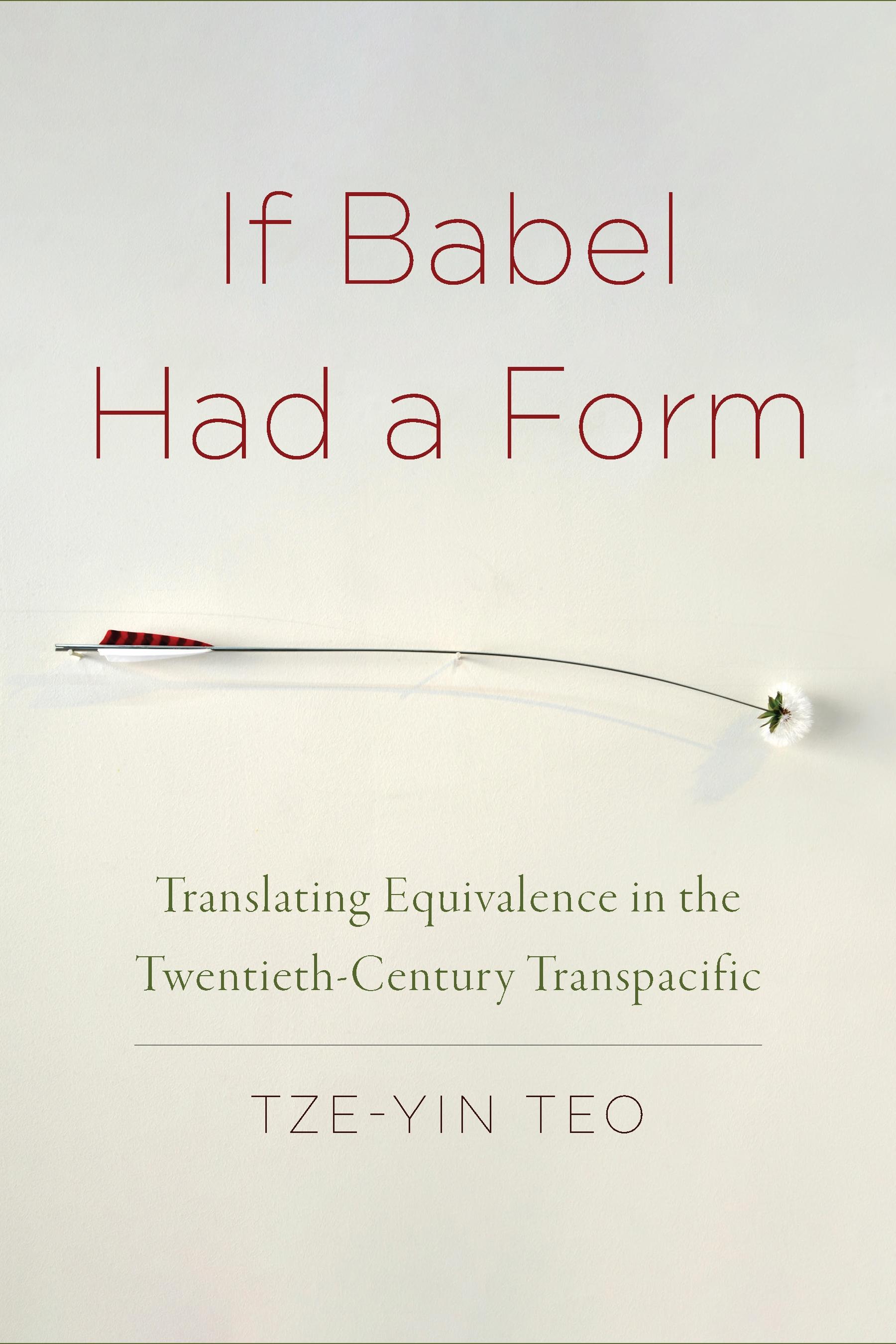
“The likeness of form between Chinese and English sentences,” writes the American Sinologist Ernest Fenollosa around 1906, “renders translation from one to the other exceptionally easy.” If Babel Had a Form asks not if his claim may be true, but what its phantasmic surprise may yet do. In twentieth-century intersections of China and Asia with the United States, translations did more than communicate meaning across politicized and racializing differences of language and nation. Transpacific translation breached the regulative protocols that created those very differences of human value and cultural meaning. The result, Tze-Yin Teo argues, saw translators cleaving to the sounds and shapes of poetry to imagine a translingual “likeness of form” but not of meaning or kind.
At stake in this form without meaning is a startling new task of equivalence. As a concept, equivalence has been rejected for its colonizing epistemology of value, naming a broken promise of translation and false premise of comparison. Yet the writers studied in this book veered from those ways of knowing to theorize a poetic equivalence: negating the colonial foundations of the concept, they ignited aporias of meaning into flashpoints for a radical literary translation. The book’s transpacific readings glean those forms of equivalence from the writing of Fenollosa, the vernacular experiments of Boxer Scholar Hu Shi, the trilingual musings of Shanghai-born Los Angeles novelist Eileen Chang, the minor work of the Bay Area Korean American transmedial artist Theresa Cha, and a post-Tiananmen elegy by the exiled dissident Yang Lian. The conclusion returns to the deconstructive genealogy of recent debates on translation and untranslatability, displacing the axiom of radical alterity for a no less radical equivalence that remains—pace Fenollosa—far from easy or exceptional.
Ultimately, If Babel Had a Form illuminates the demanding force of even the slightest sameness entangled in the translator’s work of remaking our differences.
Before Memmo my notes were scattered across PDFs. Now a workspace pulls everything into one place — I see exactly what's still left to study.
Memmo's summaries are gold before exams. I don't have to re-read 800 pages two weeks before — just the important parts.
The AI chat has saved me the night before an exam more than once. I just keep asking until I get it — no waiting on a study group to reply.
The quizzes hit exactly what I need to know. Memmo tracks what I get stuck on — so I only practice what's worth it.
Flashcards with spaced repetition are magic. Memmo knows when I'm about to forget something and brings it back.
The AI podcasts are my favorite. I listen on my way to school and get a recap without sitting at a computer.

Handbok i kvalitativa metoder
281 kr

Hållbar utveckling: en introduktion för ingenjörer och andra problemlösare
334 kr

Brymans Samhällsvetenskapliga metoder
390 kr

Projektledning
491 kr

Den orättvisa hälsan: om socioekonomiska skillnader i hälsa och livslängd
326 kr

Vetenskapsteori för nybörjare
196 kr

Organizational Leadership
429 kr

På väg mot läraryrket
172 kr

Det sociala livet i skolan: Socialpsykologiska perspektiv
253 kr

Betygsättningens didaktik
151 kr

Personality
402 kr

Studying Leadership
404 kr

Managing Innovation
477 kr

Introduktion till samhällsvetenskaplig metod
347 kr

The Psychology of Sex and Gender
698 kr

Evidens och kunskap för socialt arbete
207 kr

Introduction to Leadership
605 kr