
Before Memmo my notes were scattered across PDFs. Now a workspace pulls everything into one place — I see exactly what's still left to study.
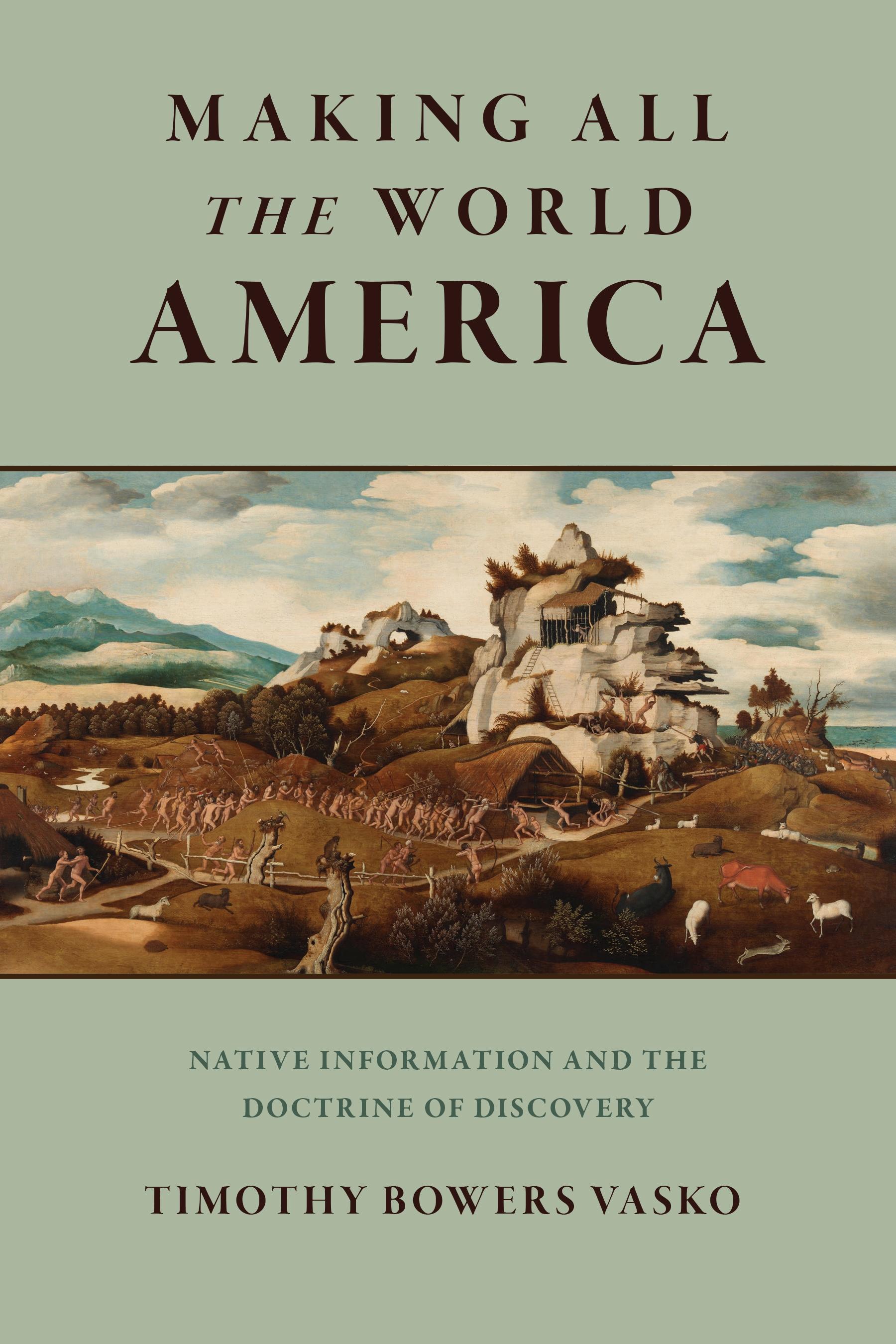
A provocative new account of the ideological framework undergirding early modern imperial expansion: the Doctrine of Discovery
Making All the World America offers a new account of the ideological framework undergirding early modern imperial expansion: the Doctrine of Discovery, which held that the first arrival of a European power among the lands and peoples of the Western Hemisphere granted the right to govern the regions that they claimed to have “discovered.”
While scholars have maintained that the doctrine operated through the suppression of Indigenous peoples, Timothy Bowers Vasko contends that, on the contrary, the doctrine’s ideological work actually depended on the recognition of Indigenous rights and sovereignty. Between 1492 and 1690, the Spanish and English architects of the doctrine sought to justify European-Christian empire through the incorporation of Indigenous peoples into colonial frameworks as religious, political, property-owning subjects. Examining the works of Peter Martyr, Thomas More, Bartolomé de Las Casas, Richard Hakluyt, and John Locke, among others, Vasko shows how these theorists leveraged and referenced knowledge of Indigenous societies and religious traditions in the Americas as a way of legitimizing imperial claims to the Americas. The doctrine’s reliance on this production of Native information enabled the emergence of a new class of Indigenous intellectuals such as Garcilaso de la Vega and Don Fernando de Alva Ixtlilxochitl, who provided essential ethnographic material and exercised considerable influence on Western thought—especially the political theory of John Locke—in surprising and overlooked ways.
Providing a provocative explanation of impasses and frustrations within struggles for Indigenous rights and the critique of imperialism more broadly, Making All the World America shows how “the native” was not eliminated but rather produced by colonial power.
Before Memmo my notes were scattered across PDFs. Now a workspace pulls everything into one place — I see exactly what's still left to study.
Memmo's summaries are gold before exams. I don't have to re-read 800 pages two weeks before — just the important parts.
The AI chat has saved me the night before an exam more than once. I just keep asking until I get it — no waiting on a study group to reply.
The quizzes hit exactly what I need to know. Memmo tracks what I get stuck on — so I only practice what's worth it.
Flashcards with spaced repetition are magic. Memmo knows when I'm about to forget something and brings it back.
The AI podcasts are my favorite. I listen on my way to school and get a recap without sitting at a computer.

Handbok i kvalitativa metoder
281 kr

Hållbar utveckling: en introduktion för ingenjörer och andra problemlösare
334 kr

Brymans Samhällsvetenskapliga metoder
390 kr

Projektledning
491 kr

Den orättvisa hälsan: om socioekonomiska skillnader i hälsa och livslängd
326 kr

Vetenskapsteori för nybörjare
196 kr

Organizational Leadership
429 kr

På väg mot läraryrket
172 kr

Det sociala livet i skolan: Socialpsykologiska perspektiv
253 kr

Betygsättningens didaktik
151 kr

Personality
402 kr

Studying Leadership
404 kr

Managing Innovation
477 kr

Introduktion till samhällsvetenskaplig metod
347 kr

The Psychology of Sex and Gender
698 kr

Evidens och kunskap för socialt arbete
207 kr

Introduction to Leadership
605 kr