
Before Memmo my notes were scattered across PDFs. Now a workspace pulls everything into one place — I see exactly what's still left to study.
When women have full socioeconomic citizenship as well as equitable and respectful partnerships with men, transformative justice can be sustained in postconflict societies
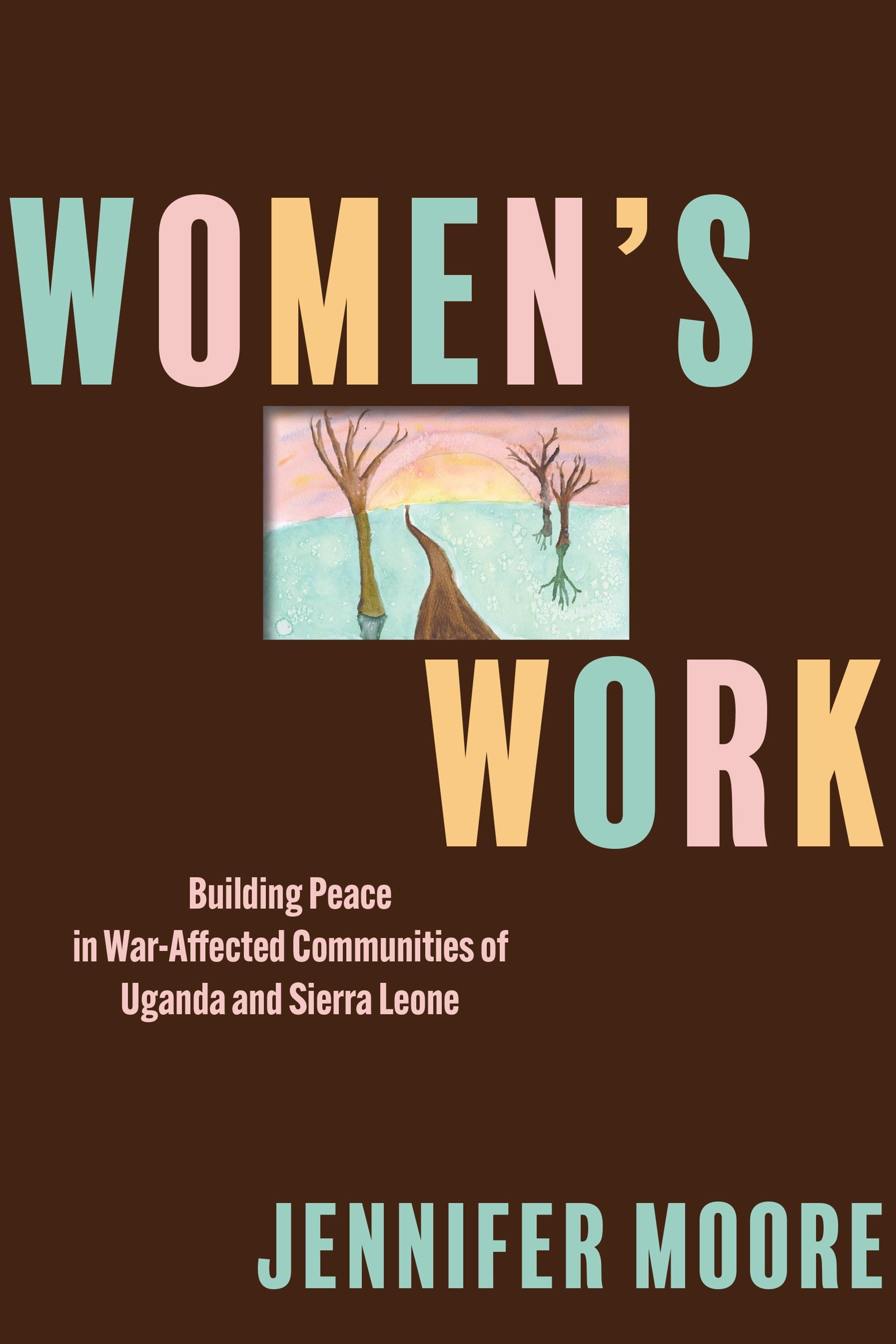
In Women’s Work, Jennifer Moore presents a reimagined theory of peacebuilding and transformative justice based on the experiences and insights of women farmers and microentrepreneurs who lived through protracted civil conflicts, drawing on seven years of interviews with women activists across ten communities—five in the Acholi region of Northern Uganda and five in the Moyamba and Koinadugu Districts of Sierra Leone. Despite the important differences between the preconflict and conflict histories and demographics of the two countries, Moore finds commonalities in the practical, yet visionary, approaches to community life emerging from the core values, daily activities, and long-range goals shared by rural cooperative members in both regions.
Collective survival, communal healing, and conflict resolution define the rhythm of these women’s daily lives as they go about building peace, piecemeal. They reject punitive retribution models and demand, instead, a peacebuilding model that advocates for advances in material well-being, the acknowledgment of state accountability for community suffering, and reconciliation and restoration of community networks. But most important, Moore amplifies these women’s voices when they insist that legal equality for women and healthy partnerships between women and men are also essential components to enduring transformation of their societies.
Moore theorizes what peacebuilding look like if it were modeled on these women-led, matriarchically structured communities that proved not only to be effective at holding governments accountable but also to have the capacity to feed their people and revitalize their local economies. Women’s Work shows that when women have full socioeconomic citizenship as well as equitable and respectful partnerships with men, transformative justice can be sustained through the arts of collective livelihood, violence-free conflict management, and celebration.
Before Memmo my notes were scattered across PDFs. Now a workspace pulls everything into one place — I see exactly what's still left to study.
Memmo's summaries are gold before exams. I don't have to re-read 800 pages two weeks before — just the important parts.
The AI chat has saved me the night before an exam more than once. I just keep asking until I get it — no waiting on a study group to reply.
The quizzes hit exactly what I need to know. Memmo tracks what I get stuck on — so I only practice what's worth it.
Flashcards with spaced repetition are magic. Memmo knows when I'm about to forget something and brings it back.
The AI podcasts are my favorite. I listen on my way to school and get a recap without sitting at a computer.

Handbok i kvalitativa metoder
281 kr

Hållbar utveckling: en introduktion för ingenjörer och andra problemlösare
334 kr

Brymans Samhällsvetenskapliga metoder
390 kr

Projektledning
491 kr

Den orättvisa hälsan: om socioekonomiska skillnader i hälsa och livslängd
326 kr

Vetenskapsteori för nybörjare
196 kr

Organizational Leadership
429 kr

På väg mot läraryrket
172 kr

Det sociala livet i skolan: Socialpsykologiska perspektiv
253 kr

Betygsättningens didaktik
151 kr

Personality
402 kr

Studying Leadership
404 kr

Managing Innovation
477 kr

Introduktion till samhällsvetenskaplig metod
347 kr

The Psychology of Sex and Gender
698 kr

Evidens och kunskap för socialt arbete
207 kr

Introduction to Leadership
605 kr