
Before Memmo my notes were scattered across PDFs. Now a workspace pulls everything into one place — I see exactly what's still left to study.
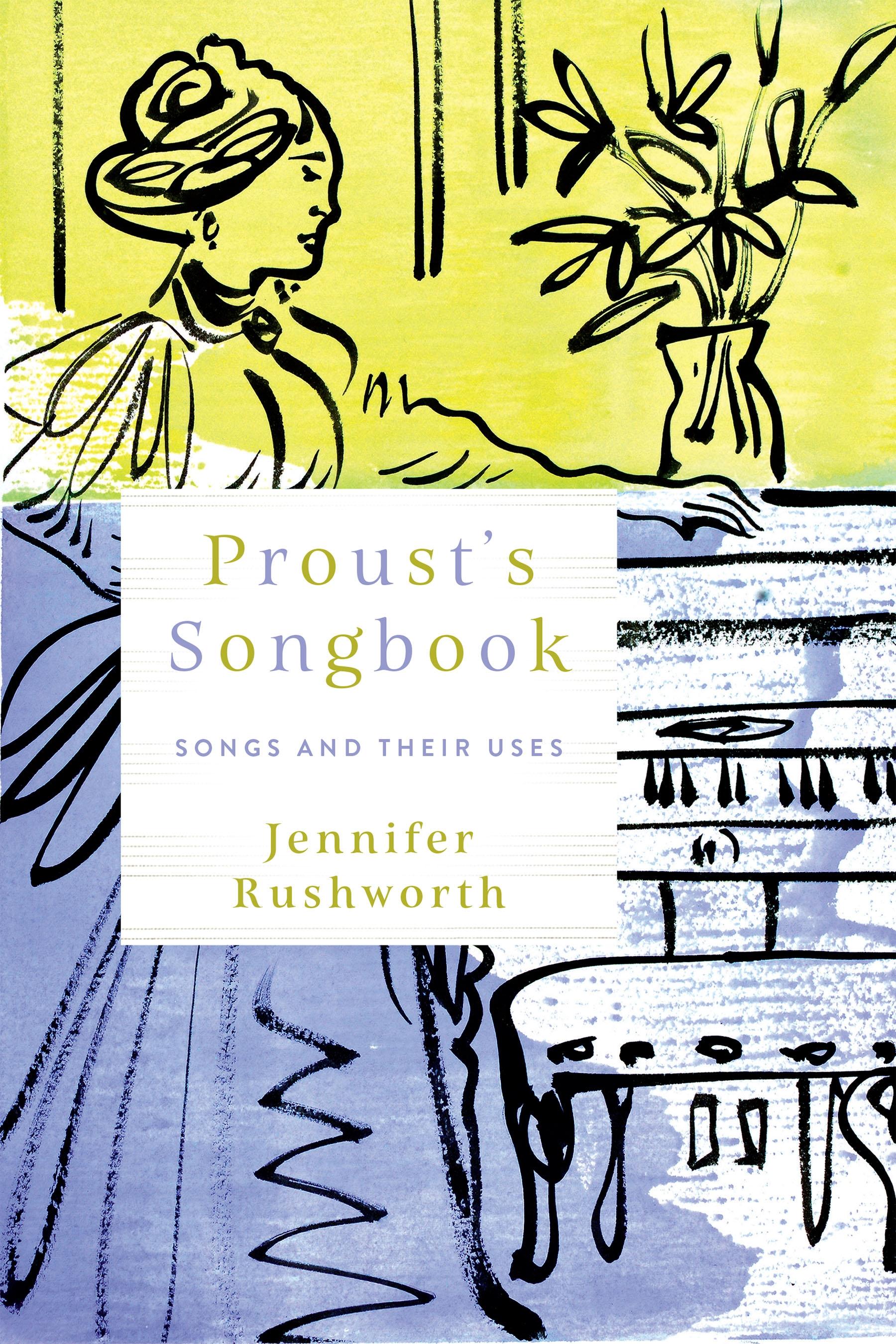
In Proust’s Songbook, Jennifer Rushworth analyzes and theorizes the presence and role of songs in Marcel Proust’s novel À la recherche du temps perdu (In Search of Lost Time). Instead of focusing on instrumental music and large-scale forms such as symphonies and opera, as is common in Proust musical studies, Rushworth argues for the centrality of songs and lyrics in Proust’s opus. Her work analyzes the ways in which the author inserted songs at key turning points in his novel and how he drew inspiration from contemporary composers and theorists of song. Rushworth presents detailed readings of five moments of song in À la recherche du temps perdu, highlighting the songs’ significance by paying close attention to their lyrics, music, composers, and histories.
Rushworth interprets these episodes through theoretical reflections on song and voice, drawing particularly from the works of Reynaldo Hahn and Roland Barthes. She argues that songs in Proust’s novel are connected and resonate with one another across the different volumes yet also shows how song for Proust is a solo, amateur, and intimate affair. In addition, she points to Proust’s juxtapositions of songs with meditations on the notion of “mauvaise musique” (bad music) to demonstrate the existence of a blurred boundary between songs that are popular and songs that are art.
According to Rushworth, a song for Proust has a special relation to repetition and memory due to its typical brevity and that song itself becomes a mode of resistance in À la Recherche—especially on the part of characters in the face of family and familial expectations. She also defines the songs in Proust’s novel as songs of farewell—noting that to sing farewell is a means to resist the very parting that is being expressed—and demonstrates how songs, in formal terms, resist the forward impetus of narrative.
Before Memmo my notes were scattered across PDFs. Now a workspace pulls everything into one place — I see exactly what's still left to study.
Memmo's summaries are gold before exams. I don't have to re-read 800 pages two weeks before — just the important parts.
The AI chat has saved me the night before an exam more than once. I just keep asking until I get it — no waiting on a study group to reply.
The quizzes hit exactly what I need to know. Memmo tracks what I get stuck on — so I only practice what's worth it.
Flashcards with spaced repetition are magic. Memmo knows when I'm about to forget something and brings it back.
The AI podcasts are my favorite. I listen on my way to school and get a recap without sitting at a computer.

Handbok i kvalitativa metoder
281 kr

Hållbar utveckling: en introduktion för ingenjörer och andra problemlösare
334 kr

Brymans Samhällsvetenskapliga metoder
390 kr

Projektledning
491 kr

Den orättvisa hälsan: om socioekonomiska skillnader i hälsa och livslängd
326 kr

Vetenskapsteori för nybörjare
196 kr

Organizational Leadership
429 kr

På väg mot läraryrket
172 kr

Det sociala livet i skolan: Socialpsykologiska perspektiv
253 kr

Betygsättningens didaktik
151 kr

Personality
402 kr

Studying Leadership
404 kr

Managing Innovation
477 kr

Introduktion till samhällsvetenskaplig metod
347 kr

The Psychology of Sex and Gender
698 kr

Evidens och kunskap för socialt arbete
207 kr

Introduction to Leadership
605 kr