
Before Memmo my notes were scattered across PDFs. Now a workspace pulls everything into one place — I see exactly what's still left to study.
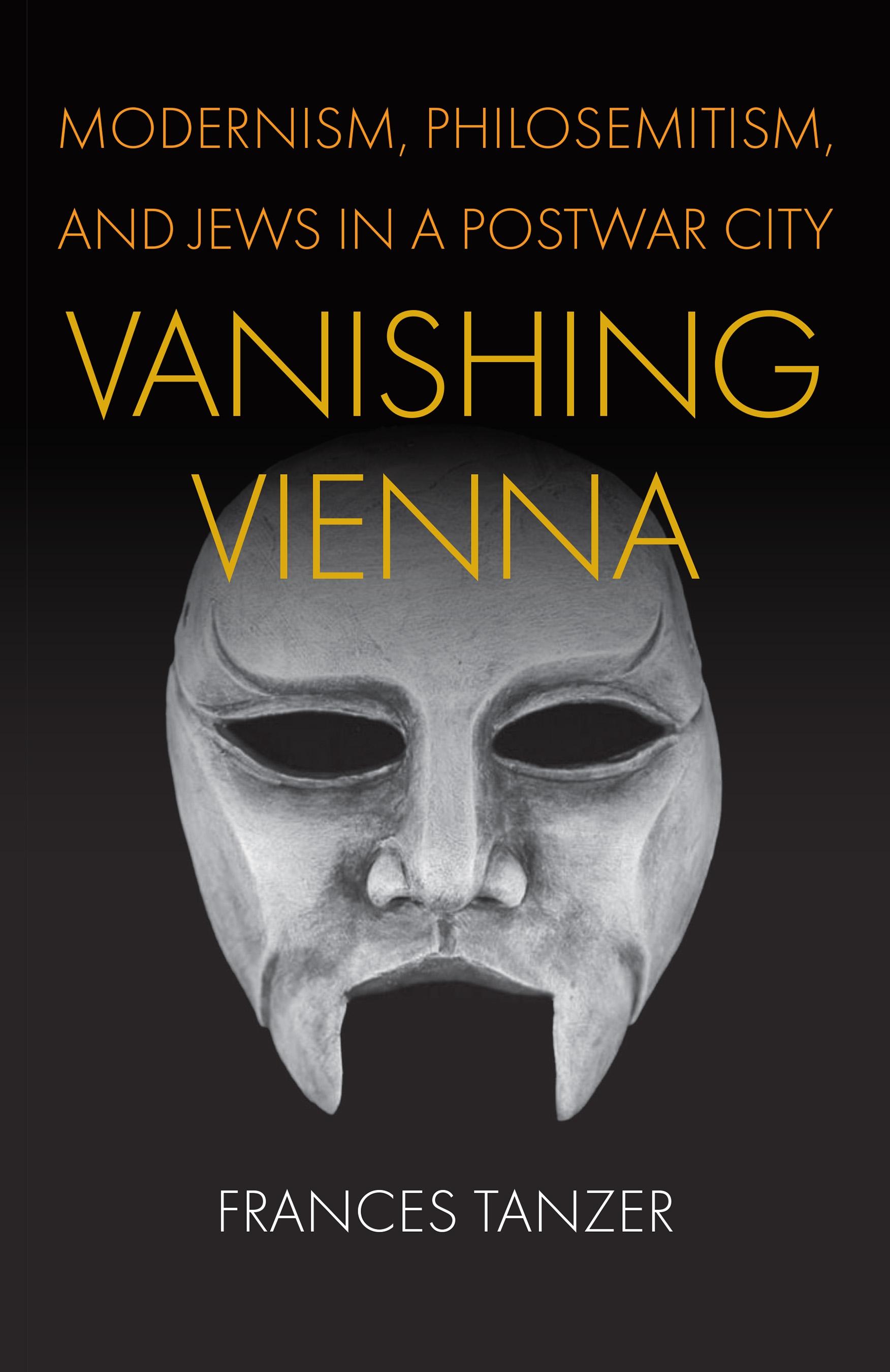
In Vanishing Vienna historian Frances Tanzer traces the reconstruction of Viennese culture from the 1938 German annexation through the early 1960s. The book reveals continuity in Vienna’s cultural history across this period and a framework for interpreting Viennese culture that relies on antisemitism, philosemitism, and a related discourse of Jewish presence and absence. This observation demands a new chronology of cultural reconstruction that links the Nazi and postwar years, and a new geography that includes the history of refugees from Nazi Vienna.
Rather than presenting the Nazi, exile, and postwar periods as discrete chapters of Vienna’s history, Tanzer argues that they are part of a continuous spectrum of cultural evolution—the result of which was the creation of a coherent Austrian identity and culture that emerged by the 1950s. As she shows, antisemitism and philosemitism were not contradictory forces in post-Nazi Austrian culture. They were deeply interconnected aspirations in a city where nostalgia for the past dominated cultural reconstruction efforts and supported seemingly contradictory impulses. Viennese nostalgia at times concealed the perpetuation of antisemitic fantasies of the city without Jews. At the same time, the postwar desire to return to a pre-Nazi past relied upon notions of Austrian culture that Austrian Jews perfected in exile, as well as on the symbolic remigration of a mostly imagined “Jewish” culture now taxed with redeeming Austria in the aftermath of the Holocaust. From this perspective, philosemitism is much more than a simple inversion of antisemitism—instead, Tanzer argues, philosemitism, problematic as it may be, defines Vienna in the era of postwar reconstruction.
In this way, Vanishing Vienna uncovers a rarely discussed phenomenon of the aftermath of the Holocaust—a society that consumes, redefines, and bestows symbolic meaning on the victims in their absence.
Before Memmo my notes were scattered across PDFs. Now a workspace pulls everything into one place — I see exactly what's still left to study.
Memmo's summaries are gold before exams. I don't have to re-read 800 pages two weeks before — just the important parts.
The AI chat has saved me the night before an exam more than once. I just keep asking until I get it — no waiting on a study group to reply.
The quizzes hit exactly what I need to know. Memmo tracks what I get stuck on — so I only practice what's worth it.
Flashcards with spaced repetition are magic. Memmo knows when I'm about to forget something and brings it back.
The AI podcasts are my favorite. I listen on my way to school and get a recap without sitting at a computer.

Handbok i kvalitativa metoder
281 kr

Hållbar utveckling: en introduktion för ingenjörer och andra problemlösare
334 kr

Brymans Samhällsvetenskapliga metoder
390 kr

Projektledning
491 kr

Den orättvisa hälsan: om socioekonomiska skillnader i hälsa och livslängd
326 kr

Vetenskapsteori för nybörjare
196 kr

Organizational Leadership
429 kr

På väg mot läraryrket
172 kr

Det sociala livet i skolan: Socialpsykologiska perspektiv
253 kr

Betygsättningens didaktik
151 kr

Personality
402 kr

Studying Leadership
404 kr

Managing Innovation
477 kr

Introduktion till samhällsvetenskaplig metod
347 kr

The Psychology of Sex and Gender
698 kr

Evidens och kunskap för socialt arbete
207 kr

Introduction to Leadership
605 kr