
Before Memmo my notes were scattered across PDFs. Now a workspace pulls everything into one place — I see exactly what's still left to study.
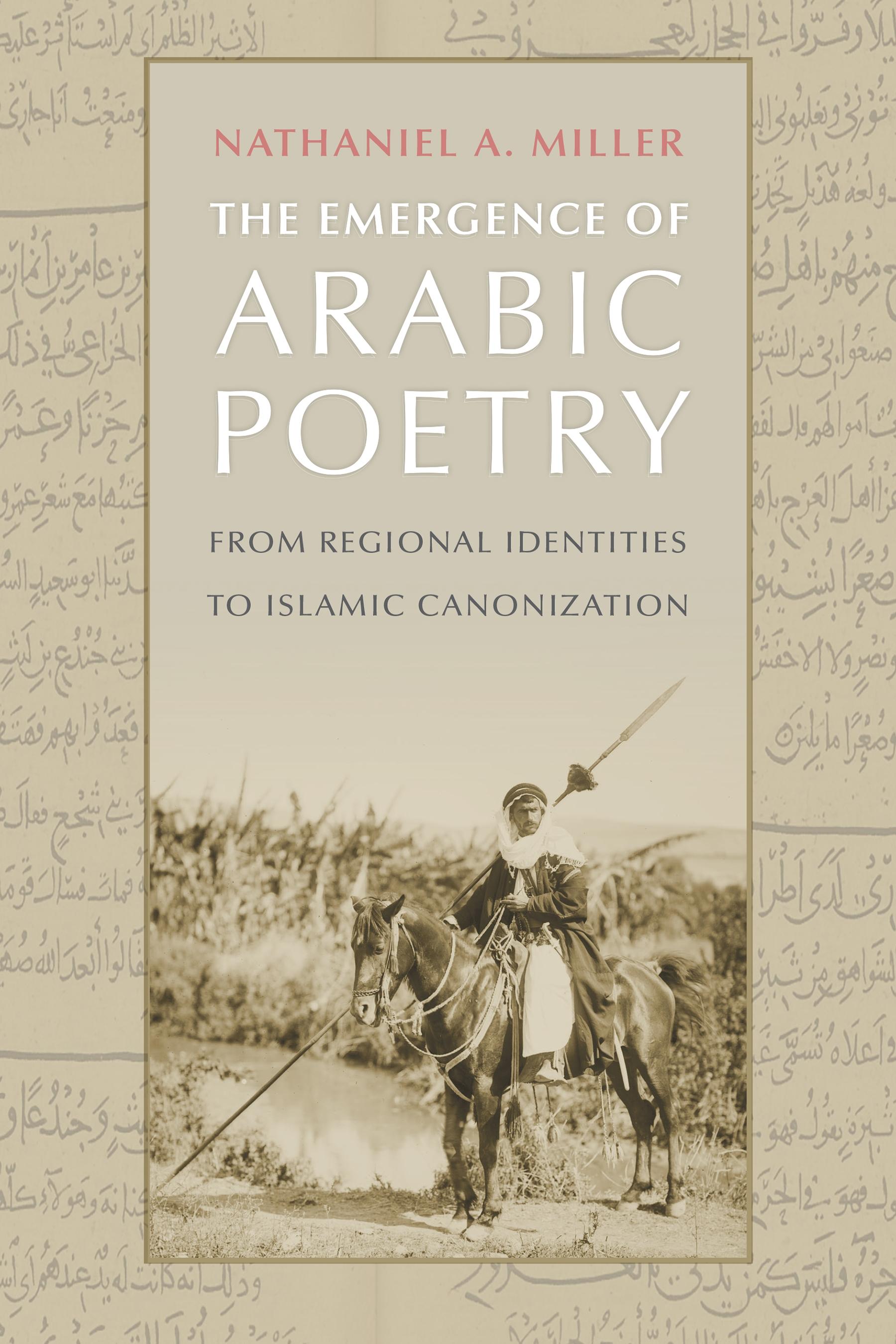
A new literary history of Arabic poetry from 500–750 CE that includes hundreds of lines of poetry never before translated into English
To interpret the Quran’s Arabic, early medieval Muslims turned to pre-Islamic poetry, a corpus that the Prophet Muhammad’s cousin called “the archive of the Arabs.” While this principle seems straightforward, pre-Islamic Arabs did not, in fact, think of themselves as either pre-Islamic or Arab. The term Arab barely appears at all in pre-Islamic poetry.
The Emergence of Arabic Poetry reexamines this early poetry to reconstruct what pre-Islamic culture actually entailed. Nathaniel A. Miller draws on a wide range of texts, including hundreds of lines of poetry never before translated into English—in addition to new inscriptional, archaeological, and non-Arabic sources—to explore the diverse world of pre- and early-Islamic Arabia in which Islam developed. Miller traces the emergence of two regional identities, and their distinctive poetic traditions, in the Arabian Peninsula of late antiquity: Najdi in the center and northeast and Hijazi in the southwest. The book shows how later efforts of Muslim scholars to use early poetry as an aesthetic, linguistic ideal to interpret the Quran resulted in an image of a unitary, exceptional, and isolated Arab identity and culture. These scholars drew on the Najdi tradition, canonizing its forms as classical Arabic poetry par excellence, and solidifying many tropes of Arabness that are still ubiquitous today: of nomadism, performative generosity, and martial equestrianism. However, Miller argues, it was the neglected Hijazi tradition that was actually more central to the emergence of early Islam.
Early Arabic poetry has been largely overlooked in current scholarship in adjacent fields, largely due to twentieth-century controversies over whether this corpus is legitimate or was forged. In combining a reconstruction of pre-Islamic poetry’s social function with a consideration of the circumstances of its later canonization, The Emergence of Arabic Poetry offers an urgently needed reappraisal of a significant but underexamined poetic corpus, as well as a new literary history of the origins of Arabic poetry from 500 to 750 CE.
Before Memmo my notes were scattered across PDFs. Now a workspace pulls everything into one place — I see exactly what's still left to study.
Memmo's summaries are gold before exams. I don't have to re-read 800 pages two weeks before — just the important parts.
The AI chat has saved me the night before an exam more than once. I just keep asking until I get it — no waiting on a study group to reply.
The quizzes hit exactly what I need to know. Memmo tracks what I get stuck on — so I only practice what's worth it.
Flashcards with spaced repetition are magic. Memmo knows when I'm about to forget something and brings it back.
The AI podcasts are my favorite. I listen on my way to school and get a recap without sitting at a computer.

Handbok i kvalitativa metoder
281 kr

Hållbar utveckling: en introduktion för ingenjörer och andra problemlösare
334 kr

Brymans Samhällsvetenskapliga metoder
390 kr

Projektledning
491 kr

Den orättvisa hälsan: om socioekonomiska skillnader i hälsa och livslängd
326 kr

Vetenskapsteori för nybörjare
196 kr

Organizational Leadership
429 kr

På väg mot läraryrket
172 kr

Det sociala livet i skolan: Socialpsykologiska perspektiv
253 kr

Betygsättningens didaktik
151 kr

Personality
402 kr

Studying Leadership
404 kr

Managing Innovation
477 kr

Introduktion till samhällsvetenskaplig metod
347 kr

The Psychology of Sex and Gender
698 kr

Evidens och kunskap för socialt arbete
207 kr

Introduction to Leadership
605 kr