
Before Memmo my notes were scattered across PDFs. Now a workspace pulls everything into one place — I see exactly what's still left to study.
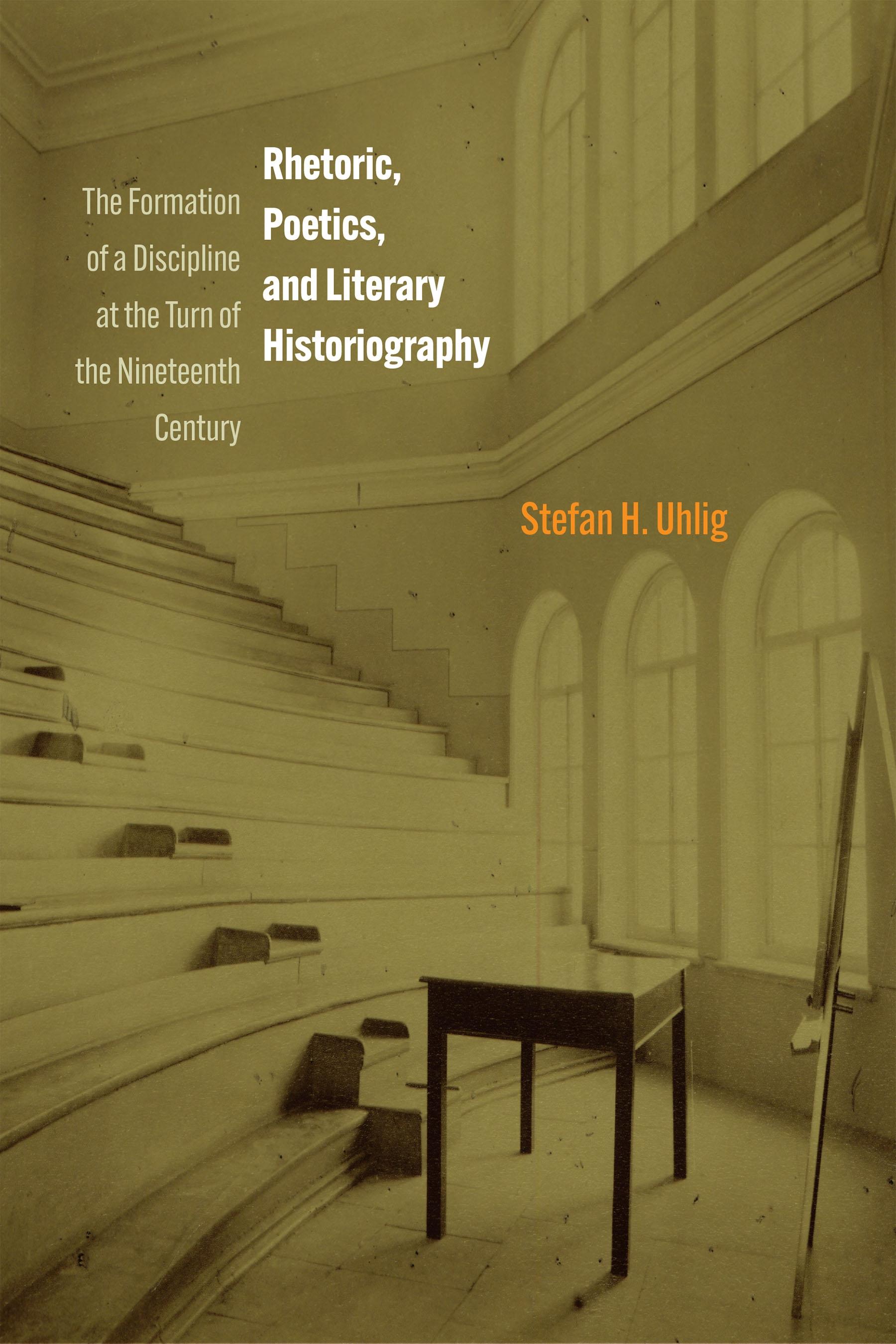
In Rhetoric, Poetics, and Literary Historiography, Stefan H. Uhlig offers a new account of the emergence of literary studies. Most histories of the early years of the field search for unifying origins of literature as a discipline and object of study. Uhlig turns to the decades around 1800 in Europe to reveal that the inception of the literary field was instead defined by intellectual diversity and contestation. He draws on an array of European writers to show how three schools of literary study—rhetoric teaching, theories of poetry, and literary history—emerged and clashed during this time, offering near-contemporaneous, yet divergent, visions of how to understand literature. Rhetoric and poetics thwarted criticism, to different ends, while literary historiography proved institutionally reassuring yet less useful as a tool for textual understanding.
Uhlig details how Scottish writers like Adam Smith and Hugh Blair taught rhetoric as a form self-expression, while Anglophone and German theorists of poetry like William Wordsworth, Friedrich Schlegel, and Johann Wolfgang von Goethe both engaged with and resented critics. At the same time, varying opinions on the practice of literary history emerged, with Immanuel Kant and Thomas De Quincey arguing for the independence of literature from historical forces while writers like Matthew Arnold approached literature as a means of narrating cultural archives instead of drawing on close reading and analysis. Rhetoric, Poetics, and Literary Historiography traces current debates in literary studies back to this formative moment, serving as a guide to past and present controversies in the field.
Before Memmo my notes were scattered across PDFs. Now a workspace pulls everything into one place — I see exactly what's still left to study.
Memmo's summaries are gold before exams. I don't have to re-read 800 pages two weeks before — just the important parts.
The AI chat has saved me the night before an exam more than once. I just keep asking until I get it — no waiting on a study group to reply.
The quizzes hit exactly what I need to know. Memmo tracks what I get stuck on — so I only practice what's worth it.
Flashcards with spaced repetition are magic. Memmo knows when I'm about to forget something and brings it back.
The AI podcasts are my favorite. I listen on my way to school and get a recap without sitting at a computer.

Handbok i kvalitativa metoder
281 kr

Hållbar utveckling: en introduktion för ingenjörer och andra problemlösare
334 kr

Brymans Samhällsvetenskapliga metoder
390 kr

Projektledning
491 kr

Den orättvisa hälsan: om socioekonomiska skillnader i hälsa och livslängd
326 kr

Vetenskapsteori för nybörjare
196 kr

Organizational Leadership
429 kr

På väg mot läraryrket
172 kr

Det sociala livet i skolan: Socialpsykologiska perspektiv
253 kr

Betygsättningens didaktik
151 kr

Personality
402 kr

Studying Leadership
404 kr

Managing Innovation
477 kr

Introduktion till samhällsvetenskaplig metod
347 kr

The Psychology of Sex and Gender
698 kr

Evidens och kunskap för socialt arbete
207 kr

Introduction to Leadership
605 kr