
Before Memmo my notes were scattered across PDFs. Now a workspace pulls everything into one place — I see exactly what's still left to study.
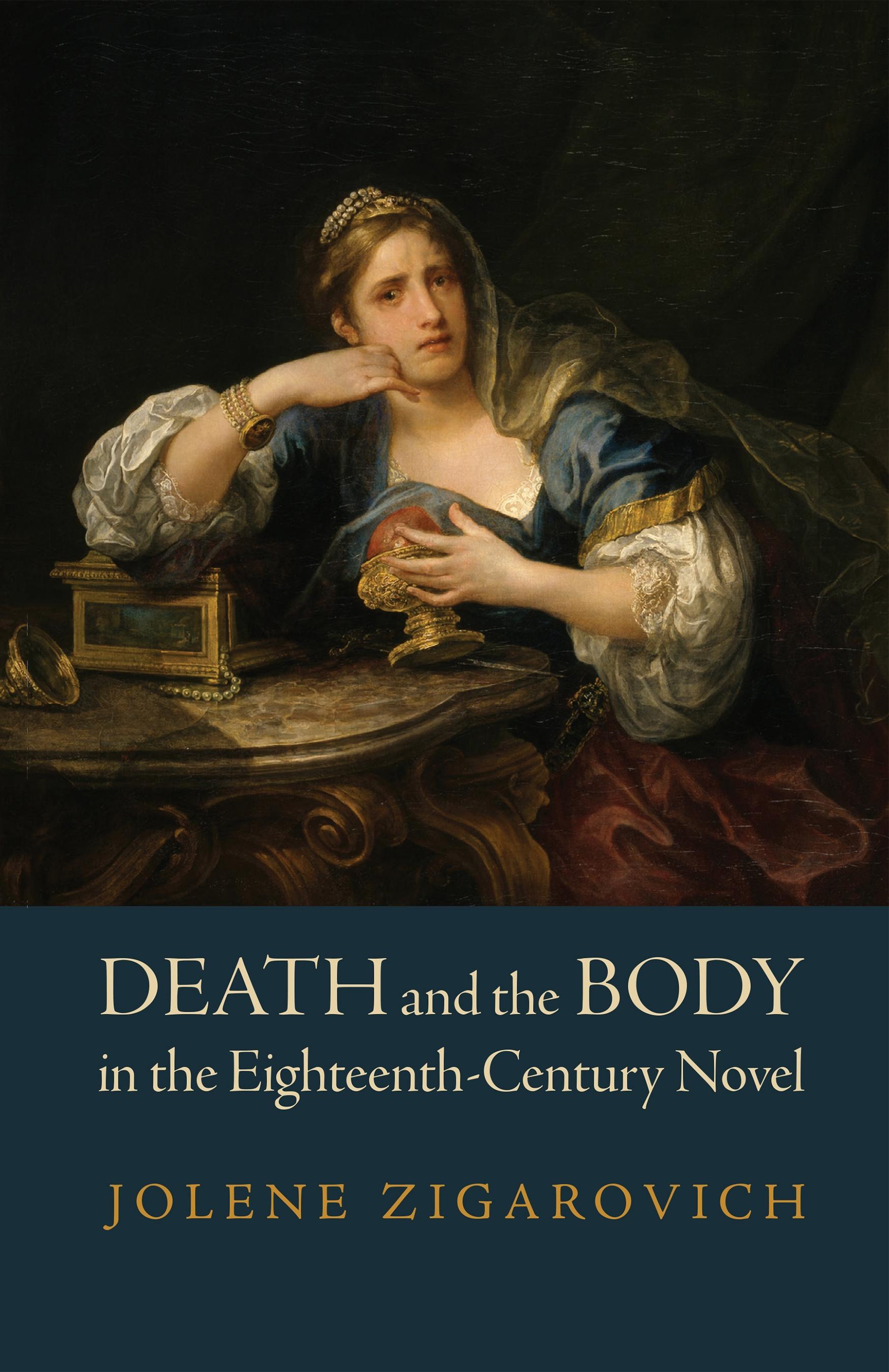
Death and the Body in the Eighteenth-Century Novel demonstrates that archives continually speak to the period’s rising funeral and mourning culture, as well as the increasing commodification of death and mourning typically associated with nineteenth-century practices. Drawing on a variety of historical discourses—such as wills, undertaking histories, medical treatises and textbooks, anatomical studies, philosophical treatises, and religious tracts and sermons—the book contributes to a fuller understanding of the history of death in the Enlightenment and its narrative transformation.
Death and the Body in the Eighteenth-Century Novel not only offers new insights about the effect of a growing secularization and commodification of death on the culture and its productions, but also fills critical gaps in the history of death, using narrative as a distinct literary marker. As anatomists dissected, undertakers preserved, jewelers encased, and artists figured the corpse, so too the novelist portrayed bodily artifacts. Why are these morbid forms of materiality entombed in the novel? Jolene Zigarovich addresses this complex question by claiming that the body itself—its parts, or its preserved representation—functioned as secular memento, suggesting that preserved remains became symbols of individuality and subjectivity. To support the conception that in this period notions of self and knowing center upon theories of the tactile and material, the chapters are organized around sensory conceptions and bodily materials such as touch, preserved flesh, bowel, heart, wax, hair, and bone. Including numerous visual examples, the book also argues that the relic represents the slippage between corpse and treasure, sentimentality and materialism, and corporeal fetish and aesthetic accessory.
Zigarovich’s analysis compels us to reassess the eighteenth-century response to and representation of the dead and dead-like body, and its material purpose and use in fiction. In a broader framework, Death and the Body in the Eighteenth-Century Novel also narrates a history of the novel that speaks to the cultural formation of modern individualism.
Before Memmo my notes were scattered across PDFs. Now a workspace pulls everything into one place — I see exactly what's still left to study.
Memmo's summaries are gold before exams. I don't have to re-read 800 pages two weeks before — just the important parts.
The AI chat has saved me the night before an exam more than once. I just keep asking until I get it — no waiting on a study group to reply.
The quizzes hit exactly what I need to know. Memmo tracks what I get stuck on — so I only practice what's worth it.
Flashcards with spaced repetition are magic. Memmo knows when I'm about to forget something and brings it back.
The AI podcasts are my favorite. I listen on my way to school and get a recap without sitting at a computer.

Handbok i kvalitativa metoder
281 kr

Hållbar utveckling: en introduktion för ingenjörer och andra problemlösare
334 kr

Brymans Samhällsvetenskapliga metoder
390 kr

Projektledning
491 kr

Den orättvisa hälsan: om socioekonomiska skillnader i hälsa och livslängd
326 kr

Vetenskapsteori för nybörjare
196 kr

Organizational Leadership
429 kr

På väg mot läraryrket
172 kr

Det sociala livet i skolan: Socialpsykologiska perspektiv
253 kr

Betygsättningens didaktik
151 kr

Personality
402 kr

Studying Leadership
404 kr

Managing Innovation
477 kr

Introduktion till samhällsvetenskaplig metod
347 kr

The Psychology of Sex and Gender
698 kr

Evidens och kunskap för socialt arbete
207 kr

Introduction to Leadership
605 kr