
Before Memmo my notes were scattered across PDFs. Now a workspace pulls everything into one place — I see exactly what's still left to study.
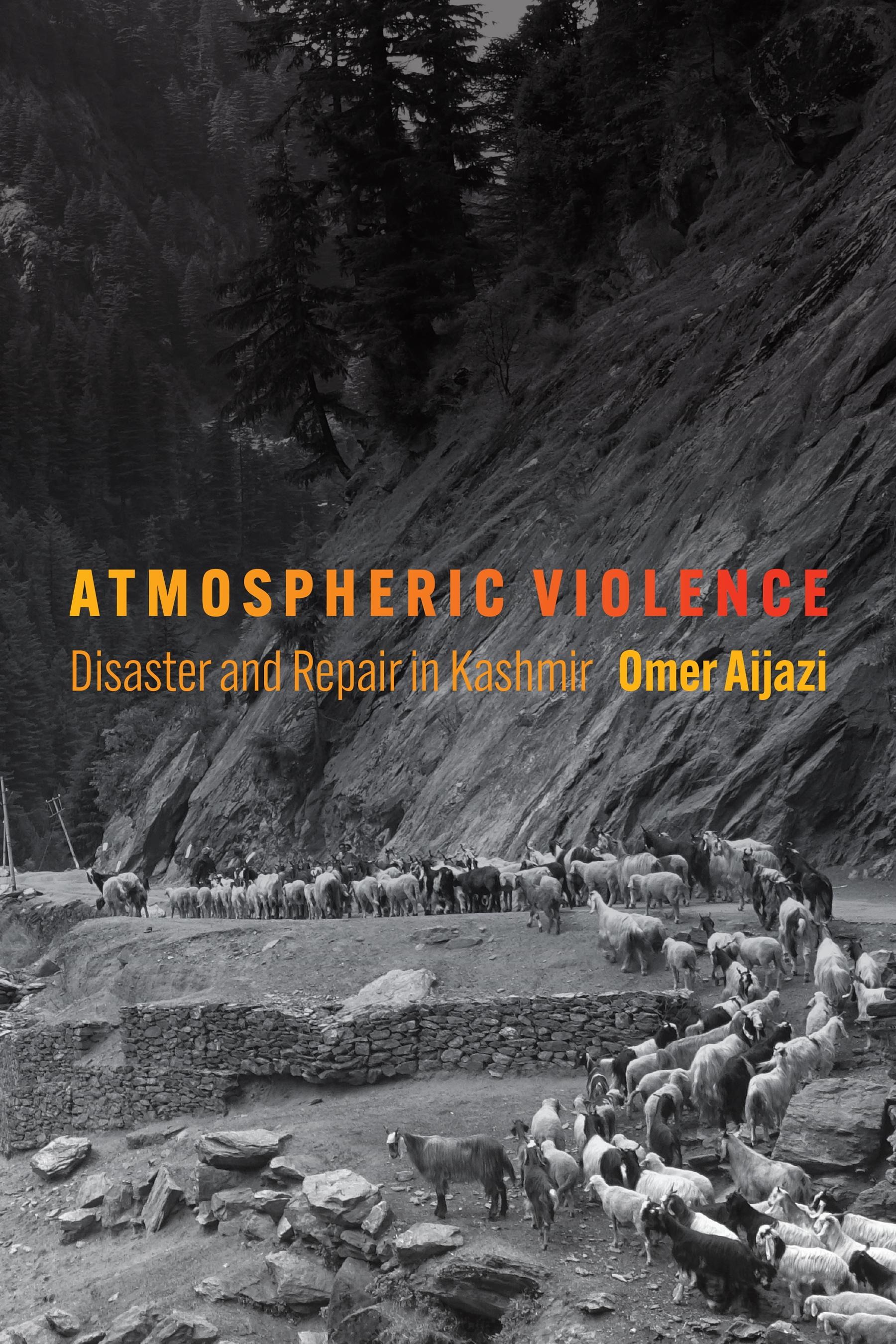
Atmospheric Violence grapples with the afterlife of environmental disasters and armed conflict and examines how people attempt to flourish despite and alongside continuing violence. Departing from conventional approaches to the study of disaster and conflict that have dominated academic studies of Kashmir, Omer Aijazi’s ethnography of life in the borderlands instead explores possibilities for imagining life otherwise, in an environment where violence is everywhere, or atmospheric.
Drawing on extensive fieldwork in the portion of Kashmir under Pakistan’s control and its surrounding mountainscapes, the book takes us to two remote mountainous valleys that have been shaped by recurring environmental disasters, as well as by the landscape of no-go zones, army barracks, and security checkpoints of the contested India/Pakistan border. Through a series of interconnected scenes from the lives of five protagonists, all of whom are precariously situated within their families or societies and rarely enjoy the expected protections of state or community, Aijazi reveals the movements, flows, and intimacies sustained by a landscape that enables alternative modes of life. Blurring the distinctions between story, theory, and activism, he explores what emerges when theory becomes a project of seeing and feeling from the non-normative standpoint of those who, like the book’s protagonists, do not subscribe to the rules by which most others have come to know the world.
Bringing the critical study of disaster into conversation with a radical humanist anthropology and the capaciousness of affect theory, held accountable to Black studies and Indigenous studies, Aijazi offers a decolonial approach to disaster studies centering not on trauma and rupture but rather on repair—the social labor through which communities living with disaster refuse the conditions of death imposed upon them and create viable lives for themselves, even amidst constant diminishment and world-annihilation.
Before Memmo my notes were scattered across PDFs. Now a workspace pulls everything into one place — I see exactly what's still left to study.
Memmo's summaries are gold before exams. I don't have to re-read 800 pages two weeks before — just the important parts.
The AI chat has saved me the night before an exam more than once. I just keep asking until I get it — no waiting on a study group to reply.
The quizzes hit exactly what I need to know. Memmo tracks what I get stuck on — so I only practice what's worth it.
Flashcards with spaced repetition are magic. Memmo knows when I'm about to forget something and brings it back.
The AI podcasts are my favorite. I listen on my way to school and get a recap without sitting at a computer.

Handbok i kvalitativa metoder
281 kr

Hållbar utveckling: en introduktion för ingenjörer och andra problemlösare
334 kr

Brymans Samhällsvetenskapliga metoder
390 kr

Projektledning
491 kr

Den orättvisa hälsan: om socioekonomiska skillnader i hälsa och livslängd
326 kr

Vetenskapsteori för nybörjare
196 kr

Organizational Leadership
429 kr

På väg mot läraryrket
172 kr

Det sociala livet i skolan: Socialpsykologiska perspektiv
253 kr

Betygsättningens didaktik
151 kr

Personality
402 kr

Studying Leadership
404 kr

Managing Innovation
477 kr

Introduktion till samhällsvetenskaplig metod
347 kr

The Psychology of Sex and Gender
698 kr

Evidens och kunskap för socialt arbete
207 kr

Introduction to Leadership
605 kr