
Before Memmo my notes were scattered across PDFs. Now a workspace pulls everything into one place — I see exactly what's still left to study.
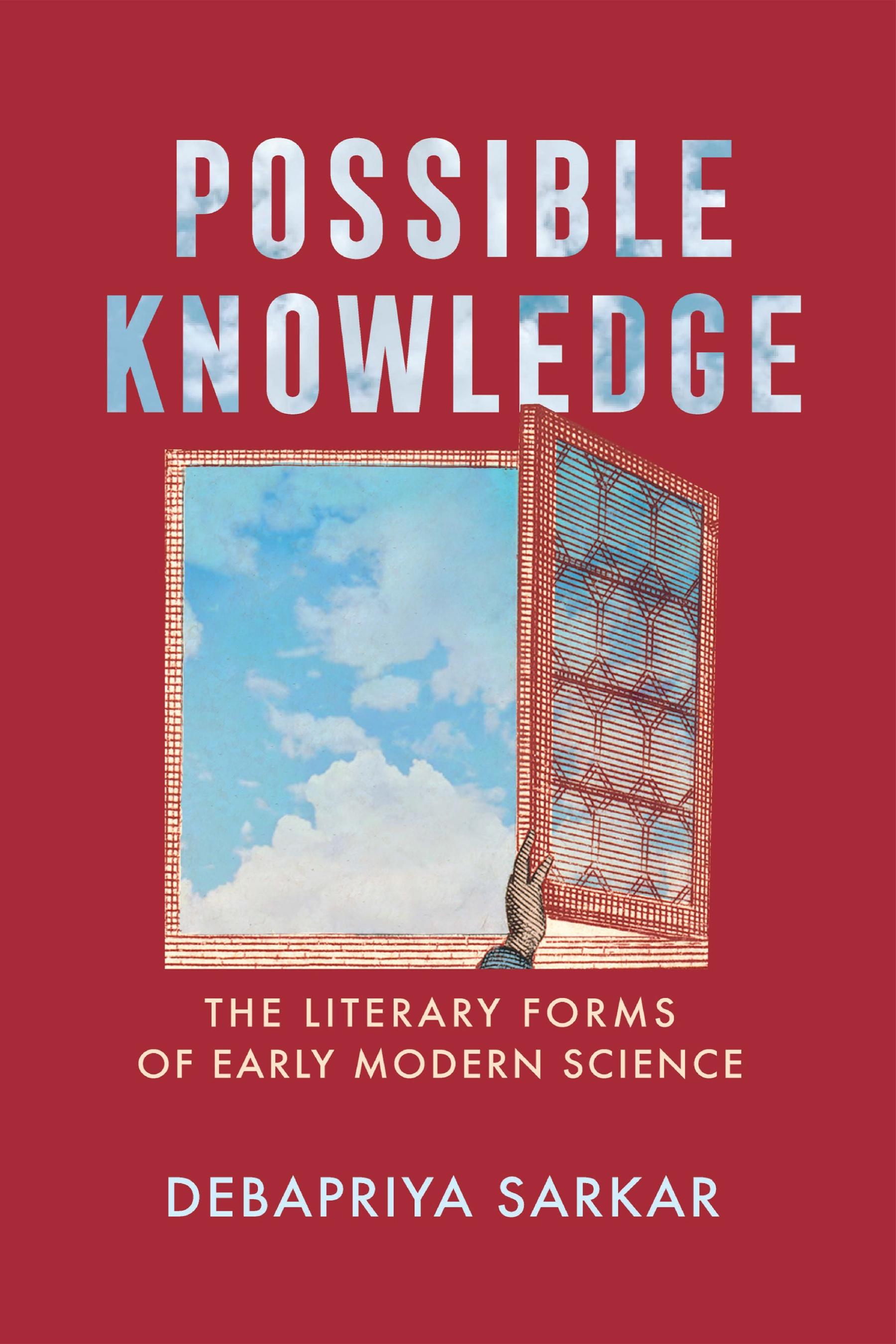
The Renaissance, scholars have long argued, was a period beset by the loss of philosophical certainty. In Possible Knowledge, Debapriya Sarkar argues for the pivotal role of literature—what early moderns termed poesie—in the dynamic intellectual culture of this era of profound incertitude. Revealing how problems of epistemology are inextricable from questions of literary form, Sarkar offers a defense of poiesis, or literary making, as a vital philosophical endeavor.
Working across a range of genres, Sarkar theorizes “possible knowledge” as an intellectual paradigm crafted in and through literary form. Sixteenth- and seventeenth-century writers such as Spenser, Bacon, Shakespeare, Cavendish, and Milton marshalled the capacious concept of the “possible,” defined by Philip Sidney as what “may be and should be,” to construct new theories of physical and metaphysical reality. These early modern thinkers mobilized the imaginative habits of thought constitutive to major genres of literary writing—including epic, tragedy, romance, lyric, and utopia—in order to produce knowledge divorced from historical truth and empirical fact by envisioning states of being untethered from “nature” or reality.
Approaching imaginative modes such as hypothesis, conjecture, prediction, and counterfactuals as instruments of possible knowledge, Sarkar exposes how the speculative allure of the “possible” lurks within scientific experiment, induction, and theories of probability. In showing how early modern literary writing sought to grapple with the challenge of forging knowledge in an uncertain, perhaps even incomprehensible world, Possible Knowledge also highlights its most audacious intellectual ambition: its claim that while natural philosophy, or what we today term science, might explain the physical world, literature could remake reality. Enacting a history of ideas that centers literary studies, Possible Knowledge suggests that what we have termed a history of science might ultimately be a history of the imagination.
Before Memmo my notes were scattered across PDFs. Now a workspace pulls everything into one place — I see exactly what's still left to study.
Memmo's summaries are gold before exams. I don't have to re-read 800 pages two weeks before — just the important parts.
The AI chat has saved me the night before an exam more than once. I just keep asking until I get it — no waiting on a study group to reply.
The quizzes hit exactly what I need to know. Memmo tracks what I get stuck on — so I only practice what's worth it.
Flashcards with spaced repetition are magic. Memmo knows when I'm about to forget something and brings it back.
The AI podcasts are my favorite. I listen on my way to school and get a recap without sitting at a computer.

Handbok i kvalitativa metoder
281 kr

Hållbar utveckling: en introduktion för ingenjörer och andra problemlösare
334 kr

Brymans Samhällsvetenskapliga metoder
390 kr

Projektledning
491 kr

Den orättvisa hälsan: om socioekonomiska skillnader i hälsa och livslängd
326 kr

Organizational Leadership
429 kr

Vetenskapsteori för nybörjare
196 kr

På väg mot läraryrket
172 kr

Det sociala livet i skolan: Socialpsykologiska perspektiv
253 kr

Betygsättningens didaktik
151 kr

Personality
402 kr

Studying Leadership
404 kr

Managing Innovation
477 kr

Introduktion till samhällsvetenskaplig metod
347 kr

The Psychology of Sex and Gender
698 kr

Evidens och kunskap för socialt arbete
207 kr

Introduction to Leadership
605 kr