
Before Memmo my notes were scattered across PDFs. Now a workspace pulls everything into one place — I see exactly what's still left to study.
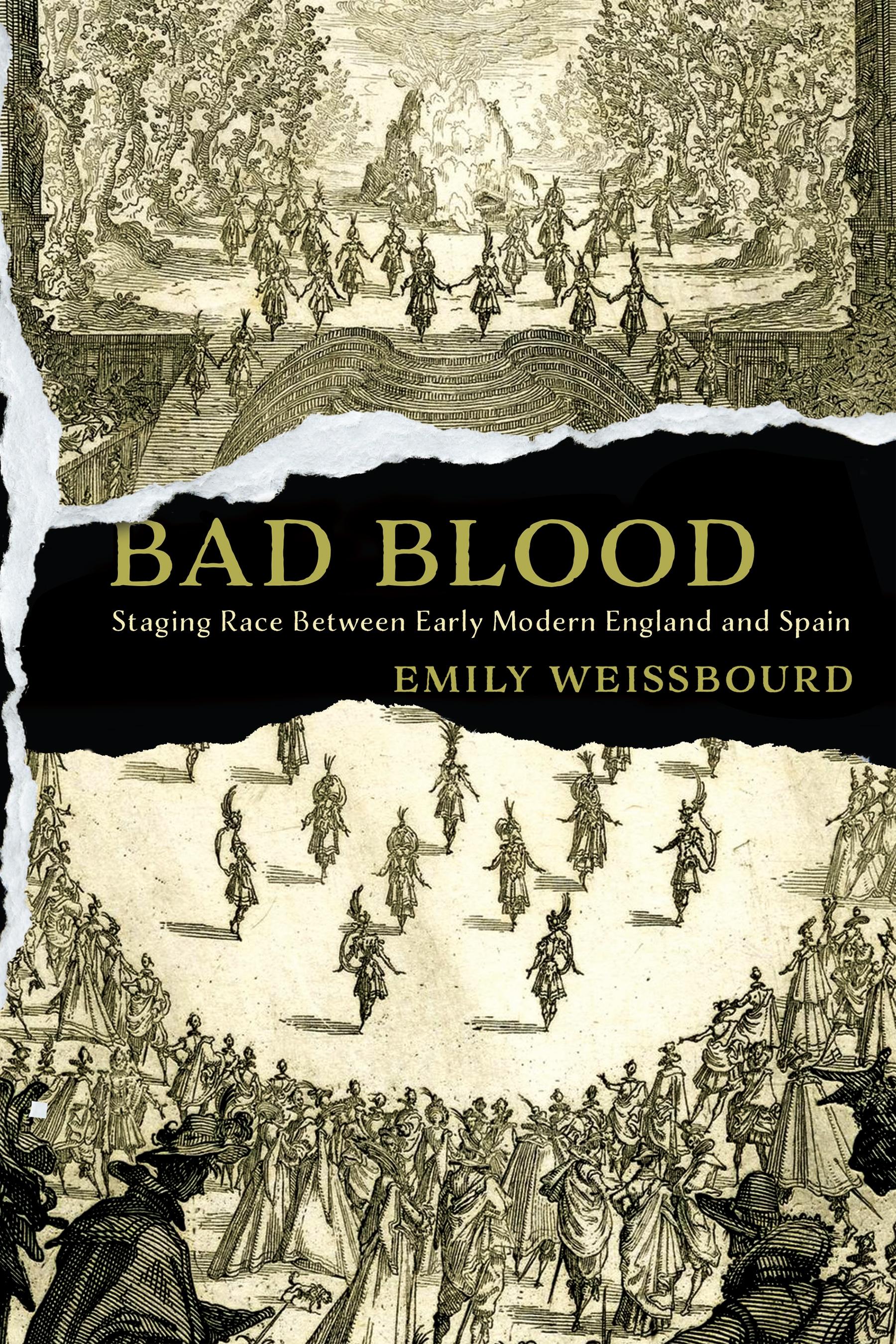
Bad Blood explores representations of race in early modern English and Spanish literature, especially drama. It addresses two different forms of racial ideology: one concerned with racialized religious difference—that is, the notion of having Jewish or Muslim “blood”—and one concerned with Blackness and whiteness. Shakespeare’s Othello tells us that he was “sold to slavery” in his youth, a phrase that evokes the Atlantic triangle trade for readers today. For many years, however, scholars have asserted that racialized slavery was not yet widely understood in early modern England, and that the kind of enslavement that Othello describes is related to Christian-Muslim conflict in the Mediterranean rather than the rise of the racialized enslavement of Afro-diasporic subjects.
Bad Blood offers a new account of early modern race by tracing the development of European racial vocabularies from Spain to England. Dispelling assumptions, stemming from Spain’s historical exclusion of Jews and Muslims, that premodern racial ideology focused on religious difference and purity of blood more than color, Emily Weissbourd argues that the context of the Atlantic slave trade is indispensable to understanding race in early modern Spanish and English literature alike. Through readings of plays by Shakespeare, Lope de Vega, and their contemporaries, as well as Spanish picaresque fiction and its English translations, Weissbourd reveals how ideologies of racialized slavery as well as religious difference come to England via Spain, and how both notions of race operate in conjunction to shore up fantasies of Blackness, whiteness, and “pure blood.” The enslavement of Black Africans, Weissbourd shows, is inextricable from the staging of race in early modern literature.
Before Memmo my notes were scattered across PDFs. Now a workspace pulls everything into one place — I see exactly what's still left to study.
Memmo's summaries are gold before exams. I don't have to re-read 800 pages two weeks before — just the important parts.
The AI chat has saved me the night before an exam more than once. I just keep asking until I get it — no waiting on a study group to reply.
The quizzes hit exactly what I need to know. Memmo tracks what I get stuck on — so I only practice what's worth it.
Flashcards with spaced repetition are magic. Memmo knows when I'm about to forget something and brings it back.
The AI podcasts are my favorite. I listen on my way to school and get a recap without sitting at a computer.

Handbok i kvalitativa metoder
281 kr

Hållbar utveckling: en introduktion för ingenjörer och andra problemlösare
334 kr

Brymans Samhällsvetenskapliga metoder
390 kr

Projektledning
491 kr

Den orättvisa hälsan: om socioekonomiska skillnader i hälsa och livslängd
326 kr

Organizational Leadership
429 kr

Vetenskapsteori för nybörjare
196 kr

På väg mot läraryrket
172 kr

Det sociala livet i skolan: Socialpsykologiska perspektiv
253 kr

Betygsättningens didaktik
151 kr

Personality
402 kr

Studying Leadership
404 kr

Managing Innovation
477 kr

Introduktion till samhällsvetenskaplig metod
347 kr

The Psychology of Sex and Gender
698 kr

Evidens och kunskap för socialt arbete
207 kr

Introduction to Leadership
605 kr