
Before Memmo my notes were scattered across PDFs. Now a workspace pulls everything into one place — I see exactly what's still left to study.
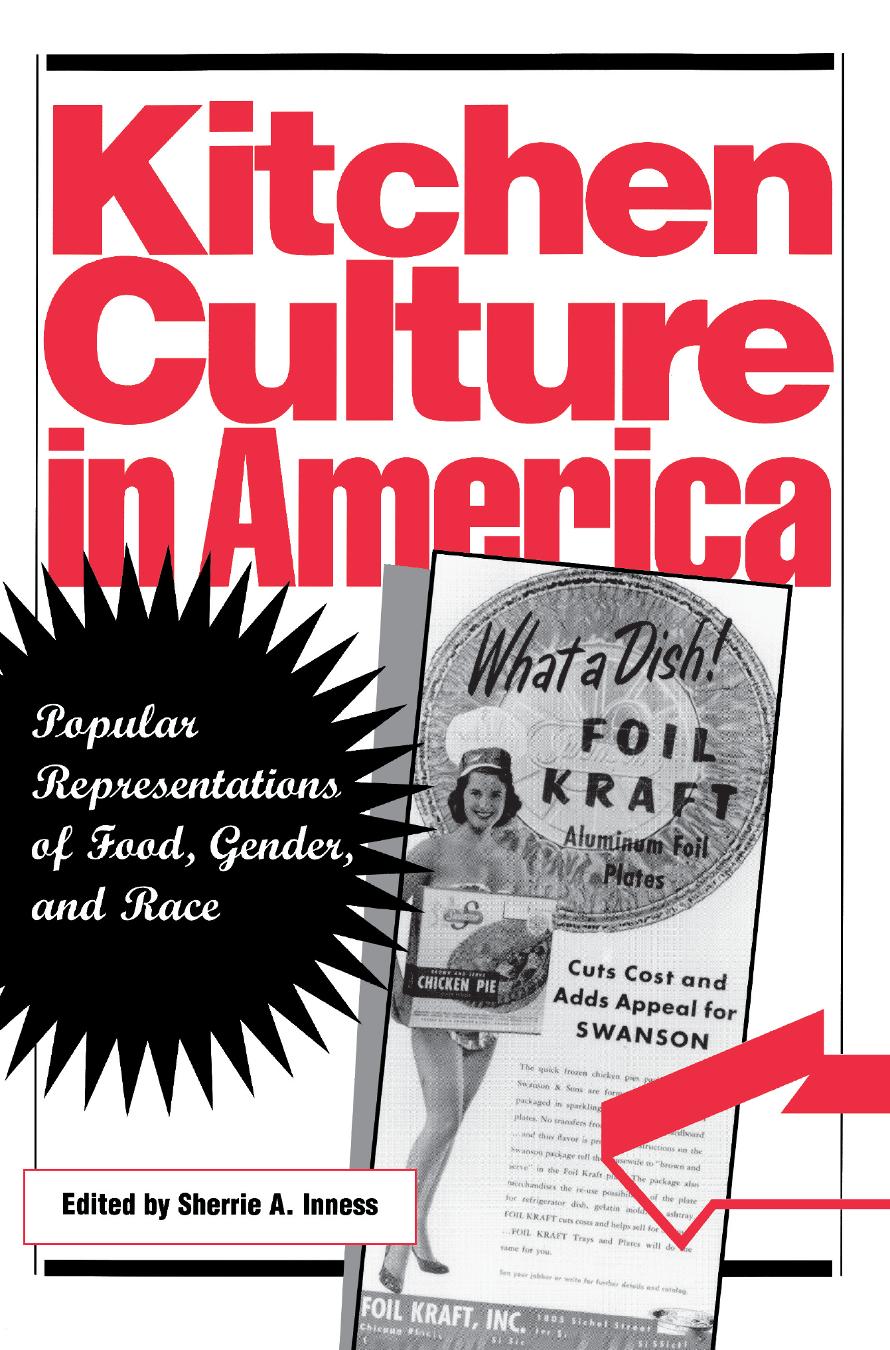
At supermarkets across the nation, customers waiting in line—mostly female—flip through magazines displayed at the checkout stand. What we find on those magazine racks are countless images of food and, in particular, women: moms preparing lunch for the team, college roommates baking together, working women whipping up a meal in under an hour, dieters happy to find a lowfat ice cream that tastes great. In everything from billboards and product packaging to cooking shows, movies, and even sex guides, food has a presence that conveys powerful gender-coded messages that shape our society.
Kitchen Culture in America is a collection of essays that examine how women's roles have been shaped by the principles and practice of consuming and preparing food. Exploring popular representations of food and gender in American society from 1895 to 1970, these essays argue that kitchen culture accomplishes more than just passing down cooking skills and well-loved recipes from generation to generation. Kitchen culture instructs women about how to behave like "correctly" gendered beings. One chapter reveals how juvenile cookbooks, a popular genre for over a century, have taught boys and girls not only the basics of cooking, but also the fine distinctions between their expected roles as grown men and women.
Several essays illuminate the ways in which food manufacturers have used gender imagery to define women first and foremost as consumers. Other essays, informed by current debates in the field of material culture, investigate how certain commodities like candy, which in the early twentieth century was advertised primarily as a feminine pleasure, have been culturally constructed. The book also takes a look at the complex relationships among food, gender, class, and race or ethnicity-as represented, for example, in the popular Southern black Mammy figure. In all of the essays, Kitchen Culture in America seeks to show how food serves as a marker of identity in American society.
Before Memmo my notes were scattered across PDFs. Now a workspace pulls everything into one place — I see exactly what's still left to study.
Memmo's summaries are gold before exams. I don't have to re-read 800 pages two weeks before — just the important parts.
The AI chat has saved me the night before an exam more than once. I just keep asking until I get it — no waiting on a study group to reply.
The quizzes hit exactly what I need to know. Memmo tracks what I get stuck on — so I only practice what's worth it.
Flashcards with spaced repetition are magic. Memmo knows when I'm about to forget something and brings it back.
The AI podcasts are my favorite. I listen on my way to school and get a recap without sitting at a computer.

Handbok i kvalitativa metoder
281 kr

Hållbar utveckling: en introduktion för ingenjörer och andra problemlösare
334 kr

Brymans Samhällsvetenskapliga metoder
390 kr

Projektledning
491 kr

Den orättvisa hälsan: om socioekonomiska skillnader i hälsa och livslängd
326 kr

Organizational Leadership
429 kr

Vetenskapsteori för nybörjare
196 kr

På väg mot läraryrket
172 kr

Det sociala livet i skolan: Socialpsykologiska perspektiv
253 kr

Betygsättningens didaktik
151 kr

Personality
402 kr

Studying Leadership
404 kr

Managing Innovation
477 kr

Introduktion till samhällsvetenskaplig metod
347 kr

The Psychology of Sex and Gender
698 kr

Evidens och kunskap för socialt arbete
207 kr

Introduction to Leadership
605 kr