
Before Memmo my notes were scattered across PDFs. Now a workspace pulls everything into one place — I see exactly what's still left to study.
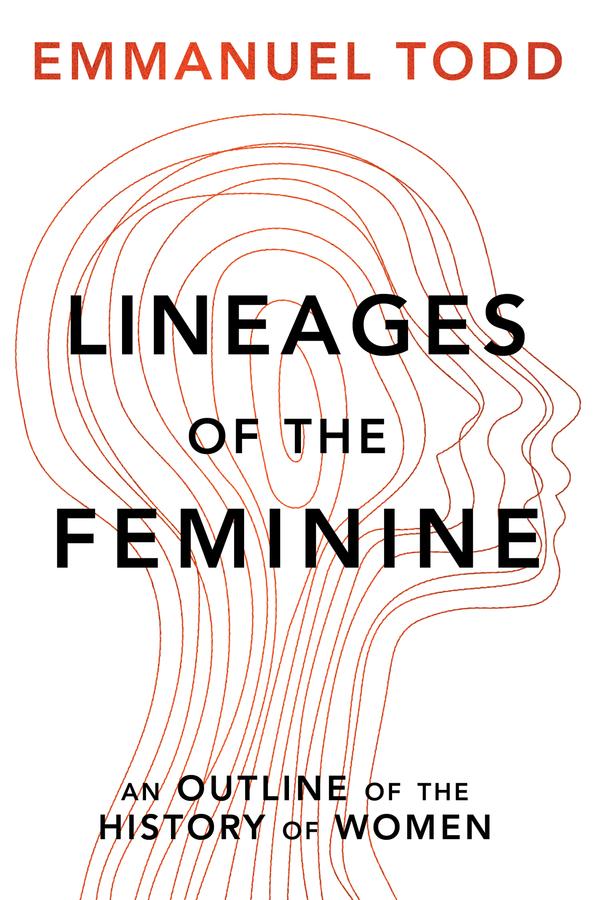
We are experiencing an anthropological revolution. We see it in the #MeToo movement, in the denunciation of femicide and in an increasingly vociferous critique of patriarchal domination. Why this sudden rise of an antagonistic conception of the relationship between men and women, at the very moment when progress is accelerating and when the goals of first- and second-wave feminism seem on the verge of being achieved?
In this book, the anthropologist and historian Emmanuel Todd, while not underestimating the importance of crucial inequalities that remain, argues that the emancipation of women has essentially already taken place but that it has given rise to new tensions and contradictions. As women gain more freedom, they also gain access to traditional male social pathologies: economic anxiety, the disorientation of anomie, and individual and class resentment. But because they remain women, with the ability to bear children, their burden as human beings, although richer, is now more difficult to bear than that of men.
In order to understand our current condition, Todd retraces the evolution of the male/female relationship through the long history of the human species, from the emergence of Homo sapiens a hundred thousand years ago to the present. He also conducts a broad empirical study of the convergence between men and women today and of the differences that still separate them – in education, in employment and in relation to longevity, suicide and homicide, electoral behaviour and racism. He explores the relations between women’s liberation and other changes in contemporary societies such as the collapse of religion, the decline of industry, the decline of homophobia, the rise of bisexuality and the transgender phenomenon, and the decline in a sense of the collective life. And he shows how and why Western countries – and especially the Anglo-American world, Scandinavia and France – are, in their new feminist revolution, perhaps less universal than they think.
Before Memmo my notes were scattered across PDFs. Now a workspace pulls everything into one place — I see exactly what's still left to study.
Memmo's summaries are gold before exams. I don't have to re-read 800 pages two weeks before — just the important parts.
The AI chat has saved me the night before an exam more than once. I just keep asking until I get it — no waiting on a study group to reply.
The quizzes hit exactly what I need to know. Memmo tracks what I get stuck on — so I only practice what's worth it.
Flashcards with spaced repetition are magic. Memmo knows when I'm about to forget something and brings it back.
The AI podcasts are my favorite. I listen on my way to school and get a recap without sitting at a computer.

Handbok i kvalitativa metoder
281 kr

Hållbar utveckling: en introduktion för ingenjörer och andra problemlösare
334 kr

Brymans Samhällsvetenskapliga metoder
390 kr

Projektledning
491 kr

Den orättvisa hälsan: om socioekonomiska skillnader i hälsa och livslängd
326 kr

Organizational Leadership
429 kr

Vetenskapsteori för nybörjare
196 kr

På väg mot läraryrket
172 kr

Det sociala livet i skolan: Socialpsykologiska perspektiv
253 kr

Betygsättningens didaktik
151 kr

Personality
402 kr

Studying Leadership
404 kr

Managing Innovation
477 kr

Introduktion till samhällsvetenskaplig metod
347 kr

The Psychology of Sex and Gender
698 kr

Evidens och kunskap för socialt arbete
207 kr

Introduction to Leadership
605 kr