
Before Memmo my notes were scattered across PDFs. Now a workspace pulls everything into one place — I see exactly what's still left to study.
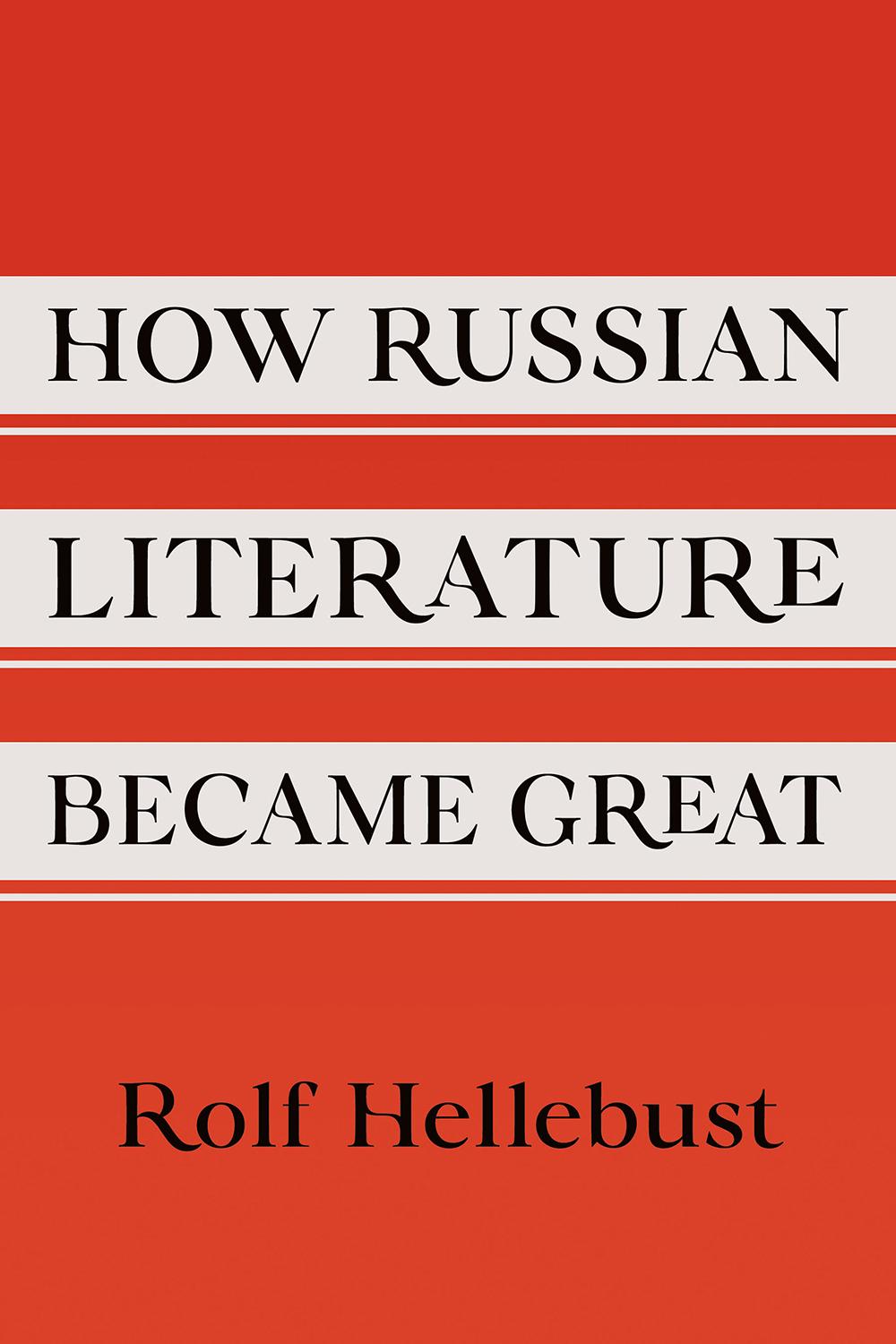
How Russian Literature Became Great explores the cultural and political role of a modern national literature, orchestrated in a Slavonic key but resonating far beyond Russia's borders.
Rolf Hellebust investigates a range of literary tendencies, philosophies, and theories from antiquity to the present: Roman jurisprudence to German Romanticism, French Enlightenment to Czech Structuralism, Herder to Hobsbawm, Samuel Johnson to Sainte-Beuve, and so on. Besides the usual Russian suspects from Pushkin to Chekhov, Hellebust includes European writers: Byron and Shelley, Goethe and Schiller, Chateaubriand and Baudelaire, Dante, Mickiewicz, and more.
As elsewhere, writing in Russia advertises itself via a canon of literary monuments constituting an atemporal "ideal order among themselves" (T.S. Eliot). And yet this is a tradition that could only have been born at a specific moment in the golden nineteenth-century age of historiography and nation-building. The Russian example reveals the contradictions between immutability and innovation, universality and specificity at the heart of modern conceptions of tradition from Sainte-Beuve through Eliot and down to the present day.
The conditions of its era of formation—the prominence of the crucial literary-historical question of the writer's social function, and the equation of literature with national identity—make the Russian classical tradition the epitome of a unified cultural text, with a complex narrative in which competing stories of progress and decline unfold through the symbolic biographical encounters of the authors who constitute its members. How Russian Literature Became Great thus offers a new paradigm for understanding the paradoxes of modern tradition.
Before Memmo my notes were scattered across PDFs. Now a workspace pulls everything into one place — I see exactly what's still left to study.
Memmo's summaries are gold before exams. I don't have to re-read 800 pages two weeks before — just the important parts.
The AI chat has saved me the night before an exam more than once. I just keep asking until I get it — no waiting on a study group to reply.
The quizzes hit exactly what I need to know. Memmo tracks what I get stuck on — so I only practice what's worth it.
Flashcards with spaced repetition are magic. Memmo knows when I'm about to forget something and brings it back.
The AI podcasts are my favorite. I listen on my way to school and get a recap without sitting at a computer.

Handbok i kvalitativa metoder
281 kr

Hållbar utveckling: en introduktion för ingenjörer och andra problemlösare
334 kr

Brymans Samhällsvetenskapliga metoder
390 kr

Projektledning
491 kr

Den orättvisa hälsan: om socioekonomiska skillnader i hälsa och livslängd
326 kr

Organizational Leadership
429 kr

Vetenskapsteori för nybörjare
196 kr

På väg mot läraryrket
172 kr

Det sociala livet i skolan: Socialpsykologiska perspektiv
253 kr

Betygsättningens didaktik
151 kr

Personality
402 kr

Studying Leadership
404 kr

Managing Innovation
477 kr

Introduktion till samhällsvetenskaplig metod
347 kr

The Psychology of Sex and Gender
698 kr

Evidens och kunskap för socialt arbete
207 kr

Introduction to Leadership
605 kr