
Before Memmo my notes were scattered across PDFs. Now a workspace pulls everything into one place — I see exactly what's still left to study.
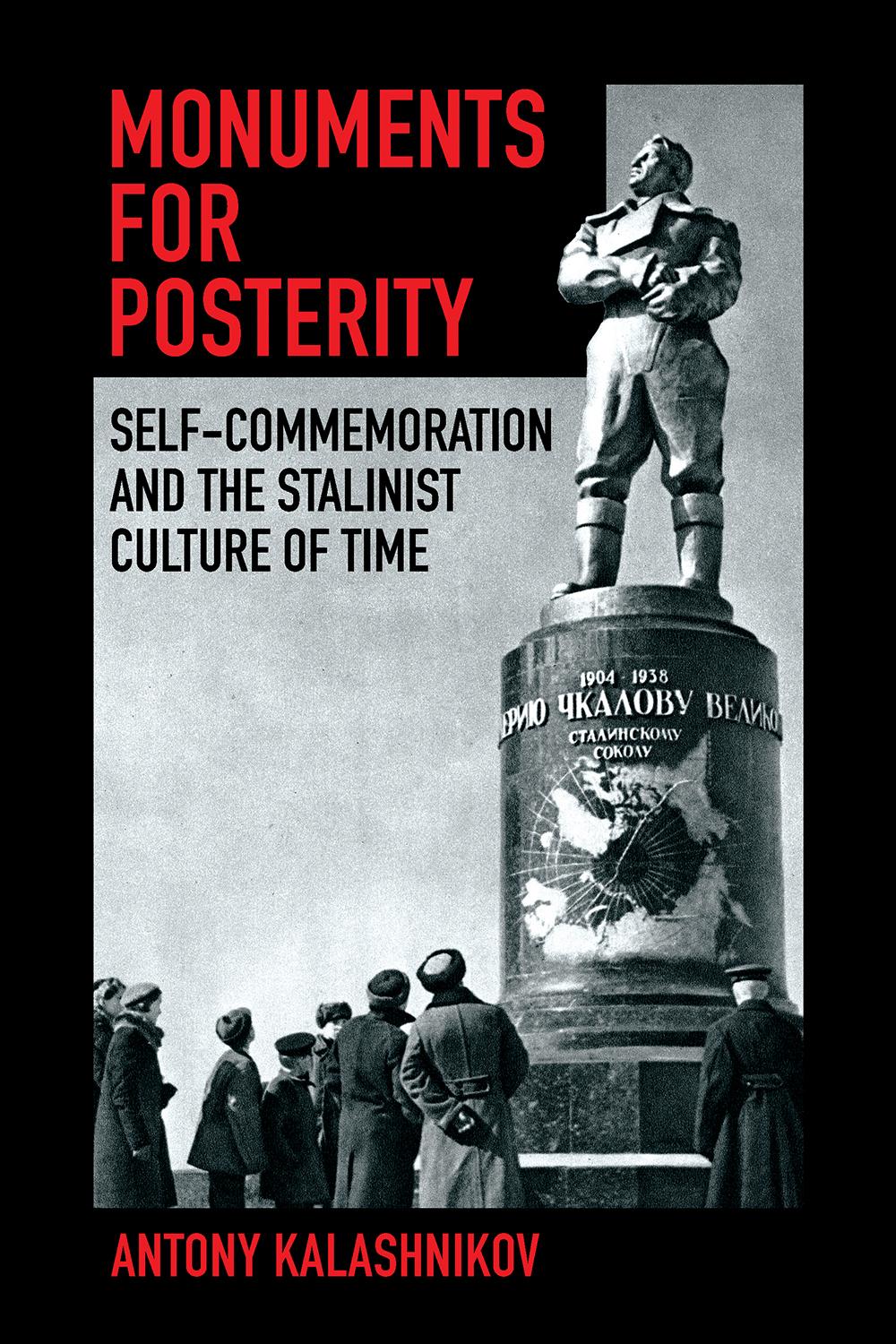
Monuments for Posterity challenges the common assumption that Stalinist monuments were constructed with an immediate, propagandistic function, arguing instead that they were designed to memorialize the present for an imagined posterity. In this respect, even while pursuing its monument-building program with a singular ruthlessness and on an unprecedented scale, the Stalinist regime was broadly in step with transnational monument-building trends of the era and their undergirding cultural dynamics.
By integrating approaches from cultural history, art criticism, and memory studies, along with previously unexplored archival material, Antony Kalashnikov examines the origin and implementation of the Stalinist monument-building program from the perspective of its goal to "immortalize the memory" of the era. He analyzes how this objective affected the design and composition of Stalinist monuments, what cultural factors prompted the sudden and powerful yearning to be remembered, and most importantly, what the culture of self-commemoration revealed about changing outlooks on the future—both in the Soviet Union and beyond its borders.
Monuments for Posterity shifts the perspective from monuments' political-ideological content to the desire to be remembered and prompts a much-needed reconsideration of the supposed uniqueness of both Stalinist aesthetics and the temporal culture that they expressed. Many Stalinist monuments still stand prominently in postsocialist cityscapes and remain the subject of continual heated political controversy. Kalashnikov makes manifest monuments' intentional attempts to seduce us—the "posterity" for whom they were built.
Before Memmo my notes were scattered across PDFs. Now a workspace pulls everything into one place — I see exactly what's still left to study.
Memmo's summaries are gold before exams. I don't have to re-read 800 pages two weeks before — just the important parts.
The AI chat has saved me the night before an exam more than once. I just keep asking until I get it — no waiting on a study group to reply.
The quizzes hit exactly what I need to know. Memmo tracks what I get stuck on — so I only practice what's worth it.
Flashcards with spaced repetition are magic. Memmo knows when I'm about to forget something and brings it back.
The AI podcasts are my favorite. I listen on my way to school and get a recap without sitting at a computer.

Handbok i kvalitativa metoder
281 kr

Hållbar utveckling: en introduktion för ingenjörer och andra problemlösare
334 kr

Brymans Samhällsvetenskapliga metoder
390 kr

Projektledning
491 kr

Den orättvisa hälsan: om socioekonomiska skillnader i hälsa och livslängd
326 kr

Vetenskapsteori för nybörjare
196 kr

Organizational Leadership
429 kr

På väg mot läraryrket
172 kr

Det sociala livet i skolan: Socialpsykologiska perspektiv
253 kr

Betygsättningens didaktik
151 kr

Personality
402 kr

Studying Leadership
404 kr

Managing Innovation
477 kr

Introduktion till samhällsvetenskaplig metod
347 kr

The Psychology of Sex and Gender
698 kr

Evidens och kunskap för socialt arbete
207 kr

Introduction to Leadership
605 kr