
Before Memmo my notes were scattered across PDFs. Now a workspace pulls everything into one place — I see exactly what's still left to study.
Winner of the AATSEEL Best Book in Literary Studies of the American Association of Teachers of Slavic and East European Languages
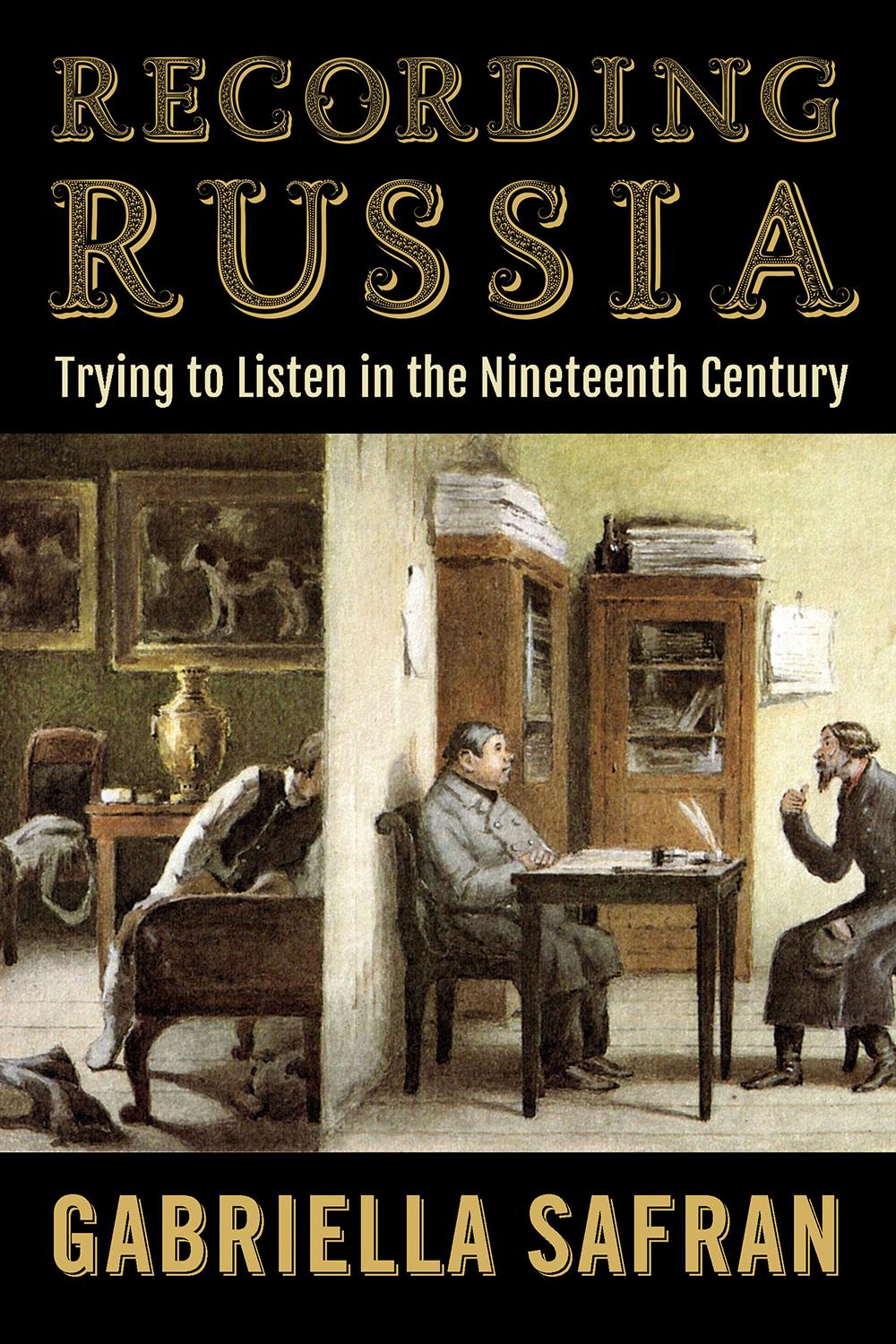
Recording Russia examines scenes of listening to "the people" across a variety of texts by Russian writers and European travelers to Russia. Gabriella Safran challenges readings of these works that essentialize Russia as a singular place where communication between the classes is consistently fraught, arguing instead that, as in the West, the sense of separation or connection between intellectuals and those they interviewed or observed is as much about technology and performance as politics and emotions.
Nineteenth-century writers belonged to a distinctive media generation using new communication technologies—not bells, but mechanically produced paper, cataloguing systems, telegraphy, and stenography. Russian writers and European observers of Russia in this era described themselves and their characters as trying hard to listen to and record the laboring and emerging middle classes. They depicted scenes of listening as contests where one listener bests another; at times the contest is between two sides of the same person. They sometimes described Russia as an ideal testing ground for listening because of its extreme cold and silence. As the mid-century generation witnessed the social changes of the 1860s and 1870s, their listening scenes revealed increasing skepticism about the idea that anyone could accurately identify or record the unadulterated "voice of the people." Bringing together intellectual history and literary analysis and drawing on ideas from linguistic anthropology and sound and media studies, Recording Russia looks at how writers, folklorists, and linguists such as Turgenev, Dostoevsky, and Vladimir Dahl, as well as foreign visitors, thought about the possibilities and meanings of listening to and repeating other people's words.
Before Memmo my notes were scattered across PDFs. Now a workspace pulls everything into one place — I see exactly what's still left to study.
Memmo's summaries are gold before exams. I don't have to re-read 800 pages two weeks before — just the important parts.
The AI chat has saved me the night before an exam more than once. I just keep asking until I get it — no waiting on a study group to reply.
The quizzes hit exactly what I need to know. Memmo tracks what I get stuck on — so I only practice what's worth it.
Flashcards with spaced repetition are magic. Memmo knows when I'm about to forget something and brings it back.
The AI podcasts are my favorite. I listen on my way to school and get a recap without sitting at a computer.

Handbok i kvalitativa metoder
281 kr

Hållbar utveckling: en introduktion för ingenjörer och andra problemlösare
334 kr

Brymans Samhällsvetenskapliga metoder
390 kr

Projektledning
491 kr

Den orättvisa hälsan: om socioekonomiska skillnader i hälsa och livslängd
326 kr

Vetenskapsteori för nybörjare
196 kr

Organizational Leadership
429 kr

På väg mot läraryrket
172 kr

Det sociala livet i skolan: Socialpsykologiska perspektiv
253 kr

Betygsättningens didaktik
151 kr

Personality
402 kr

Studying Leadership
404 kr

Managing Innovation
477 kr

Introduktion till samhällsvetenskaplig metod
347 kr

The Psychology of Sex and Gender
698 kr

Evidens och kunskap för socialt arbete
207 kr

Introduction to Leadership
605 kr