
Before Memmo my notes were scattered across PDFs. Now a workspace pulls everything into one place — I see exactly what's still left to study.
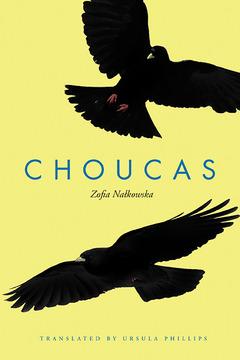
The novel in Europe in the early twentieth century took a decidedly inward turn, and Choucas (1927) is an intriguing example of the modernist psychological tradition. Its author, Zofia Nalkowska (1884–1954), was a celebrated Polish novelist and playwright. She rose to prominence in interwar Poland and was one of a group of early feminist writers that included Pola Gojawiczynska, Maria Dabrowska, and Maria Kuncewiczowa.
Choucas is set in the Swiss Alps in the mid-1920s in a sanatoria village near Lake Geneva. The book has an international focus, and the narrator, a polish woman, profiles a motley collection of visitors to the village and patients at the sanatorium and their interactions with each other. Among these she encounters Armenian survivors of the 1915–16 genocide who were given refuge in Switzerland. The characters are all from different countries and each represents a distinct political or religious point of view. The title is derived from the French word for a species of bird native to this region of Switzerland. Nalkowska was known for her love of nature and animals, and the birds have symbolic significance for the characters themselves. The choucas fly down from the mountain passes seeking food, while some of the characters in the novel wander around the sanatorium seeking philosophical truths.
In Choucas, there is a strong autobiographical element to the story, as Nalkowska had stayed in a sanatorium in Leysin, Switzerland, with her husband in 1925. A comparison may also be drawn with the classic novel by Thomas Mann, The Magic Mountain (1924), which has similar themes. The book delineates a fascinating time period, and the author's concise fictional technique is strikingly innovative and groundbreaking. Choucas is a fine example of early modernist literature and is translated for the first time into English for a new generation of readers.
Before Memmo my notes were scattered across PDFs. Now a workspace pulls everything into one place — I see exactly what's still left to study.
Memmo's summaries are gold before exams. I don't have to re-read 800 pages two weeks before — just the important parts.
The AI chat has saved me the night before an exam more than once. I just keep asking until I get it — no waiting on a study group to reply.
The quizzes hit exactly what I need to know. Memmo tracks what I get stuck on — so I only practice what's worth it.
Flashcards with spaced repetition are magic. Memmo knows when I'm about to forget something and brings it back.
The AI podcasts are my favorite. I listen on my way to school and get a recap without sitting at a computer.

Handbok i kvalitativa metoder
281 kr

Hållbar utveckling: en introduktion för ingenjörer och andra problemlösare
334 kr

Brymans Samhällsvetenskapliga metoder
390 kr

Projektledning
491 kr

Den orättvisa hälsan: om socioekonomiska skillnader i hälsa och livslängd
326 kr

Organizational Leadership
429 kr

Vetenskapsteori för nybörjare
196 kr

På väg mot läraryrket
172 kr

Det sociala livet i skolan: Socialpsykologiska perspektiv
253 kr

Betygsättningens didaktik
151 kr

Personality
402 kr

Studying Leadership
404 kr

Managing Innovation
477 kr

Introduktion till samhällsvetenskaplig metod
347 kr

The Psychology of Sex and Gender
698 kr

Evidens och kunskap för socialt arbete
207 kr

Introduction to Leadership
605 kr