
Before Memmo my notes were scattered across PDFs. Now a workspace pulls everything into one place — I see exactly what's still left to study.
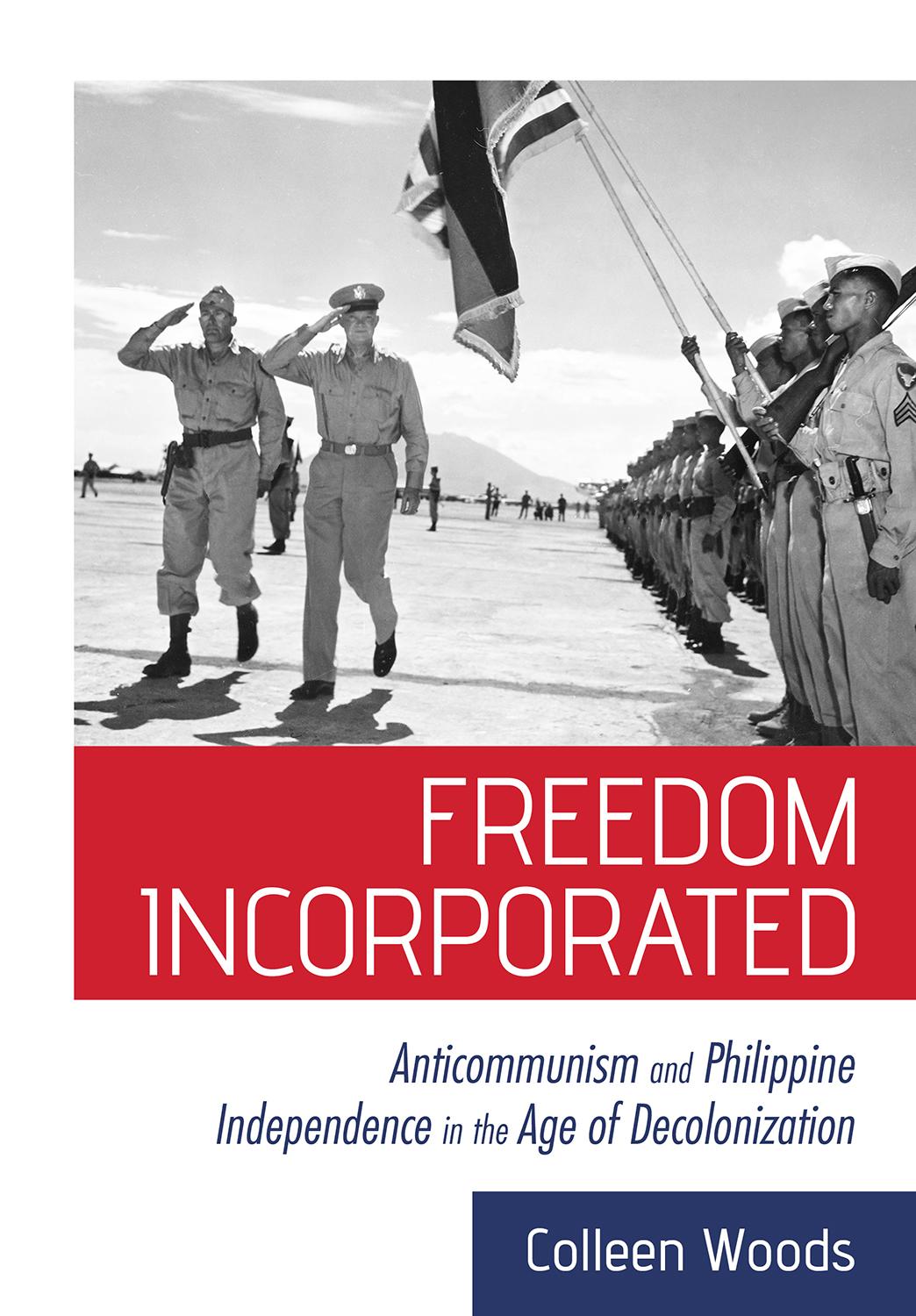
Freedom Incorporated demonstrates how anticommunist political projects were critical to the United States' expanding imperial power in the age of decolonization, and how anticommunism was essential to the growing global economy of imperial violence in the Cold War era.
In this broad historical account, Colleen Woods demonstrates how, in the mid-twentieth century Philippines, US policymakers and Filipino elites promoted the islands as a model colony. In the wake of World War II, as the decolonization movement strengthened, those same political actors pivoted and, after Philippine independence in 1946, lauded the archipelago as a successful postcolonial democracy. Officials at Malacañang Palace and the White House touted the 1946 signing of the liberating Treaty of Manila as a testament to the US commitment to the liberation of colonized people and celebrated it under the moniker of Philippine–American Friendship Day. Despite elite propaganda, from the early 1930s to late 1950s, radical movements in the Philippines highlighted US hegemony over the new Republic of the Philippines and, in so doing, threatened American efforts to separate the US from sordid histories of empire, imperialism, and the colonial racial order.
Woods finds that in order to justify US intervention in an ostensibly independent Philippine nation, anticommunist Filipinos and their American allies transformed local political struggles in the Philippines into sites of resistance against global communist revolution. By linking political struggles over local resources, like the Hukbalahap Rebellion in central Luzon, to a war against communism, American and Filipino anticommunists legitimized the use of violence as a means to capture and contain alternative forms of political, economic, and social organization. Placing the post-World War II history of anticommunism in the Philippines within a larger imperial framework, in Freedom Incorporated Woods illustrates how American and Filipino intelligence agents, military officials, paramilitaries, state bureaucrats, academics, and entrepreneurs mobilized anticommunist politics to contain challenges to elite rule in the Philippines.
Before Memmo my notes were scattered across PDFs. Now a workspace pulls everything into one place — I see exactly what's still left to study.
Memmo's summaries are gold before exams. I don't have to re-read 800 pages two weeks before — just the important parts.
The AI chat has saved me the night before an exam more than once. I just keep asking until I get it — no waiting on a study group to reply.
The quizzes hit exactly what I need to know. Memmo tracks what I get stuck on — so I only practice what's worth it.
Flashcards with spaced repetition are magic. Memmo knows when I'm about to forget something and brings it back.
The AI podcasts are my favorite. I listen on my way to school and get a recap without sitting at a computer.

Handbok i kvalitativa metoder
281 kr

Hållbar utveckling: en introduktion för ingenjörer och andra problemlösare
334 kr

Brymans Samhällsvetenskapliga metoder
390 kr

Projektledning
491 kr

Den orättvisa hälsan: om socioekonomiska skillnader i hälsa och livslängd
326 kr

Vetenskapsteori för nybörjare
196 kr

Organizational Leadership
429 kr

På väg mot läraryrket
172 kr

Det sociala livet i skolan: Socialpsykologiska perspektiv
253 kr

Betygsättningens didaktik
151 kr

Personality
402 kr

Studying Leadership
404 kr

Managing Innovation
477 kr

Introduktion till samhällsvetenskaplig metod
347 kr

The Psychology of Sex and Gender
698 kr

Evidens och kunskap för socialt arbete
207 kr

Introduction to Leadership
605 kr