
Before Memmo my notes were scattered across PDFs. Now a workspace pulls everything into one place — I see exactly what's still left to study.
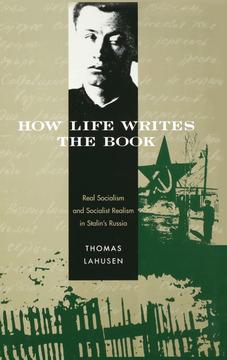
'A gripping, unsettling, and highly original book that turns the making of a Soviet socialist-realist classic—Azhaev's Far from Moscow—into a detective story, and sheds as strange and ambiguous a light on the Stalin era, from gulag to Writers'Union, as one could hope for. Lahusen is a disarmingly low-key scholarly virtuoso who performs simultaneously as an archive-based historian, an interpreter of texts (including Azhaev's own self-organized archive), and a gently relentless biographer whose stalking of his prey is reminiscent of Nabokov. The final chilling paragraph typically economical and understated, is a reminder that the author/investigator, too, is a collaborator in the multiple reworkings of Azhaev's text, and of his life, that How Life Writes the Book has so finely analyzed.'—Sheila Fitzpatrick, University of Chicago
'This is a wonderfully original work: a history of a book, a literary analysis of an age, a montage of a life. Lahusen writes with a postmodern sensibility but without the postmodernist jargon.'—Yuri Slezkine, University of California, Berkeley
'Thomas Lahusen has written an imaginative and archivally grounded book that presents the most fascinating picture to date of the literary process that produced canonical works of Socialist Realism and the people who wrote them. How Life Writes the Book is alternatingly chilling and funny as it demonstrates the interpenetration of literary institutions, massive construction projects and the Soviet system of prison camps and slave labor. With this study, as with his earlier Intimacy and Terror, Lahusen continues his own project of revolutionizing our understanding of the Soviet subject and Soviet subjectivity.'—Eric Naiman, University of California, Berkeley
'Lahusen's case study marks a new genre of inquiry into the very nature of socialist realism, a genre which became possible after archives and memory in Russia regained their voice. It shows how life is transformed into Soviet myth.'—Hans G'nther, editor of The Culture of the Stalin Period
Before Memmo my notes were scattered across PDFs. Now a workspace pulls everything into one place — I see exactly what's still left to study.
Memmo's summaries are gold before exams. I don't have to re-read 800 pages two weeks before — just the important parts.
The AI chat has saved me the night before an exam more than once. I just keep asking until I get it — no waiting on a study group to reply.
The quizzes hit exactly what I need to know. Memmo tracks what I get stuck on — so I only practice what's worth it.
Flashcards with spaced repetition are magic. Memmo knows when I'm about to forget something and brings it back.
The AI podcasts are my favorite. I listen on my way to school and get a recap without sitting at a computer.

Handbok i kvalitativa metoder
281 kr

Hållbar utveckling: en introduktion för ingenjörer och andra problemlösare
334 kr

Brymans Samhällsvetenskapliga metoder
390 kr

Projektledning
491 kr

Den orättvisa hälsan: om socioekonomiska skillnader i hälsa och livslängd
326 kr

Organizational Leadership
429 kr

Vetenskapsteori för nybörjare
196 kr

På väg mot läraryrket
172 kr

Det sociala livet i skolan: Socialpsykologiska perspektiv
253 kr

Betygsättningens didaktik
151 kr

Personality
402 kr

Studying Leadership
404 kr

Managing Innovation
477 kr

Introduktion till samhällsvetenskaplig metod
347 kr

The Psychology of Sex and Gender
698 kr

Evidens och kunskap för socialt arbete
207 kr

Introduction to Leadership
605 kr