
Before Memmo my notes were scattered across PDFs. Now a workspace pulls everything into one place — I see exactly what's still left to study.
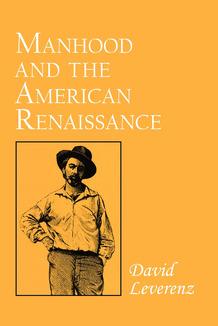
In the view of David Leverenz, such nineteenth-century American male writers as Emerson, Hawthorne, Melville, Thoreau, and Whitman were influenced more profoundly by the popular model of the entrepreneurial "man of force" than they were by their literary precursors and contemporaries. Drawing on the insights of feminist theory, gender studies, psychoanalytical criticism, and social history, Manhood and the American Renaissance demonstrates that gender pressures and class conflicts played as critical a role in literary creation for the male writers of nineteenth-century America as they did for the women writers.
Leverenz interprets male American authors in terms of three major ideologies of manhood linked to the social classes in the Northeast-patrician, artisan, and entrepreneurial. He asserts that the older ideologies of patrician gentility and of artisan independence were being challenged from 1820 to 1860 by the
new middle-class ideology of competitive individualism. The male writers of the American Renaissance, patrician almost without exception in their backgrounds and self-expectations, were fascinated yet horrified by the aggressive materialism and the rivalry for dominance they witnessed in the undeferential "new men." In close readings of the works both of well-known male literary figures and of then popular authors such as Richard Henry Dana, Jr., and Francis Parkman, Leverenz discovers a repressed center of manhood beset by fears of humiliation and masochistic fantasies. He discerns different patterns in the works of Whitman, with his artisan's background, and Frederick Douglass, who rose from artisan freedom to entrepreneurial power.
Emphasizing the interplay of class and gender, Leverenz also considers how women viewed manhood. He concludes that male writers portrayed manhood as a rivalry for dominance, but contemporary female writers saw it as patriarchy. Two chapters contrast the work of the genteel writers Sarah Hale and Caroline Kirkland with the evangelical works of Susan Warner and Harriet Beecher Stowe.
A bold and imaginative work, Manhood and the American Renaissance will enlighten and inspire controversy among all students of American literature, nineteenth-century American history, and the relation of gender and literature.
Before Memmo my notes were scattered across PDFs. Now a workspace pulls everything into one place — I see exactly what's still left to study.
Memmo's summaries are gold before exams. I don't have to re-read 800 pages two weeks before — just the important parts.
The AI chat has saved me the night before an exam more than once. I just keep asking until I get it — no waiting on a study group to reply.
The quizzes hit exactly what I need to know. Memmo tracks what I get stuck on — so I only practice what's worth it.
Flashcards with spaced repetition are magic. Memmo knows when I'm about to forget something and brings it back.
The AI podcasts are my favorite. I listen on my way to school and get a recap without sitting at a computer.

Handbok i kvalitativa metoder
281 kr

Hållbar utveckling: en introduktion för ingenjörer och andra problemlösare
334 kr

Brymans Samhällsvetenskapliga metoder
390 kr

Projektledning
491 kr

Den orättvisa hälsan: om socioekonomiska skillnader i hälsa och livslängd
326 kr

Vetenskapsteori för nybörjare
196 kr

Organizational Leadership
429 kr

På väg mot läraryrket
172 kr

Det sociala livet i skolan: Socialpsykologiska perspektiv
253 kr

Betygsättningens didaktik
151 kr

Personality
402 kr

Studying Leadership
404 kr

Managing Innovation
477 kr

Introduktion till samhällsvetenskaplig metod
347 kr

The Psychology of Sex and Gender
698 kr

Evidens och kunskap för socialt arbete
207 kr

Introduction to Leadership
605 kr