
Before Memmo my notes were scattered across PDFs. Now a workspace pulls everything into one place — I see exactly what's still left to study.
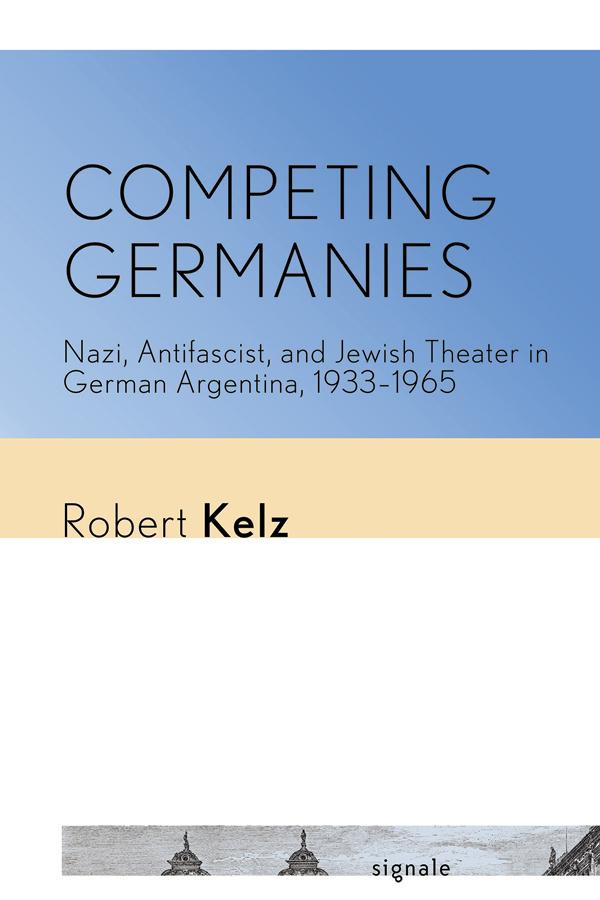
Following World War II, German antifascists and nationalists in Buenos Aires believed theater was crucial to their highly politicized efforts at community-building, and each population devoted considerable resources to competing against its rival onstage. Competing Germanies tracks the paths of several stage actors from European theaters to Buenos Aires and explores how two of Argentina's most influential immigrant groups, German nationalists and antifascists (Jewish and non-Jewish), clashed on the city's stages. Covered widely in German- and Spanish-language media, theatrical performances articulated strident Nazi, antifascist, and Zionist platforms. Meanwhile, as their thespian representatives grappled onstage for political leverage among emigrants and Argentines, behind the curtain, conflicts simmered within partisan institutions and among theatergoers. Publicly they projected unity, but offstage nationalist, antifascist, and Zionist populations were rife with infighting on issues of political allegiance, cultural identity and, especially, integration with their Argentine hosts.
Competing Germanies reveals interchange and even mimicry between antifascist and nationalist German cultural institutions. Furthermore, performances at both theaters also fit into contemporary invocations of diasporas, including taboos and postponements of return to the native country, connections among multiple communities, and forms of longing, memory, and (dis)identification. Sharply divergent at first glance, their shared condition as cultural institutions of emigrant populations caused the antifascist Free German Stage and the nationalist German Theater to adopt parallel tactics in community-building, intercultural relationships, and dramatic performance.
Its cross-cultural, polyglot blend of German, Jewish, and Latin American studies gives Competing Germanies a wide, interdisciplinary academic appeal and offers a novel intervention in Exile studies through the lens of theater, in which both victims of Nazism and its adherents remain in focus.
Before Memmo my notes were scattered across PDFs. Now a workspace pulls everything into one place — I see exactly what's still left to study.
Memmo's summaries are gold before exams. I don't have to re-read 800 pages two weeks before — just the important parts.
The AI chat has saved me the night before an exam more than once. I just keep asking until I get it — no waiting on a study group to reply.
The quizzes hit exactly what I need to know. Memmo tracks what I get stuck on — so I only practice what's worth it.
Flashcards with spaced repetition are magic. Memmo knows when I'm about to forget something and brings it back.
The AI podcasts are my favorite. I listen on my way to school and get a recap without sitting at a computer.

Handbok i kvalitativa metoder
281 kr

Hållbar utveckling: en introduktion för ingenjörer och andra problemlösare
334 kr

Brymans Samhällsvetenskapliga metoder
390 kr

Projektledning
491 kr

Den orättvisa hälsan: om socioekonomiska skillnader i hälsa och livslängd
326 kr

Vetenskapsteori för nybörjare
196 kr

Organizational Leadership
429 kr

På väg mot läraryrket
172 kr

Det sociala livet i skolan: Socialpsykologiska perspektiv
253 kr

Betygsättningens didaktik
151 kr

Personality
402 kr

Studying Leadership
404 kr

Managing Innovation
477 kr

Introduktion till samhällsvetenskaplig metod
347 kr

The Psychology of Sex and Gender
698 kr

Evidens och kunskap för socialt arbete
207 kr

Introduction to Leadership
605 kr