
Before Memmo my notes were scattered across PDFs. Now a workspace pulls everything into one place — I see exactly what's still left to study.
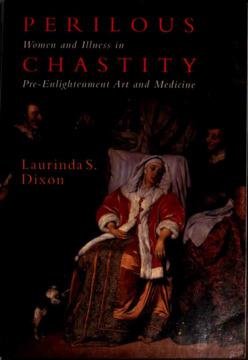
Bearing such titles as The Doctor's Visit or The Lovesick Maiden, certain seventeenth-century Dutch paintings are familiar to museum browsers: an attractive young woman—well dressed, but pale and listless—reclines in a chair, languishes in bed, or falls to the floor in a faint. Weathered crones or impish boys leer suggestively in the background. These paintings traditionally have been viewed as commentary on quack doctors or unmarried pregnant women. The first book to examine images of women and illness in the light of medical history, Perilous Chastity reveals a surprising new interpretation.
In an engaging analysis enhanced by abundant illustrations-including eight pages of color plates—Laurinda S. Dixon shows how paintings reflect changing medical theories concerning women. While she illuminates a tradition stretching from antiquity to the present, she concentrates on art from the thirteenth through the eighteenth centuries, and particularly on paintings from seventeenth-century Leiden.
Dixon suggests how the assumptions of a predominantly male medical establishment have influenced prevailing notions of women's social place. She traces the evolution of the belief that women's illnesses were caused by "hysteria," so named in ancient Greece after the notion that the uterus had a tendency to wander in the body. All women were considered prone to hysteria-strong emotions, idleness, intellectual activity, or unladylike pursuits could cause it—but it was most commonly diagnosed among celibates. Analyzing paintings of women's sickrooms by Jan Steen, Dirck Hals, Gabriel Metsu, Jacob Ochtervelt, Godfried Schalcken, Samuel van Hoogstraten, and Franz van Mieris, Dixon perceives metaphoric identifications of the womb as the source of illness. She also documents changing fashions in cures for hysteria and discusses allusions to the debilitating effects of women's passions not only in paintings, but also in madrigals by John Dowland and Henry Purcell.
In conclusion, Dixon argues that her study has strong ramifications of attitudes towards women and illness today. She takes up images in twentieth-century culture as well and calls attention to a resurgence of female "hysteria" after World War II.
Before Memmo my notes were scattered across PDFs. Now a workspace pulls everything into one place — I see exactly what's still left to study.
Memmo's summaries are gold before exams. I don't have to re-read 800 pages two weeks before — just the important parts.
The AI chat has saved me the night before an exam more than once. I just keep asking until I get it — no waiting on a study group to reply.
The quizzes hit exactly what I need to know. Memmo tracks what I get stuck on — so I only practice what's worth it.
Flashcards with spaced repetition are magic. Memmo knows when I'm about to forget something and brings it back.
The AI podcasts are my favorite. I listen on my way to school and get a recap without sitting at a computer.

Handbok i kvalitativa metoder
281 kr

Hållbar utveckling: en introduktion för ingenjörer och andra problemlösare
334 kr

Brymans Samhällsvetenskapliga metoder
390 kr

Projektledning
491 kr

Den orättvisa hälsan: om socioekonomiska skillnader i hälsa och livslängd
326 kr

Organizational Leadership
429 kr

Vetenskapsteori för nybörjare
196 kr

På väg mot läraryrket
172 kr

Det sociala livet i skolan: Socialpsykologiska perspektiv
253 kr

Betygsättningens didaktik
151 kr

Personality
402 kr

Studying Leadership
404 kr

Managing Innovation
477 kr

Introduktion till samhällsvetenskaplig metod
347 kr

The Psychology of Sex and Gender
698 kr

Evidens och kunskap för socialt arbete
207 kr

Introduction to Leadership
605 kr