
Before Memmo my notes were scattered across PDFs. Now a workspace pulls everything into one place — I see exactly what's still left to study.
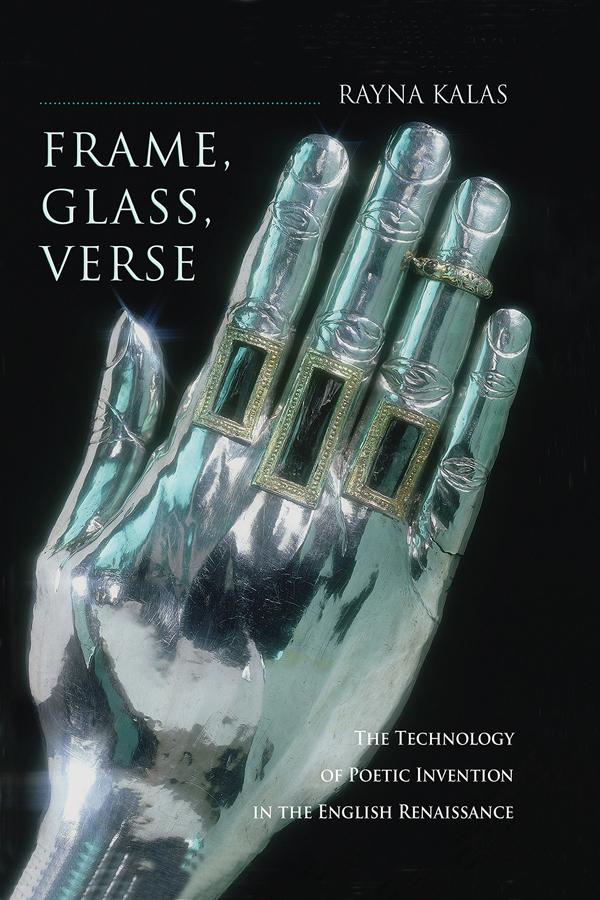
In a book that draws attention to some of our most familiar and unquestioned habits of thought—from "framing" to "perspective" to "reflection"—Rayna Kalas suggests that metaphors of the poetic imagination were once distinctly material and technical in character. Kalas explores the visual culture of the English Renaissance by way of the poetic image, showing that English writers avoided charges of idolatry and fancy through conceits that were visual, but not pictorial.
Frames, mirrors, and windows have been pervasive and enduring metaphors for texts from classical antiquity to modernity; as a result, those metaphors seem universally to emphasize the mimetic function of language, dividing reality from the text that represents it. This book dissociates those metaphors from their earlier and later formulations in order to demonstrate that figurative language was material in translating signs and images out of a sacred and iconic context and into an aesthetic and representational one. Reading specific poetic images—in works by Spenser, Shakespeare, Gascoigne, Bacon, and Nashe—together with material innovations in frames and glass, Kalas reveals both the immanence and the agency of figurative language in the early modern period.
Frame, Glass, Verse shows, finally, how this earlier understanding of poetic language has been obscured by a modern idea of framing that has structured our apprehension of works of art, concepts, and even historical periods. Kalas presents archival research in the history of frames, mirrors, windows, lenses, and reliquaries that will be of interest to art historians, cultural theorists, historians of science, and literary critics alike. Throughout Frame, Glass, Verse, she challenges readers to rethink the relationship of poetry to technology.
Before Memmo my notes were scattered across PDFs. Now a workspace pulls everything into one place — I see exactly what's still left to study.
Memmo's summaries are gold before exams. I don't have to re-read 800 pages two weeks before — just the important parts.
The AI chat has saved me the night before an exam more than once. I just keep asking until I get it — no waiting on a study group to reply.
The quizzes hit exactly what I need to know. Memmo tracks what I get stuck on — so I only practice what's worth it.
Flashcards with spaced repetition are magic. Memmo knows when I'm about to forget something and brings it back.
The AI podcasts are my favorite. I listen on my way to school and get a recap without sitting at a computer.

Handbok i kvalitativa metoder
281 kr

Hållbar utveckling: en introduktion för ingenjörer och andra problemlösare
334 kr

Brymans Samhällsvetenskapliga metoder
390 kr

Projektledning
491 kr

Den orättvisa hälsan: om socioekonomiska skillnader i hälsa och livslängd
326 kr

Vetenskapsteori för nybörjare
196 kr

Organizational Leadership
429 kr

På väg mot läraryrket
172 kr

Det sociala livet i skolan: Socialpsykologiska perspektiv
253 kr

Betygsättningens didaktik
151 kr

Personality
402 kr

Studying Leadership
404 kr

Managing Innovation
477 kr

Introduktion till samhällsvetenskaplig metod
347 kr

The Psychology of Sex and Gender
698 kr

Evidens och kunskap för socialt arbete
207 kr

Introduction to Leadership
605 kr